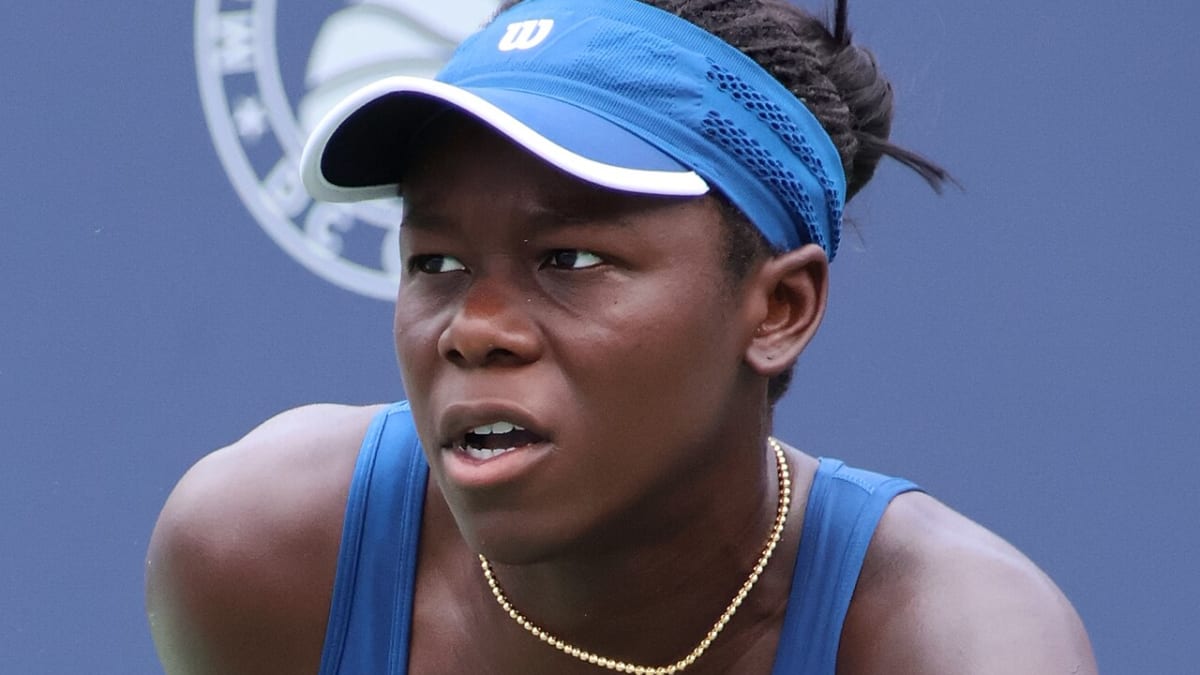
The unforgiving nature of the grass-court season has claimed another physical casualty. World No. 9 Victoria Mboko has officially withdrawn from the upcoming championships at Wimbledon following a devastating left knee injury. The structural damage occurred during her high-stakes encounter against Karolina Pliskova at the HSBC Championships, where Mboko was forced to stop play while trailing 6-2, 3-4. This sudden physical halt ends her grass campaign and leaves a massive void in both the singles draw and her high-profile doubles commitments.
The Fateful Slide on the Grass Courts of the HSBC Championships
Grass-court tennis demands a completely different set of biomechanical adjustments compared to clay or hard courts. Players must lower their center of gravity, shorten their backswings, and, most importantly, accept the unpredictable footing. During her second-round singles match against Karolina Pliskova, Victoria Mboko was actively trying to establish baseline depth to neutralize Pliskova's flat, penetrating groundstrokes. Trailing 6-2, 3-4, Mboko attempted a lateral recovery step after hitting a running forehand from the deuce court.
The traction on the grass failed to hold her weight as she planted her left foot to change direction. Instead of sliding smoothly through the hit, her foot caught on the turf, causing her left knee to buckle inward under intense lateral force. The immediate loss of stability made it impossible for her to load her weight onto her back leg to generate topspin. Realizing the severity of the joint instability, Mboko had no choice but to shake hands and forfeit the match, a heartbreaking conclusion to a contest that was showcasing high-level tactical adjustments from both competitors.
Listen to the Second Serve Podcast
Get our daily AI-synthesized audio briefings and match reviews on the go.
This injury highlights the extreme physical tax that the quick transition from clay to grass places on modern athletes. The sheer force required to arrest momentum on grass, where the friction coefficient changes constantly as the court wears down, exposes the knee joint to extreme valgus stress. Mboko's retirement at 6-2, 3-4 is a stark reminder of how quickly a player's season can be derailed by a single misstep on this unforgiving surface.
The High-Profile Doubles Alliance with Serena Williams at Queen's Club
Before the physical setback, Mboko was enjoying a highly publicized doubles partnership with 23-time Grand Slam champion Serena Williams at the Queen's Club. The pairing was designed to give Mboko invaluable match play under high-pressure scenarios, helping her refine her transitional game and net positioning. Williams' booming serve and Mboko's heavy groundstrokes from the baseline created a formidable tactical synergy that kept opponents off-balance during their early rounds.
In doubles, court positioning is highly dynamic, requiring rapid diagonal sprints and sudden vertical movements toward the net to intercept crosscourt returns. Mboko was showing remarkable progress in her ability to read the server's racket face and shift her positioning accordingly. Her partnership with Williams was not just an exhibition of star power; it was a masterclass in tactical court coverage and communication between two generations of elite ball-strikers.
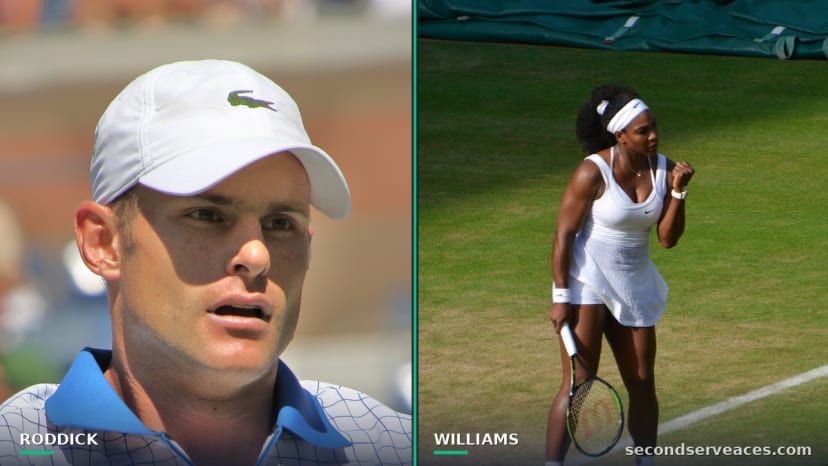
Unfortunately, this knee injury suddenly interrupted what promised to be a deeply educational run for the young Canadian. As we explored in our previous coverage of Mboko's Knee Injury Cruelly Ends Serena Williams Doubles Run, the sudden withdrawal leaves Williams without her partner and deprives tennis fans of one of the most intriguing doubles pairings of the season. The tactical lessons learned alongside Williams will have to be shelved as Mboko shifts her focus entirely to rehabilitation.
Medical Diagnostics and the Long Road Back from an MCL Tear
Following her retirement from the match against Pliskova, Mboko underwent extensive MRI scans to determine the exact extent of the damage. The clinical diagnosis confirmed a Medial Collateral Ligament (MCL) injury in her left knee. The MCL is critical for stabilizing the inner side of the knee joint, preventing it from collapsing inward during lateral movements. For a tennis player who relies heavily on explosive lateral footwork to defend the corners, a compromised MCL completely compromises the kinetic chain.
This diagnosis officially rules Mboko out of Wimbledon and the remainder of the grass-court swing. The recovery protocol for an MCL sprain or tear requires a period of immobilization followed by progressive strength training to rebuild the surrounding musculature, particularly the quadriceps and hamstrings. Rushing back from such an injury risks secondary damage to the anterior cruciate ligament (ACL) or meniscus, meaning Mboko's medical team will likely take a highly conservative approach.
The news of her withdrawal prompted an immediate outpouring of support from across the sporting world. High-profile athletes, including Serena Williams, Olympic skiing legend Lindsey Vonn, Sloane Stephens, Eva Lys, and Priscilla Hon, publicly sent messages of encouragement. This collective show of solidarity underscores Mboko's standing in the tennis community and the shared understanding of the physical risks inherent in professional sport.
Rebuilding the Kinetic Chain for a Hard-Court Return
As Mboko begins her rehabilitation, her coaching staff will need to address the technical elements of her movement patterns to prevent future joint strain on the WTA Tour. Rebuilding her explosive first-step quickness will be paramount. When she eventually returns to hard courts, the friction is much higher than on grass, requiring absolute trust in her knee's lateral stability during slide-to-stop movements.
The physical rebuild will also involve fine-tuning her closed-stance footwork, ensuring that she does not over-rotate her hips and place excessive torque on her knees when hitting on the run. By focusing on core stability and glute activation, Mboko can distribute the kinetic forces of her heavy topspin groundstrokes more evenly throughout her entire body, reducing the localized stress on her joints.
While this injury is a massive setback, Mboko's career trajectory remains highly promising. Fans and analysts can track her career progress and historical performance metrics on her Wikipedia page. With the right rehabilitation plan and a cautious approach to her return, there is every reason to believe she can return to her peak form and continue her ascent in the women's game.
Essential Matchday Add-Ons
Tournament-tested accessories and high-frequency consumables every competitive player keeps in their bag.
Tourna Grip Original Dry Feel Overgrip (10-Pack)
4.8 ★ (12,000+ reviews)
The gold standard for sweaty hands. Proprietary dry feel absorbs moisture better as play intensifies.
Luxilon ALU Power 125 Silver String Set
4.9 ★ (3,500+ reviews)
Unrivaled control and spin potential used by over 50% of the ATP Top 100 players.
Babolat Custom Damp Vibration Dampener (2-Pack)
4.7 ★ (4,200+ reviews)
Customizable dampening with removable central O-ring for fine-tuning court feedback and sound.
Penn Championship Extra Duty Tennis Balls (4-Can Pack)
4.7 ★ (8,900+ reviews)
Official ball of USTA League Tennis with extra-duty felt designed for abrasive hard courts.
Analyze Victoria Mboko vs. Serena Williams
Predict tactical adjustments, momentum swings, and serve strategy options for this match-up using our AI simulator.
The Aces Tactical Panel
This report was curated and edited by Bhaskar Goel. Tactical analysis and technical insights were provided by our specialized panel of expert correspondents.
Julian Price
Senior Tactical Correspondent
Stuffy, pedantic British academic and historian specializing in match momentum and historical context.
Elena Cruz
Director of Analytical Research
Data scientist specializing in court surface physics and movement patterns.
Bhaskar
The Editor & Fan
Passionate tennis player and site editor bringing everyday amateur insights and relatable fan commentary.
Arthur Vance
Senior Existential Analyst
Deep, eccentric, and DFW-inspired. Models court metaphysics, kinetic beauty, and player psychology.
Leo Sterling
High-Performance Consultant
Hard-nosed ex-trainer from Melbourne with a no-nonsense view on tour fitness.
Related Reports

Quick Answers
Why did Victoria Mboko withdraw from Wimbledon?+
Victoria Mboko withdrew from Wimbledon due to a Medial Collateral Ligament (MCL) injury in her left knee sustained during her match at the HSBC Championships.
What was the match score when Victoria Mboko got injured?+
Mboko was trailing Karolina Pliskova 6-2, 3-4 at the HSBC Championships when she was forced to retire due to the knee injury.
Who did Victoria Mboko play doubles with prior to her injury?+
Mboko was playing doubles alongside 23-time Grand Slam champion Serena Williams at the Queen's Club before her injury occurred.