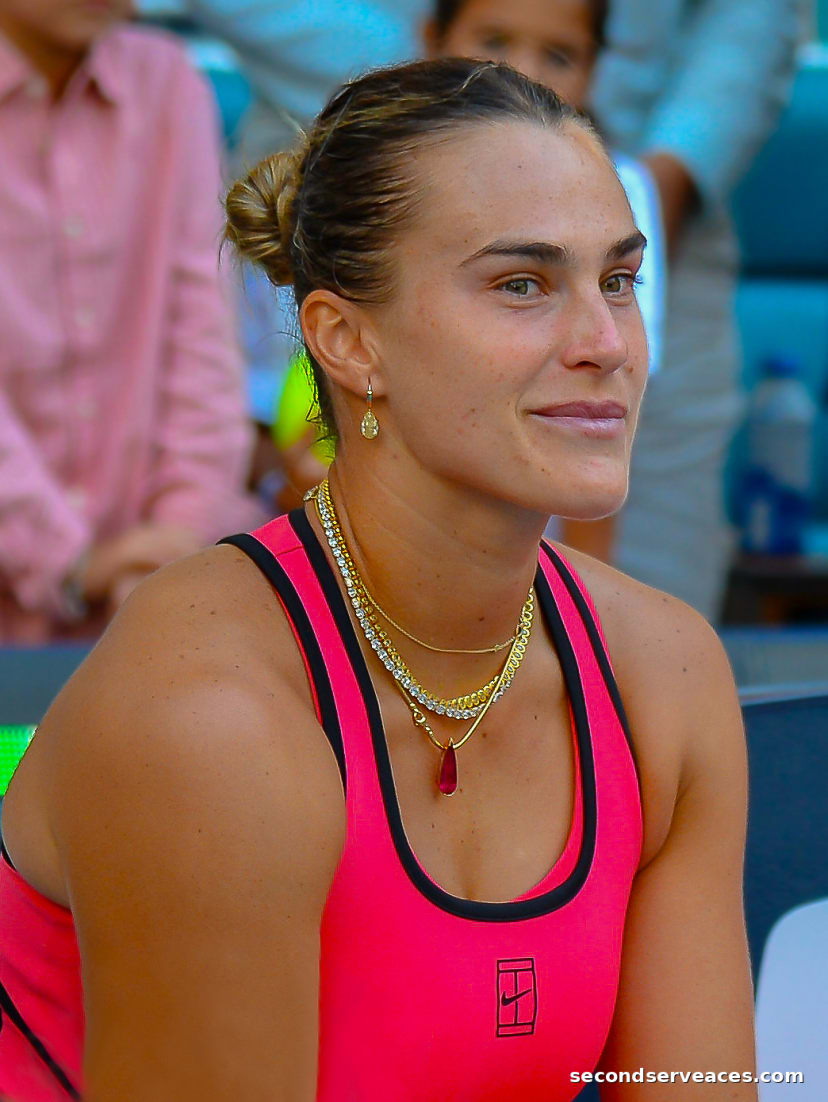
The baseline for civil discourse on the professional circuit has shifted. At the Internazionali BNL d'Italia in Rome, the conversation surrounding player compensation and Grand Slam governance took a sharp, confrontational turn. When Aryna Sabalenka succinctly remarked, "At some point we will boycott," she moved the discourse from theoretical grievance to tangible, organized defiance. This is no longer a localized dispute; it is a systemic challenge to the current economic architecture of the sport.
Listen to the Second Serve Podcast
Get our daily AI-synthesized audio briefings and match reviews on the go.
The French Open looms as the next major flashpoint, but the friction points are broad. We are looking at a fundamental disagreement over how the spoils of the world’s biggest stages are divided. While the French Tennis Federation insists they are engaged in ongoing dialogue, the players are telegraphing a clear message: the current framework of stakeholder cooperation is fraying under the pressure of stagnant equity concerns.
This isn't just about prize money; it is about the structural power balance between the Grand Slams and the players who occupy the ranking lists of the ATP and WTA. When stars like Sabalenka and Coco Gauff publicly align on these issues, the governing bodies are forced to contend with a level of athlete solidarity that has been historically absent in the modern era.
Echoes of 1973: The Precedent for Organized Dissent
To understand the gravity of the current mood, one must look back at the 1973 Wimbledon boycott. When Nikola Pilić was barred by the International Lawn Tennis Federation, 81 players stood in solidarity, choosing to vacate the draw rather than play under what they deemed an unjust mandate. That moment, supported by figures like Jan Kodeš, remains the gold standard for player leverage. It proved that the tournament is not the entity; the field is.
The modern iteration of this struggle is complicated by the fragmented nature of the tours. We saw a preview of this volatility in 2022, when the ATP and WTA removed ranking points from Wimbledon following the exclusion of Russian and Belarusian competitors. It was a strategic, if painful, use of the ranking system as a political cudgel—a move that fundamentally altered the stakes for players chasing the 2,000 points typically awarded to a Grand Slam winner.
Current distribution models leave little room for error. With women’s finalists receiving 1,300 points and men’s finalists 1,200, the dependency on these singular events is absolute. The players know that if they hold the power of the draw, they hold the power to bring the industry to a standstill. The question is whether they possess the collective resolve to activate that leverage as they prepare for the clay-court crescendo in Paris.
The Economic Math Behind the Courtroom Rhetoric
The technical reality of this standoff is rooted in the distribution of the revenue pie. The current disparity between the lucrative earnings of the Grand Slams and the support structures available to the broader field is the primary catalyst for the rhetoric coming out of Rome. Sabalenka’s words reflect a growing sentiment that the professional environment is unsustainable for those outside the absolute top tier.
The governance structures—the FFT, the ITF, and the respective tours—are now in a high-stakes tactical rally. They cannot afford another 1973-style vacuum. If the Grand Slams lose their top seeds, they lose their broadcast value, their sponsorship density, and their legitimacy. The players have realized that their presence is the only asset that matters.
We are watching a shift in player psychology from passive acceptance to aggressive negotiation. The mention of a boycott, however blunt, is a calculated attempt to gain a seat at the table. Whether this leads to a equitable settlement or a protracted institutional war remains the most significant tactical uncertainty in tennis today.
Governing Bodies Under Siege
The French Tennis Federation finds itself in a precarious position. By confirming they are in dialogue with individual players, they are acknowledging the decentralization of power. Players are no longer waiting for their representative councils to speak; they are addressing the media directly, leveraging the reach of global platforms to force transparency.
This is a test of leadership for the governing bodies. Can they provide a framework that satisfies the demands for equity without fracturing the sport? If they fail to provide a clear roadmap for change, the threat of a boycott will move from a news conference talking point to a reality that could force the industry to rewrite its bylaws overnight.
For the players, the strategy is clear: stay unified, keep the pressure on the boards, and prepare for the inevitable showdown. The sport is in a period of high-intensity negotiation, and the next few months will determine whether we see reform or a significant disruption to the calendar.
What Aryna Sabalenka Plays With
Wilson Blade 98 v9 (16x19)
Luxilon ALU Power 125
Wilson Pro Overgrip (12-Pack)
Analyze Aryna Sabalenka vs. Coco Gauff
Predict tactical adjustments, momentum swings, and serve strategy options for this match-up using our AI simulator.
The Aces Tactical Panel
This report was curated and edited by Bhaskar Goel. Tactical analysis and technical insights were provided by our specialized panel of expert correspondents.
Julian Price
Senior Tactical Correspondent
Stuffy, pedantic British academic and historian specializing in match momentum and historical context.
Elena Cruz
Director of Analytical Research
Data scientist specializing in court surface physics and movement patterns.
Bhaskar
The Editor & Fan
Passionate tennis player and site editor bringing everyday amateur insights and relatable fan commentary.
Arthur Vance
Senior Existential Analyst
Deep, eccentric, and DFW-inspired. Models court metaphysics, kinetic beauty, and player psychology.
Leo Sterling
High-Performance Consultant
Hard-nosed ex-trainer from Melbourne with a no-nonsense view on tour fitness.