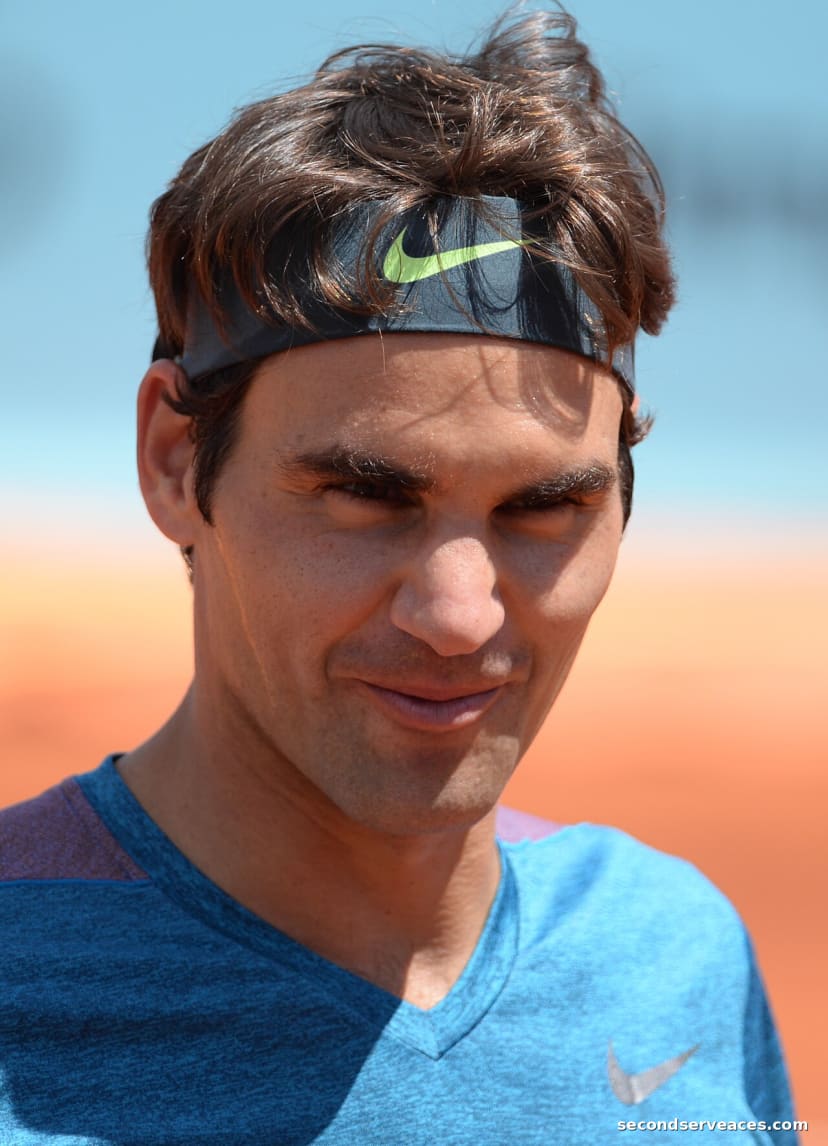
A Return to the Ochre Sanctum
There is a specific, granular geometry to the Monte-Carlo Country Club that seems to map itself onto the psyche of certain players. For Stefanos Tsitsipas, this venue has historically acted as a mirror for his most elegant baseline poetry. As the 2026 Monte-Carlo Masters approaches this Monday, April 6th, the tennis world finds itself contemplating the curious, jagged trajectory of the Greek star. He arrives here not as an imperious favorite, but as an enigma ranked 51st in the world, seeking to reconcile his current standing with the ghost of the player who once dominated these courts.
Listen to the Second Serve Podcast
Get our daily AI-synthesized audio briefings and match reviews on the go.
The numbers, stark and unadorned, demand our attention. Tsitsipas maintains an 85% win rate at this event, a statistic that feels less like data and more like a testament to a deep, visceral comfort with the Mediterranean clay. Having secured three titles here—a run that included consecutive triumphs in 2021 and 2022—he has tasted the rarefied air of repeat success. Yet, professional tennis is a brutal, episodic theater. Last year, he met a tactical hurdle in the form of Lorenzo Musetti, exiting in the quarter-finals. That loss serves as a sober reminder that even on one’s most cherished surface, the transition from dominance to vulnerability can be agonizingly swift.
The Statistical Baseline
- Total Titles at Monte-Carlo: 3
- Career Win Rate at Event: 85%
- Total Career Defeats at Monte-Carlo: 4
- Current ATP Ranking: 51
The Tactical Breakdown
To understand the Tsitsipas challenge is to understand the physics of the heavy topspin forehand on a surface that grabs the ball and kicks it upward into the strike zone. Historically, his game relies on an aggressive, circular rhythm—using the forehand to pull opponents wide before looking for the short, decisive finish. However, the modern game has drifted toward a higher premium on rally tolerance and the ability to absorb pace from the corners.
When Tsitsipas is successful, he employs a tactical geometry that minimizes his backhand exposure by running around the ball to dictate with his stronger wing. His effectiveness at Monte-Carlo is tied to his ability to serve out wide, opening the court for the follow-up strike. His recent struggles suggest a potential disconnect in his rally construction; against opponents like Musetti, who utilize superior backhand variety and shorter, slicing angles, the one-dimensional power game can be neutralized if the initial serve doesn't secure an immediate advantage.
The Bigger Picture
What does it mean for a three-time champion to descend into the mid-fifties of the rankings? In the grand history of the ATP tour, we have seen giants like Rafael Nadal and Novak Djokovic treat clay as their personal laboratory for tactical evolution. Tsitsipas currently sits at a pivot point. The Monte-Carlo Masters represents the beginning of the European clay season, a period where momentum can be salvaged from the wreckage of a disjointed opening quarter of the year. Historically, success at this specific tournament has served as a harbinger for performance at Roland Garros. If he can leverage his unique history here—the specific court speed, the wind patterns, and the muscle memory of his previous titles—he may yet reshape the narrative of his 2026 season.
What Stefanos Tsitsipas Plays With
Wilson Blade 98 v9
Luxilon 4G 125
Wilson Pro Overgrip (12-Pack)
Analyze Stefanos Tsitsipas vs. Novak Djokovic
Predict tactical adjustments, momentum swings, and serve strategy options for this match-up using our AI simulator.
The Aces Tactical Panel
This report was curated and edited by Bhaskar Goel. Tactical analysis and technical insights were provided by our specialized panel of expert correspondents.
Julian Price
Senior Tactical Correspondent
Stuffy, pedantic British academic and historian specializing in match momentum and historical context.
Elena Cruz
Director of Analytical Research
Data scientist specializing in court surface physics and movement patterns.
Bhaskar
The Editor & Fan
Passionate tennis player and site editor bringing everyday amateur insights and relatable fan commentary.
Arthur Vance
Senior Existential Analyst
Deep, eccentric, and DFW-inspired. Models court metaphysics, kinetic beauty, and player psychology.
Leo Sterling
High-Performance Consultant
Hard-nosed ex-trainer from Melbourne with a no-nonsense view on tour fitness.