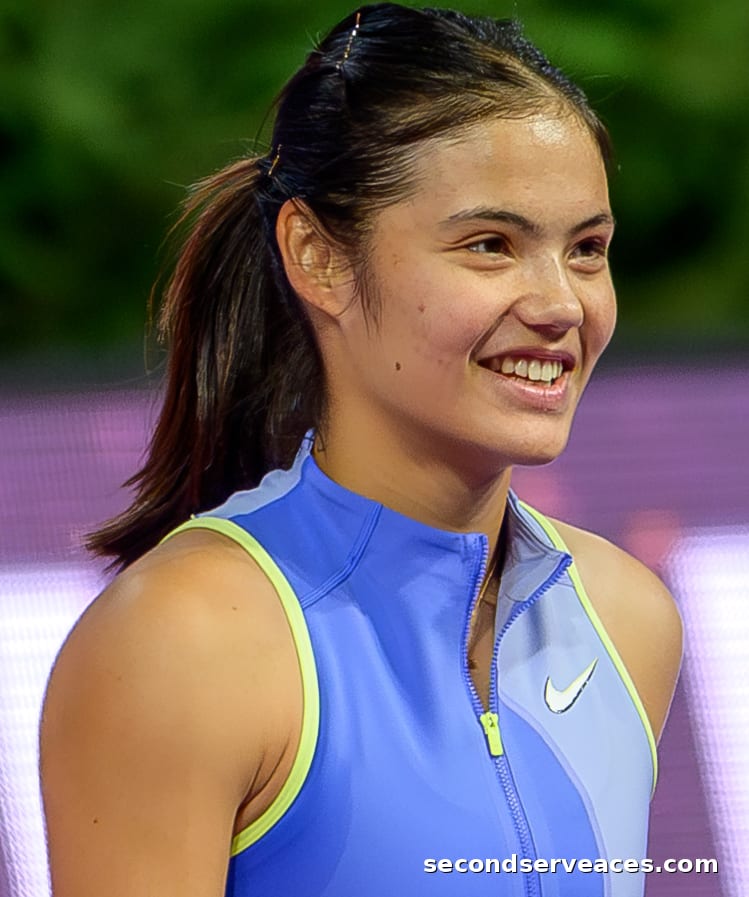
Rust and Recovery: The Mechanics of a Challenging Return
Returning to the WTA Tour after a 10-week absence due to post-viral illness is a significant physical and technical hurdle. Emma Raducanu’s return at the Strasbourg WTA 500 event ended in a 6-4, 7-6(4) loss to Diane Parry, underscoring the difficulty of maintaining rhythm after an extended layoff. The match saw Raducanu struggle to find the consistent depth required to neutralize Parry’s clay-court game, a challenge compounded by the lack of competitive match play over the last two and a half months.
Listen to the Second Serve Podcast
Get our daily AI-synthesized audio briefings and match reviews on the go.
The statistical realities of this defeat are clear when looking at the WTA rankings, where Raducanu has slid from 23rd to 37th. In professional tennis, the margins between winning and losing are often defined by match-toughness—the ability to execute high-percentage shots under pressure. As we noted in our previous tactical breakdown of players returning from hiatus, the transition back to high-intensity competition requires a period of recalibration that is rarely seamless.
Tactical Hurdles and the Path to Roland-Garros
Parry utilized the clay surface to dictate play, forcing Raducanu into defensive positions where her recovery speed was tested. While Raducanu managed to push the second set into a tie-break, the tactical execution—specifically the ability to win crucial points on her serve—was missing. This match serves as a baseline for her current form as she looks toward the Roland-Garros main draw, which is scheduled to begin this Sunday.
Elsewhere in the French sphere, the qualifying rounds are providing their own narratives. Players like Felix Gill, Jan Choinski, and Arthur Fery have successfully navigated their first-round encounters, demonstrating the grit required for success on the red dirt. For Raducanu, the focus now shifts from this Strasbourg result to the tactical adjustments needed to regain her footing before the major tournament begins. The lack of court time was evident, but the opportunity to compete at the highest level remains the most effective way to address those deficiencies.
What Carlos Alcaraz Plays With
Babolat Pure Aero 98
Babolat RPM Blast 1.30
Babolat VS Original (12-Pack)
Nike Vapor Pro 2
Analyze Emma Raducanu vs. Amanda Anisimova
Predict tactical adjustments, momentum swings, and serve strategy options for this match-up using our AI simulator.
The Aces Tactical Panel
This report was curated and edited by Bhaskar Goel. Tactical analysis and technical insights were provided by our specialized panel of expert correspondents.
Julian Price
Senior Tactical Correspondent
Stuffy, pedantic British academic and historian specializing in match momentum and historical context.
Elena Cruz
Director of Analytical Research
Data scientist specializing in court surface physics and movement patterns.
Bhaskar
The Editor & Fan
Passionate tennis player and site editor bringing everyday amateur insights and relatable fan commentary.
Arthur Vance
Senior Existential Analyst
Deep, eccentric, and DFW-inspired. Models court metaphysics, kinetic beauty, and player psychology.
Leo Sterling
High-Performance Consultant
Hard-nosed ex-trainer from Melbourne with a no-nonsense view on tour fitness.
Related Reports


Quick Answers
What was the final score in Emma Raducanu's return match in Strasbourg?+
Emma Raducanu lost her opening-round match to Diane Parry with a final score of 6-4, 7-6(4).
How long was Emma Raducanu absent from the WTA Tour before the Strasbourg event?+
Raducanu had been away from the tour for 10 weeks due to a post-viral illness.
Where does Emma Raducanu currently stand in the WTA rankings?+
Following her absence, Emma Raducanu's world ranking has moved from 23rd to 37th.