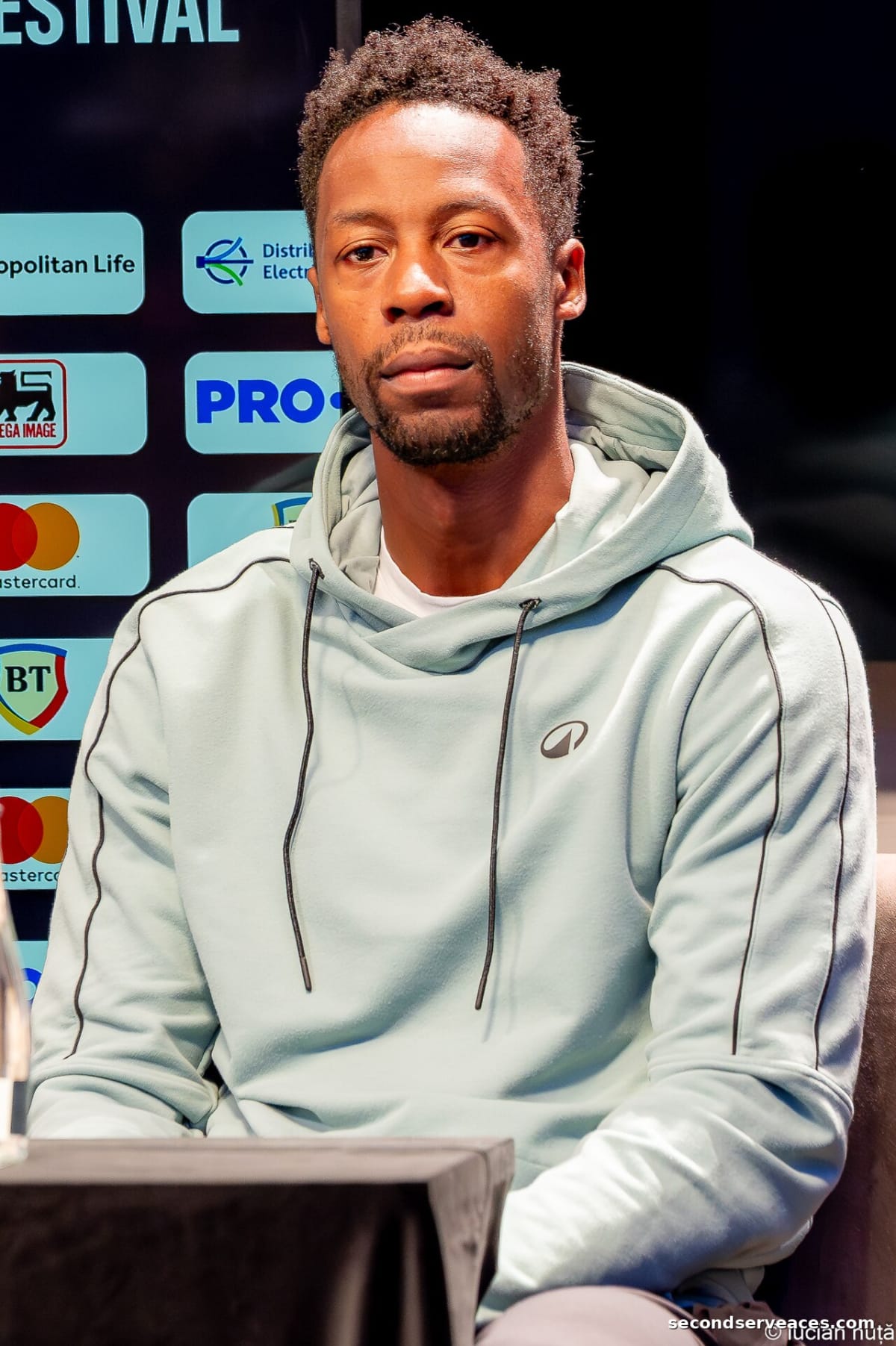
The United States Tennis Association has officially unveiled its wildcard selections for the upcoming hard-court Grand Slam, sparking immediate debate over physical longevity and the strategic distribution of main-draw entries. As the tournament prepares to welcome the world's elite to New York, the wildcard list highlights a stark contrast between celebrated veterans receiving a final opportunity and former champions left to find alternative routes into the draw.
Listen to the Second Serve Podcast
Get our daily AI-synthesized audio briefings and match reviews on the go.
Monfils Prepares for Flushing Meadows Farewell Tour
Gael Monfils has been awarded a coveted main-draw wild card, confirming that the French veteran will make one final appearance at the tournament before concluding his professional career at the end of the season. At 39 years old, Monfils must carefully manage his physical load on the abrasive hard courts of the Billie Jean King National Tennis Center. His highly athletic, defensive style of play requires maximum shock absorption from his footwear, making durability a primary concern over a best-of-five-set format.
Currently positioned at No. 305 in the ATP rankings, Monfils has spent his career relying on sliding mechanics that generate immense kinetic strain on his joints. Transitioning to the North American hard courts demands a precise calibration of movement to prevent premature fatigue. For Monfils, this final New York campaign is as much a test of mechanical preservation as it is a tactical challenge.
The decision to grant Monfils direct entry ensures that fans will witness his signature defensive coverage one last time. While younger American prospects like Jenson Brooksby, Michael Zheng, and Martin Damm continue to develop their physical baselines, the presence of Monfils offers a benchmark of physical resilience. His ability to extend rallies on these medium-fast courts remains an invaluable asset to the tournament's opening-round entertainment value.
Wawrinka Left Out of Main Draw Allocation
In a surprising development, 2016 champion Stan Wawrinka was omitted from the initial main-draw wildcard announcements. The Swiss veteran, renowned for his heavy-ball baseline game and devastating one-handed backhand, has historically excelled on high-rebound hard courts. Without a wildcard pathway, Wawrinka faces a steep climb to secure a spot in the main draw, raising questions about how Grand Slam organizers prioritize historical achievement versus developmental potential.
Wawrinka's absence from the direct wildcard list forces him to rely on late withdrawals or potential entry adjustments. This administrative friction stands in sharp contrast to the women's singles draw, where multi-time Grand Slam champion Venus Williams and former champion Sloane Stephens comfortably secured their main-draw wild cards. The decision highlights the highly competitive nature of the men's wildcard allocation, where physical specifications and long-term viability often clash with past glory.
As the tournament landscape continues to evolve, the exclusion of legendary figures like Wawrinka underscores the shifting priorities of governing bodies. Navigating these entry barriers has become a central point of discussion among active players. Indeed, we previously analyzed similar structural pressures in our coverage of how tennis Grand Slams establish player councils to address entry requirements and financial distribution disputes.
Popyrin Captures Reciprocal Australian Exemption
Australia's Alexei Popyrin has secured direct entry into the main draw via the reciprocal wildcard agreement between the USTA and Tennis Australia. Standing at 1.96 meters, Popyrin possesses the ideal physical specifications for modern hard-court tennis, utilizing a high-velocity first serve to dictate play. This reciprocal pipeline bypasses the physical wear-and-tear of the qualifying rounds, giving the Australian a significant advantage in terms of energy conservation.
Popyrin's technical profile is built around aggressive first-strike tennis, allowing him to keep match times relatively short and minimize physical degradation. On the fast-playing surfaces in New York, his ability to win cheap points on serve will be critical. This strategic entry pathway allows Popyrin to focus entirely on tactical preparation rather than battling through three rounds of qualifying matches.
The contrast between Popyrin's aggressive, vertical game and the counterpunching styles of older competitors creates a compelling dynamic in the draw. With three career titles to his name, the 27-year-old Australian represents the mid-career demographic looking to capitalize on high-value entry opportunities. His presence adds substantial depth to a field that will test the physical durability of every competitor.
Nishikori Targets Qualification Path
Former finalist Kei Nishikori will return to the US Open, but he must navigate the qualifying draw after being awarded a qualifying wild card. For a player who has struggled with extensive physical setbacks, playing three consecutive best-of-three-set matches just to reach the main draw represents a severe physical hurdle. Nishikori's clean timing and exceptional return-of-serve metrics will be tested against highly motivated opponents operating on thin margins.
The qualifying tournament presents a relentless schedule that offers little recovery time, making physical durability the ultimate currency. Nishikori must rely on highly efficient footwork and early break points to minimize his time spent on court. Any prolonged three-set battles in the qualifying rounds could severely compromise his physical readiness should he advance to the main draw.
Nishikori's path through qualifying will also feature hungry younger competitors, including rising talents like Martin Damm and Michael Zheng. This mixture of established veteran class and raw physical power makes the qualifying tournament one of the most intriguing phases of the event. For Nishikori, the road back to the main stage of a Grand Slam begins with a test of pure physical endurance.
Rivalry Matchup & Player Profiles
To understand the tactical landscape of the tournament, we can examine the physical specifications and career metrics of two prominent wildcard figures: Gael Monfils and Alexei Popyrin.
| Metric | Gael Monfils | Alexei Popyrin |
|---|---|---|
| Rank | No. 305 | No. 128 |
| Age | 39 | 27 |
| Country | France | Australia |
| Height | 1.93 m (6 ft 4 in) | 1.96 m (6 ft 5 in) |
| Handedness | Right-handed | Right-handed |
| Play Style | Counterpuncher / Defensive baseliner | Aggressive baseliner |
| Career Titles | 13 | 3 |
Gael Monfils currently holds a 1-0 lead in his head-to-head matchup against Alexei Popyrin. Their sole encounter occurred at the Cincinnati Masters, where Monfils secured a straight-sets victory of 7-5, 6-3. In that tactical clash, Monfils demonstrated superior defensive resilience, converting 3 of 5 break points while winning 78% of his first-serve points to neutralize Popyrin's aggressive baseline attacks.
While Popyrin possesses a height advantage and a more aggressive court position, Monfils' ability to absorb pace and force unforced errors proved to be the deciding factor in their previous meeting. Should their paths cross in New York, the physical toll of a five-set format will heavily test whether Monfils' defensive movement can hold up against Popyrin's high-velocity groundstrokes.
What Novak Djokovic Plays With
Head Speed Pro
Luxilon ALU Power 125
Head Prime Tour (12-Pack)
Asics Court FF 3 Novak
Analyze Gael Monfils vs. Alexei Popyrin
Predict tactical adjustments, momentum swings, and serve strategy options for this match-up using our AI simulator.
The Aces Tactical Panel
This report was curated and edited by Bhaskar Goel. Tactical analysis and technical insights were provided by our specialized panel of expert correspondents.
Julian Price
Senior Tactical Correspondent
Stuffy, pedantic British academic and historian specializing in match momentum and historical context.
Elena Cruz
Director of Analytical Research
Data scientist specializing in court surface physics and movement patterns.
Bhaskar
The Editor & Fan
Passionate tennis player and site editor bringing everyday amateur insights and relatable fan commentary.
Arthur Vance
Senior Existential Analyst
Deep, eccentric, and DFW-inspired. Models court metaphysics, kinetic beauty, and player psychology.
Leo Sterling
High-Performance Consultant
Hard-nosed ex-trainer from Melbourne with a no-nonsense view on tour fitness.
Related Reports
Quick Answers
Why did Gael Monfils receive a US Open main-draw wild card?+
Gael Monfils was awarded a main-draw wild card ahead of his final appearance at Flushing Meadows before his planned retirement at the end of the year.
How did Alexei Popyrin earn his spot in the US Open main draw?+
Alexei Popyrin secured his main-draw entry through the reciprocal wildcard agreement between the USTA and Tennis Australia.
Did Stan Wawrinka receive a main-draw wild card for the US Open?+
No, the 2016 champion Stan Wawrinka was omitted from the initial list of main-draw wild cards announced by the tournament.