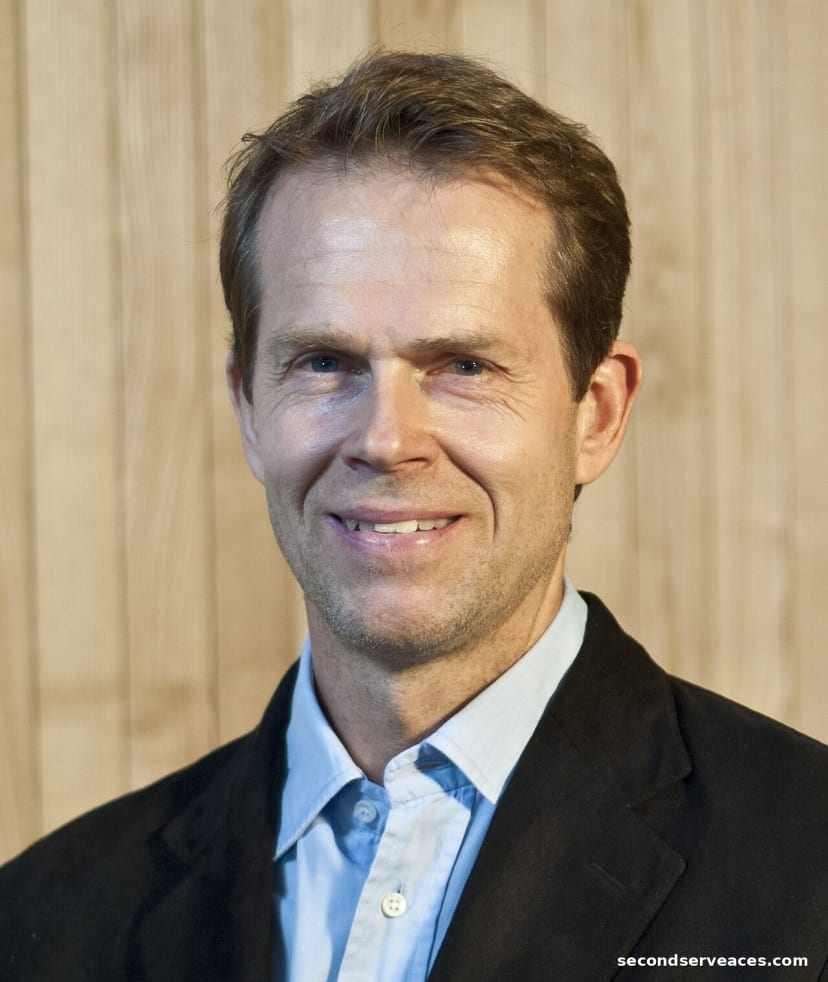
There is a specific, melancholy physics to the late-career arc of a tennis player. It is not merely the gradual evaporation of ATP rankings points; it is the slow, inexorable friction between the muscle-memory of a champion and the betrayal of time itself. Stan Wawrinka, a man whose backhand has historically operated with the tectonic force of a closing vault door, now finds himself at the precipice of his professional departure.
Listen to the Second Serve Podcast
Get our daily AI-synthesized audio briefings and match reviews on the go.
The Stoic Reality of the 2026 Horizon
Wawrinka has publicly acknowledged that he will retire at the end of the 2026 season. This is not a decision made in haste but rather a controlled descent—a closing of the curtain for a career defined by its defiance of the established "Big Three" hierarchy. The three-time Grand Slam champion, currently holding the 106th position in the global rankings, is maneuvering through the final segments of a long, arduous journey that has taken him from the summit of the sport to the current, quieter peripheries.
The upcoming appearance at Roland-Garros serves as the centerpiece of this twilight phase. For a player who once mastered the heavy, slow-drying red clay of Paris with such violent elegance, returning to the site of his 2015 triumph carries the weight of a final, necessary confrontation with the past. It is a moment where the stadium itself becomes a mirror, reflecting both the glory that once was and the current reality of a professional athlete navigating the inevitable ebb of peak performance.
His current trajectory, however, is undeniably difficult. With six consecutive losses mounting as the primary ballast for his upcoming schedule, the momentum is undeniably against him. The sport, as it often does, offers no sentimentality for the legends it honors; it demands the same kinetic efficiency from a veteran as it does from an ascending teenager, regardless of the trophies residing in the player’s personal cabinet.
The Friction of Recent Form
The statistical narrative of Wawrinka’s current form is stark. The recent first-round exit at the Aix-en-Provence Challenger at the hands of Sebastian Ofner stands as a poignant reminder of the volatility currently plaguing his game. In a sport where confidence is a fragile, self-reinforcing feedback loop, these six losses have created a vacuum that is difficult to refill with the sheer force of will that once defined his play.
Tactically, the challenge for Wawrinka is maintaining the heavy topspin and depth required to compete on clay when the explosive first step—the foundational engine of his movement—lacks its former immediacy. The loss to Ofner was a microcosm of this struggle: a mismatch of timing and reactive speed that left the veteran unable to impose his usual, brutal architecture on the rally.
Yet, the calendar remains, and the sport persists. Wawrinka will enter the main draw of the Geneva Open via a wildcard, a decision that speaks to the respect he commands within the tour’s infrastructure. It is a reprieve, a chance to find rhythm before the bright, unforgiving lights of Paris descend, where he must somehow reconcile his championship history with the harsh current of his six-match winless streak.
What Carlos Alcaraz Plays With
Babolat Pure Aero 98
Babolat RPM Blast 1.30
Nike Vapor Pro 2
Analyze Stan Wawrinka vs. Sebastian Ofner
Predict tactical adjustments, momentum swings, and serve strategy options for this match-up using our AI simulator.
The Aces Tactical Panel
This report was curated and edited by Bhaskar Goel. Tactical analysis and technical insights were provided by our specialized panel of expert correspondents.
Julian Price
Senior Tactical Correspondent
Stuffy, pedantic British academic and historian specializing in match momentum and historical context.
Elena Cruz
Director of Analytical Research
Data scientist specializing in court surface physics and movement patterns.
Bhaskar
The Editor & Fan
Passionate tennis player and site editor bringing everyday amateur insights and relatable fan commentary.
Arthur Vance
Senior Existential Analyst
Deep, eccentric, and DFW-inspired. Models court metaphysics, kinetic beauty, and player psychology.
Leo Sterling
High-Performance Consultant
Hard-nosed ex-trainer from Melbourne with a no-nonsense view on tour fitness.