The Physical Toll of the Tour
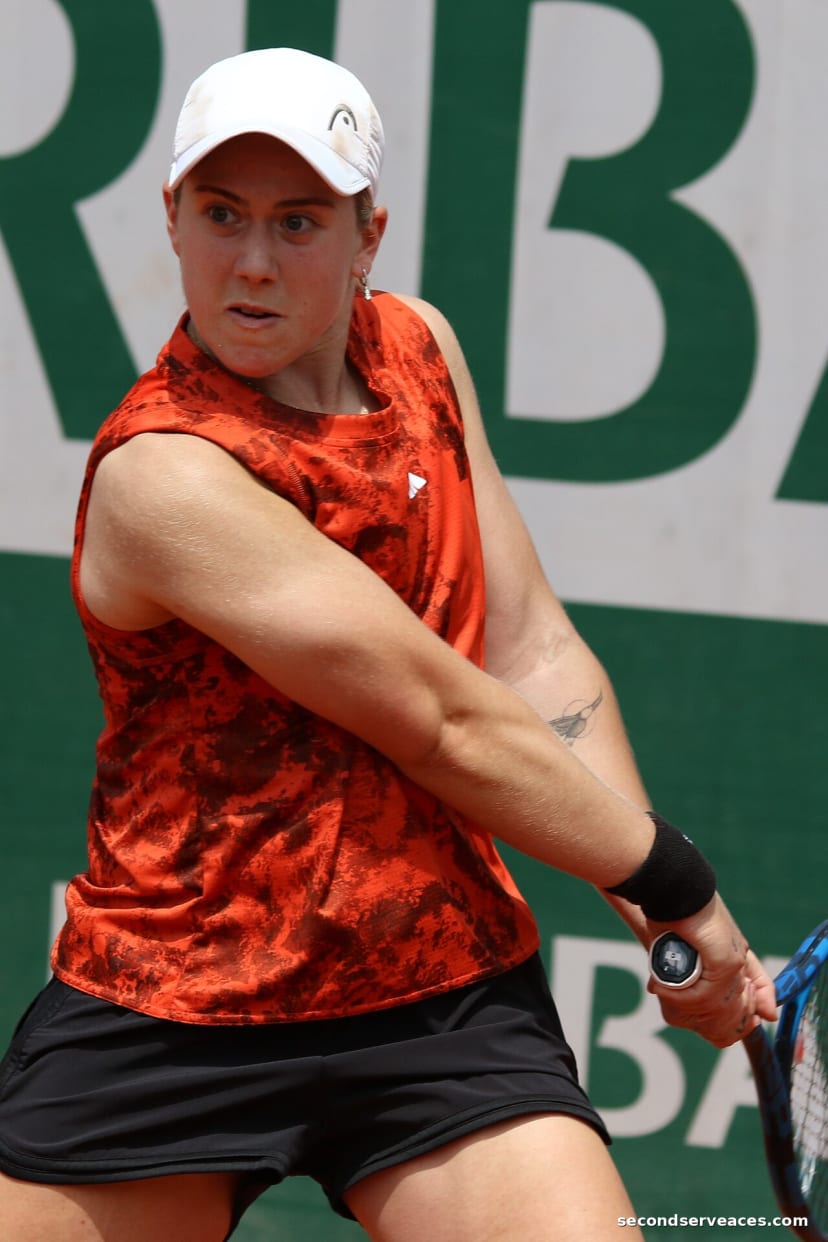
Tennis is a brutal, unforgiving grind where the body often dictates the ceiling of your potential. Sonay Kartal’s decision to withdraw from Great Britain’s Billie Jean King Cup qualifier against Australia, slated for April 10-11 in Melbourne, is a sobering reminder of that reality. A persistent lower back injury—a malady that has haunted the professional circuit for decades—has forced her out, echoing the physical vulnerability she showed when retiring during her fourth-round encounter with Elena Rybakina at Indian Wells last month.
Listen to the Second Serve Podcast
Get our daily AI-synthesized audio briefings and match reviews on the go.
For a player looking to bridge the gap between challenger-level consistency and tour-level durability, this is a significant setback. The BJK Cup is a crucible, a venue where the noise of a team environment can mask the fragility of an athlete’s mechanics.
The Shift in British Prospects
- Harriet Dart: Now the highest-ranked singles player for the British squad at world number 181.
- The Core: The burden of responsibility now falls on a unit consisting of Katie Swan, Mika Stojsavljevic, and Jodie Burrage.
- Tournament Context: The tie will be contested on hard courts in Melbourne, an unforgiving surface that magnifies any mechanical inefficiency.
The Tactical Breakdown
The modern game is won in the margins of recovery and the geometry of court coverage. When a player battles a lower back injury, the kinetic chain—the engine of the tennis serve—is the first casualty. A compromised back restricts rotation, forcing the player to compensate by 'arming' the ball or failing to achieve necessary clearance over the net.
In a hard-court environment like Melbourne, where the ball skids and demands quick transitions, a player without full torso rotation becomes a sitting target. Opponents will immediately look to exploit this by pushing the ball wide, forcing the injured player to defend in the corners where the lateral pivot puts the most strain on the lumbar region. Without the ability to load effectively on the back leg, the explosive serve-plus-one pattern vanishes, forcing the player into high-margin, defensive rallies they aren't equipped to win.
The Bigger Picture
Tennis history is littered with brilliant talents whose trajectories were hampered not by a lack of skill, but by the relentless geometry of injury. The absence of stalwarts in the British camp—a list that historically includes names like Emma Raducanu and Katie Boulter—creates a 'next person up' scenario. For emerging players like Stojsavljevic, these moments are defining. They are where the mental grind of professional sports meets the harsh glare of the public eye. Without the depth that a full-strength team provides, the psychological pressure shifts, and the strategy becomes about pure grit rather than tactical superiority.
Essential Matchday Add-Ons
Tournament-tested accessories and high-frequency consumables every competitive player keeps in their bag.
Tourna Grip Original Dry Feel Overgrip (10-Pack)
4.8 ★ (12,000+ reviews)
The gold standard for sweaty hands. Proprietary dry feel absorbs moisture better as play intensifies.
Luxilon ALU Power 125 Silver String Set
4.9 ★ (3,500+ reviews)
Unrivaled control and spin potential used by over 50% of the ATP Top 100 players.
Babolat Custom Damp Vibration Dampener (2-Pack)
4.7 ★ (4,200+ reviews)
Customizable dampening with removable central O-ring for fine-tuning court feedback and sound.
Penn Championship Extra Duty Tennis Balls (4-Can Pack)
4.7 ★ (8,900+ reviews)
Official ball of USTA League Tennis with extra-duty felt designed for abrasive hard courts.
Analyze Sonay Kartal vs. Emma Raducanu
Predict tactical adjustments, momentum swings, and serve strategy options for this match-up using our AI simulator.
The Aces Tactical Panel
This report was curated and edited by Bhaskar Goel. Tactical analysis and technical insights were provided by our specialized panel of expert correspondents.
Julian Price
Senior Tactical Correspondent
Stuffy, pedantic British academic and historian specializing in match momentum and historical context.
Elena Cruz
Director of Analytical Research
Data scientist specializing in court surface physics and movement patterns.
Bhaskar
The Editor & Fan
Passionate tennis player and site editor bringing everyday amateur insights and relatable fan commentary.
Arthur Vance
Senior Existential Analyst
Deep, eccentric, and DFW-inspired. Models court metaphysics, kinetic beauty, and player psychology.
Leo Sterling
High-Performance Consultant
Hard-nosed ex-trainer from Melbourne with a no-nonsense view on tour fitness.