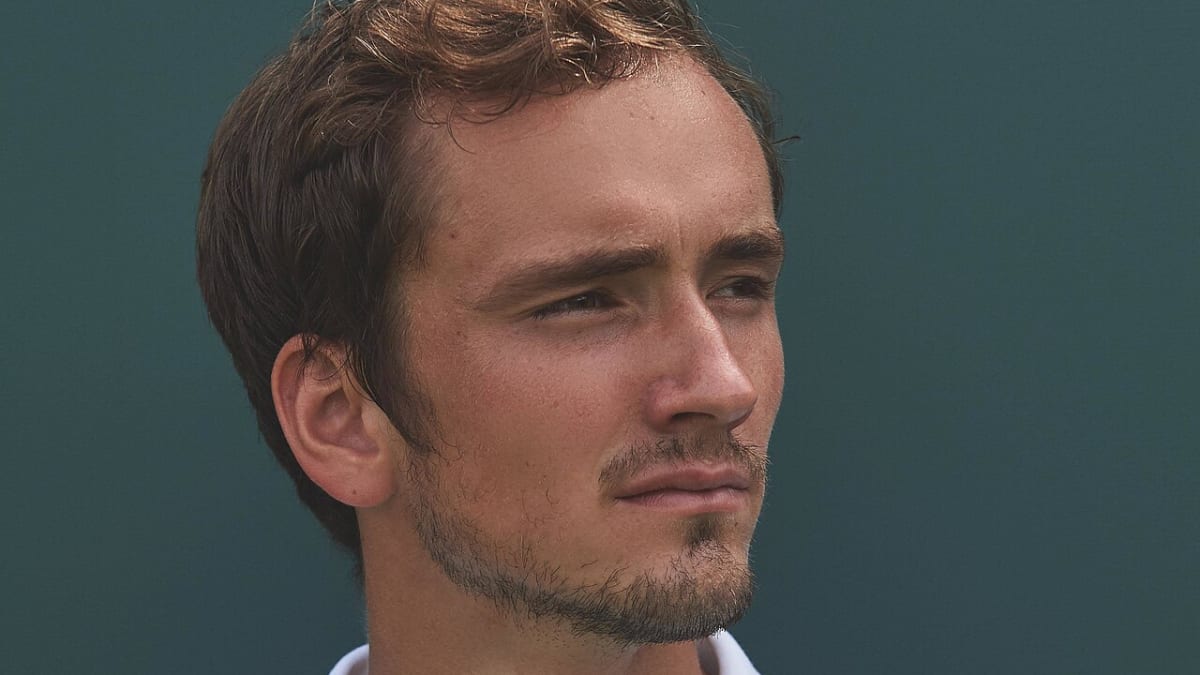
The Red Dirt Meltdown on Court Philippe-Chatrier
To those of us who still remember the pristine white attire of the 1970s and the exquisite touch of Ken Rosewall, the modern baseline grind can occasionally feel like a chore. Yet, even the most pedantic traditionalist could not look away from the dramatic spectacle that unfolded on the Parisian clay, where Daniil Medvedev was defeated in the first round of the French Open by Adam Walton with a score of 2-6, 6-1, 1-6, 6-1, 4-6. The gangly Muscovite, affectionately dubbed "The Octopus" for his seemingly infinite reach, looked thoroughly out of sorts on the slow, unforgiving dirt of the official Roland-Garros tournament.
It was a match characterized by wild swings of match momentum, a far cry from the steady, metronomic clay-court rallies of Björn Borg or Guillermo Vilas. Medvedev’s flat, penetrating groundstrokes, which serve him so splendidly on rapid hard courts, were repeatedly swallowed by the damp clay, allowing Walton to dictate play with heavy topspin. The final set was a masterclass in tension, culminating in a 4-6 decider that left the former US Open champion shaking his head in sheer exasperation as he exited the court.
For Medvedev, this early capitulation is a bitter pill to swallow, particularly given his recent strides on the dirt. One cannot help but lament the lack of classic variety in his clay-court repertoire—where are the delicate drop volleys and the slice backhands that once defined the European spring? Instead, we witnessed a stubborn baseline duel that ultimately favored the Australian underdog, leaving Medvedev to pack his bags and contemplate a swift transition to his preferred green pastures.
Listen to the Second Serve Podcast
Get our daily AI-synthesized audio briefings and match reviews on the go.
Querrey's Bold Proclamation for the Impending Lawn Campaign
While the clay-court purists dissect the wreckage of Medvedev’s Parisian campaign, former Wimbledon semifinalist Sam Querrey remains remarkably bullish on the Russian's prospects. Speaking on the 'Nothing Major' podcast, the American serve-and-volley exponent made a rather audacious prediction: Medvedev will win a warm-up tournament on grass and reach the semi-finals at Wimbledon. It is a projection that may raise a few eyebrows among the stuffier members of the All England Club, yet it is grounded in solid historical precedent.
Lest we forget, the unique low-bouncing nature of the lawn tennis court is highly conducive to Medvedev's flat-ball striking. In fact, Daniil Medvedev won his only grass-court title at Mallorca in 2021, where he defeated Sam Querrey himself in the final. That particular encounter demonstrated how effectively the Russian can neutralize big-serving opponents, redirecting the pace with the sort of defensive wizardry that would make even the great Arthur Ashe applaud.
The transition from the grueling clay to the slippery lawns of SW19 requires a complete recalibration of footwork and tactical intent. On grass, the premium is placed on first-strike tennis and low slice backhands, elements that Medvedev handles with far more aplomb than the high-kicking topspin of the red dirt. If Querrey's forecast holds true, the tennis world may well witness a triumphant resurgence from the world's most eccentric baseliner.
The Impending Rise of Learner Tien on the Green Lawns
Medvedev is not the only player drawing intrigue as the tour pivots to the grass-court season. Former American stalwart Steve Johnson has thrown his own hat into the predictive ring, forecasting a meteoric rise for the young American prospect, Learner Tien. Johnson boldly predicted that Learner Tien will reach the top 15 of the ATP rankings after the grass-court season concludes, a testament to the youngster's immense potential.
Tien’s highly anticipated grass-court season is scheduled to start at the Halle Open on June 15th, a tournament famed for its pristine grass courts and stellar entry lists. It is a formidable testing ground for any young player, reminiscent of the classic tune-up events of the 1970s where legends like Jimmy Connors and John McEnroe honed their lawn tennis craft. To make a deep run in Halle requires not just technical prowess, but an innate understanding of the court's unique geometry.
The American contingent has long yearned for a true grass-court champion since the days of Pete Sampras and Andy Roddick. While big-serving giants like John Isner and Ben Shelton have historically thrived on the turf, Tien represents a different breed of player—one reliant on exceptional timing and court intelligence. Whether he can fulfill Johnson's lofty top-15 prediction remains to be seen, but his campaign in Halle will undoubtedly be watched with keen interest.
Sinner and the Modern Grass Hierarchy
Naturally, any discussion of the grass-court hierarchy must also account for the formidable block of European talent currently dominating the upper echelons of the sport. Players like Hubert Hurkacz, Alexander Bublik, and the mercurial Jannik Sinner will all be vying for the prestigious Challenge Cup at Wimbledon. Sinner, in particular, remains a fascinating study in athletic adaptation, as we observed during Jannik Sinner's recent Parisian struggles.
The modern grass-court game has evolved significantly from the classic serve-and-volley era, with baseline exchanges now being the norm rather than the exception. Players like Bublik bring an unpredictable, almost exhibition-like flair to the turf, while Hurkacz possesses the classic big-serve-plus-one formula that is so devastatingly effective on a fast court. For Medvedev to navigate this minefield and reach the semifinals, as Querrey predicts, he will need to find his absolute best rhythm from the very first ball.
Ultimately, the beauty of the lawn tennis season lies in its brevity and its sheer unpredictability. As the players exchange their clay-stained socks for pristine white attire, the slate is wiped clean. Whether Medvedev can banish the memory of his first-round exit in Paris and conquer the lawns of Europe, or whether a new champion like Tien or even the grass-court specialist Tim van Rijthoven will steal the spotlight, remains one of the most compelling narratives of this grand old sport.
What Daniil Medvedev Plays With
Tecnifibre T-Fight 305 Isoflex
Tecnifibre Razor Soft
Tecnifibre ATP Players Overgrip
Analyze Daniil Medvedev vs. Adam Walton
Predict tactical adjustments, momentum swings, and serve strategy options for this match-up using our AI simulator.
The Aces Tactical Panel
This report was curated and edited by Bhaskar Goel. Tactical analysis and technical insights were provided by our specialized panel of expert correspondents.
Julian Price
Senior Tactical Correspondent
Stuffy, pedantic British academic and historian specializing in match momentum and historical context.
Elena Cruz
Director of Analytical Research
Data scientist specializing in court surface physics and movement patterns.
Bhaskar
The Editor & Fan
Passionate tennis player and site editor bringing everyday amateur insights and relatable fan commentary.
Arthur Vance
Senior Existential Analyst
Deep, eccentric, and DFW-inspired. Models court metaphysics, kinetic beauty, and player psychology.
Leo Sterling
High-Performance Consultant
Hard-nosed ex-trainer from Melbourne with a no-nonsense view on tour fitness.
Related Reports


Quick Answers
What was the score of Daniil Medvedev's first-round loss at the French Open?+
Daniil Medvedev was defeated by Adam Walton in the first round with a score of 2-6, 6-1, 1-6, 6-1, 4-6.
Where did Daniil Medvedev win his only grass-court title?+
Medvedev won his sole grass-court title at Mallorca in 2021, where he defeated Sam Querrey in the final.
When and where is Learner Tien scheduled to begin his grass-court season?+
Learner Tien is scheduled to start his grass-court season at the Halle Open on June 15th.