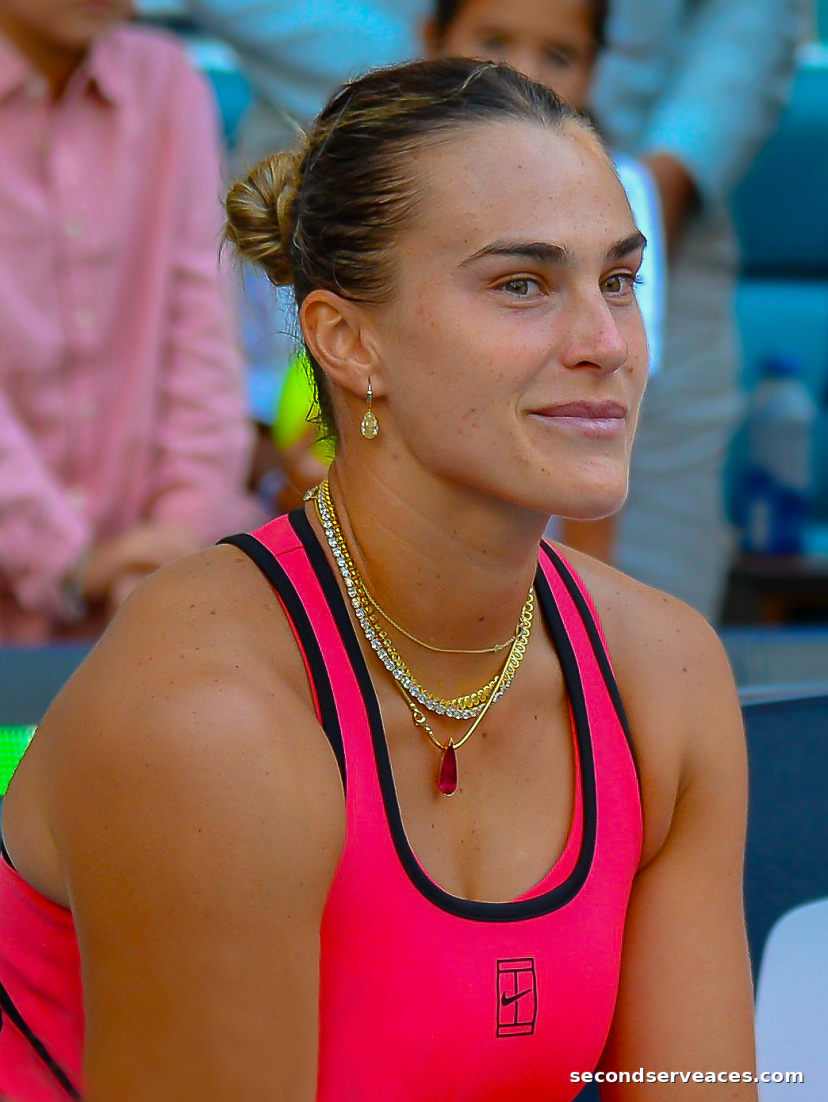
There is a specific, almost suffocating geometry to being down a set and a break in professional tennis. The court, which ordinarily measures a standard 78 by 27 feet, begins to feel conceptually vast, as though the baseline has retreated into a different zip code. The net—nominally three feet high at the center strap—suddenly looms like a fortress wall. This is the psychic abyss into which World No. 1 Aryna Sabalenka stared down during the final of Indian Wells. And from that very abyss, she engineered a comeback so kinesthetically violent, and emotionally resonant, that she herself admitted she will remember the title for the rest of her life.
Listen to the Second Serve Podcast
Get our daily AI-synthesized audio briefings and match reviews on the go.
To win your first Indian Wells title is, in itself, a monumental achievement. The tournament, often referred to as the 'fifth Grand Slam,' is played in the heavy, dry desert air of California's Coachella Valley. The hard courts here possess a high-friction grit that grips the ball, neutralizing flat hitters and rewarding those who can generate absurd levels of rotational torque. To win this tournament when you are a set and a break down—staring into the barrel of impending defeat—is not merely a test of technique, but a referendum on one's competitive soul.
The Tactical Breakdown
When analyzing a player of Sabalenka's caliber, one must first confront the sheer physics of her game. She does not play tennis so much as she subjects the tennis ball to extreme blunt-force trauma. However, brute force is rarely enough to alter match momentum when the opponent has firmly entrenched themselves with a commanding lead.
Historically, a player facing a set-and-a-break deficit will either capitulate to the mathematical probability of loss, or they will begin to wildly over-hit in a panicked attempt to shorten points. Sabalenka, however, chose a third, far more terrifying option: she recalibrated her kinetic chain. The mechanics of her recovery were rooted in the following tactical shifts:
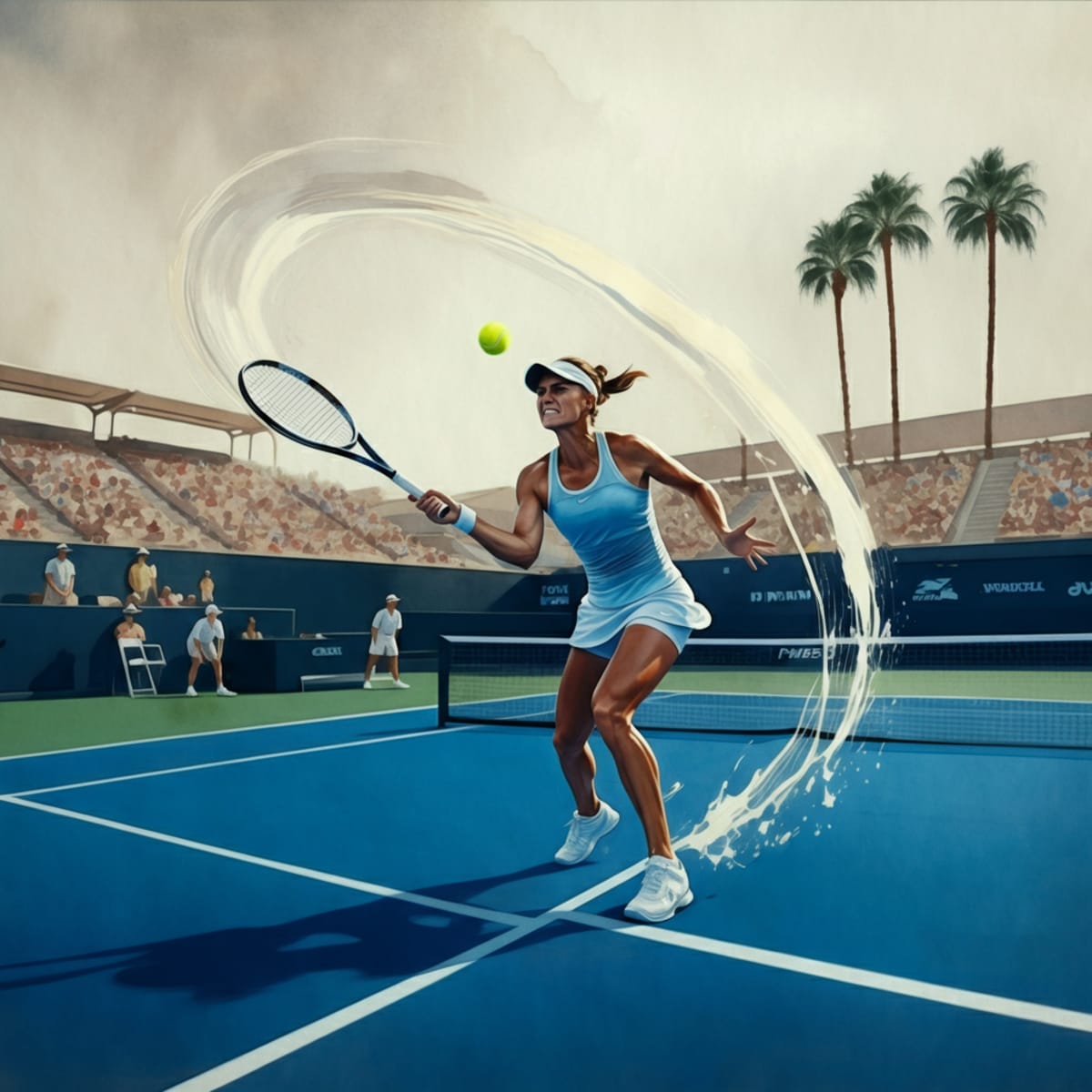
- The Manipulation of Topspin: Indian Wells demands margin. Recognizing that her flatter, piercing drives were yielding unforced errors, Sabalenka theoretically adjusted her racket face at the point of contact, rolling over the ball to inject a heavier, looping topspin. This allowed her to clear the net with a higher parabolic arc while ensuring the ball would still violently kick up off the high-friction hard court, pushing her opponent behind the baseline.
- Break Point Mechanics: Down a break, the return game ceases to be about starting the point and becomes an exercise in sheer survival. Sabalenka's ability to compress her low-center-of-gravity split step allowed her to cut off angles early. By attacking the second serve with aggressive court geometry, she forced a regression in her opponent's rally tolerance.
- Redefining the Baseline: Instead of retreating, Sabalenka hugged the baseline. Taking the ball on the rise fundamentally steals time from the other side of the net. It is a high-risk, high-reward strategy that relies entirely on a player's hand-eye coordination and supreme self-belief.
Tactically, the World No. 1 refused to be dictated to. She weaponized her own crisis, turning the deficit into an excuse to swing with the kind of unburdened freedom that makes her practically unplayable.
The Bigger Picture
It was not so long ago that Aryna Sabalenka's internal monologue seemed to be her own worst enemy. Tennis historians and armchair psychologists alike have thoroughly documented her past struggles with the yips—the double faults that used to leak from her racket in high-pressure moments like water from a cracked hull. That version of Sabalenka is dead and buried, largely replaced by the monolithic competitor we see today.
This inaugural Indian Wells title acts as a critical inflection point in her season and her broader career trajectory. Consider the historical context of the World No. 1 ranking. To hold the top spot is to wear a target on your back; every opponent steps onto the court with nothing to lose, swinging freely against the undisputed queen of the tour. Sabalenka has not merely survived this burden; she has internalized it. By rallying from a set and a break down, she sent a chilling message to the locker room: Even when you have me beaten, you do not have me beaten.
The implications for the rest of the season are profound:
- Surface Versatility: Having conquered the uniquely slow, gritty hard courts of the California desert, Sabalenka proves that her power game is not reliant solely on fast, indoor conditions or low-bouncing surfaces. She can grind through the friction.
- The Intimidation Factor: Comebacks of this magnitude create a residual aura. The next time a player goes up a break against Sabalenka in a major semi-final, the ghost of this Indian Wells final will be standing right there beside them on the baseline, whispering doubts.
"I will remember this title for the rest of my life," Sabalenka noted in the aftermath of the victory. And honestly, so will we. It was a masterclass in the refusal to yield—a symphony of topspin, torque, and the beautiful, brutal mathematics of the comeback.
What Aryna Sabalenka Plays With
Wilson Blade 98 v9 (16x19)
Luxilon ALU Power 125
Simulate Aryna Sabalenka Match Scenarios
Simulate high-pressure scenarios, score leverage points, and tactical responses for ATP and WTA players.
The Aces Tactical Panel
This report was curated and edited by Bhaskar Goel. Tactical analysis and technical insights were provided by our specialized panel of expert correspondents.
Julian Price
Senior Tactical Correspondent
Stuffy, pedantic British academic and historian specializing in match momentum and historical context.
Elena Cruz
Director of Analytical Research
Data scientist specializing in court surface physics and movement patterns.
Bhaskar
The Editor & Fan
Passionate tennis player and site editor bringing everyday amateur insights and relatable fan commentary.
Arthur Vance
Senior Existential Analyst
Deep, eccentric, and DFW-inspired. Models court metaphysics, kinetic beauty, and player psychology.
Leo Sterling
High-Performance Consultant
Hard-nosed ex-trainer from Melbourne with a no-nonsense view on tour fitness.