A Royal Upset on the Madrid Red Clay
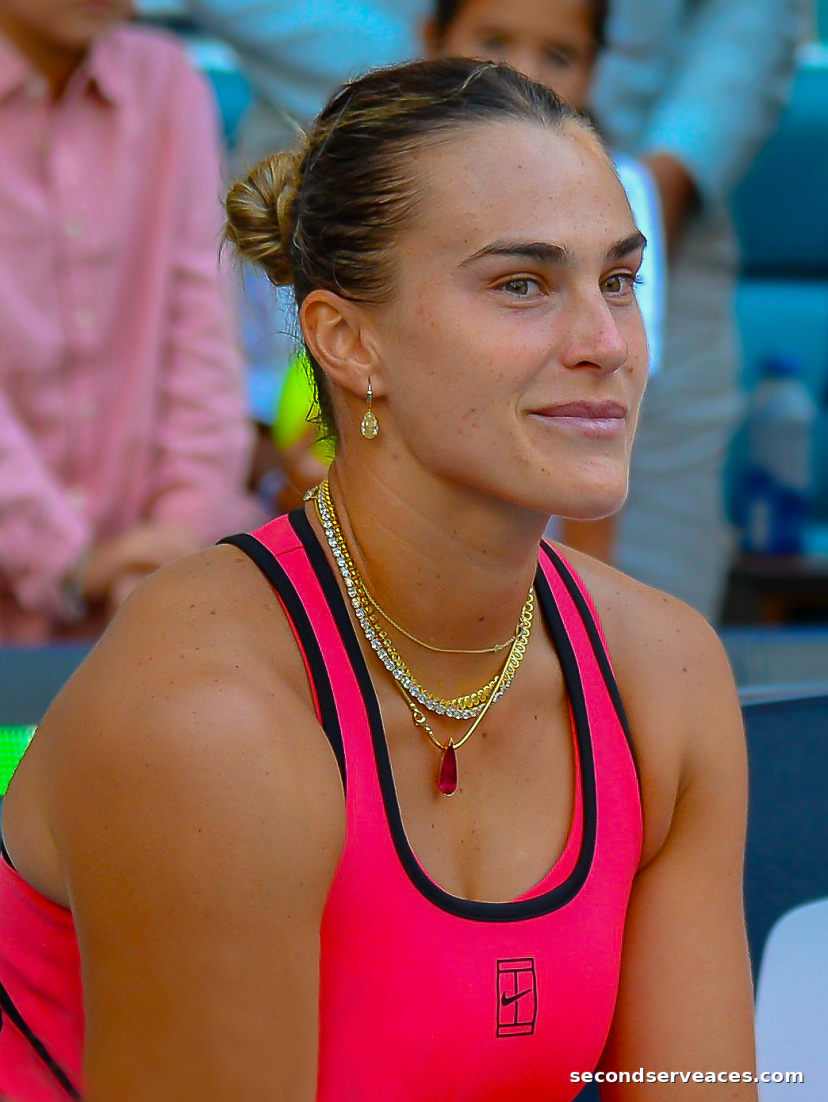
The terracotta dust of the Madrid Open has seen its fair share of legends, but rarely does the script flip with such velocity. Hailey Baptiste, displaying the kind of fearless poise usually reserved for those with a trophy cabinet already overflowing, dismantled the momentum of the world number one. Aryna Sabalenka arrived in the Spanish capital riding a formidable 15-match winning streak, a juggernaut of power that seemed destined to steamroll her way through the quarter-finals.
Listen to the Second Serve Podcast
Get our daily AI-synthesized audio briefings and match reviews on the go.
Instead, the arena bore witness to an American arrival. Baptiste enters the history books as only the second woman from the United States to best a reigning world number one at this prestigious event. The first? None other than Serena Williams, who accomplished the feat back in 2012. It was a performance that echoed through the stands, reminding us that in the WTA, the hierarchy is only ever as strong as the next baseline exchange.
Tactically, Baptiste dictated by refusing to let Sabalenka find her rhythm on the forehand wing. By electing to hit with heavy, dipping topspin cross-court into the Sabalenka backhand, she forced the top seed to reach low and early, preventing the clean, flat strikes that fueled that 15-match tear. It was a masterclass in controlled aggression, turning a defensive court into an offensive launchpad.
The Architecture of an Upset
Why did the favorite falter? The answer lies in the technical breakdown of the match points that defined the latter stages. Where Sabalenka usually leans on her serve to bail her out of trouble, Baptiste stood inside the baseline on second-serve returns, effectively shortening the court and robbing the top seed of the time needed to reset her feet. The result was a sequence of forced errors that swung the momentum permanently away from the top-ranked favorite.
The resilience Baptiste displayed was not merely about hitting winners, but about maintaining composure under the heavy pressure of a match-point scenario against the tour’s most ferocious hitter. She traded the sheer power of her opponent for tactical patience, waiting for the short ball before pulling the trigger down the line. It was a cerebral victory that suggests the young American has the temperament to handle the altitude of professional tennis’s biggest stages.
Her movement was equally critical. By opting for deep, lunging recoveries, she negated the usual court-covering advantage Sabalenka holds. By the middle of the second set, it was clear that the top seed was becoming frustrated by the sheer volume of balls coming back over the net. Every time Sabalenka tried to flatten out her groundstrokes to end the point, Baptiste was there to absorb the pace and redirect it with surgical intent.
The Rising Stars of the Iberian Spring
As the draw begins to thin, the youth movement in Madrid is impossible to ignore. Alongside Baptiste’s heroics, we witnessed the ever-impressive Mirra Andreeva dispatching Leylah Fernandez, signaling a shift in the guard that would have kept even the most seasoned tennis historian alert. The contrast is stark; while the veterans battle for every inch, this new generation is playing with a freedom that is as refreshing as a cool breeze on a humid Madrid afternoon.
History provides a fascinating lens here. We must recall that Andreeva previously bested Baptiste in the third round of Wimbledon 2025, handing her a 6-1, 6-3 defeat. That loss serves as a vital marker for Baptiste’s development. The fact that she could pivot from such a stinging defeat to upending the current world number one on clay—a surface that demands maximum physical exertion—speaks volumes about her dedication and the quality of her training regime.
With stars like Jessica Pegula, Madison Keys, and Coco Gauff also navigating this competitive circuit, the narrative of American women's tennis is clearly entering a new, vibrant chapter. The dust in Madrid may be settling, but the echoes of Baptiste's victory are only just beginning to reverberate.
A Legacy of American Brilliance in Madrid
It is worth noting the unique atmosphere that Madrid provides. Unlike the traditional circuits, the Spanish clay brings out a distinct flair in players who can balance power with the nuances of sliding and court craft. Baptiste joins a lineage of American powerhouses who have graced these courts, including Victoria Azarenka and the aforementioned Serena Williams, each leaving their mark on this red-clay fortress.
To defeat a world number one is to announce one's candidacy for the major titles. Baptiste did not just win; she commanded the baseline and dictated the terms of engagement. The tennis world will be watching her next steps with bated breath, as consistency is now the only barrier between her and a consistent stay in the top echelons of the WTA rankings.
As we turn our gaze toward the upcoming fixtures, one thing remains certain: the unpredictability of this sport is its greatest asset. Whether it is the tactical guile of a veteran or the untamed ambition of a breakthrough star, Madrid has proven once again that every point is an opportunity to rewrite the history books. Keep your eyes on the court, for the next chapter is already being drafted.
What Aryna Sabalenka Plays With
Wilson Blade 98 v9 (16x19)
Luxilon ALU Power 125
Analyze Hailey Baptiste vs. Aryna Sabalenka
Predict tactical adjustments, momentum swings, and serve strategy options for this match-up using our AI simulator.
The Aces Tactical Panel
This report was curated and edited by Bhaskar Goel. Tactical analysis and technical insights were provided by our specialized panel of expert correspondents.
Julian Price
Senior Tactical Correspondent
Stuffy, pedantic British academic and historian specializing in match momentum and historical context.
Elena Cruz
Director of Analytical Research
Data scientist specializing in court surface physics and movement patterns.
Bhaskar
The Editor & Fan
Passionate tennis player and site editor bringing everyday amateur insights and relatable fan commentary.
Arthur Vance
Senior Existential Analyst
Deep, eccentric, and DFW-inspired. Models court metaphysics, kinetic beauty, and player psychology.
Leo Sterling
High-Performance Consultant
Hard-nosed ex-trainer from Melbourne with a no-nonsense view on tour fitness.