A Rare Convergence Under the Lights
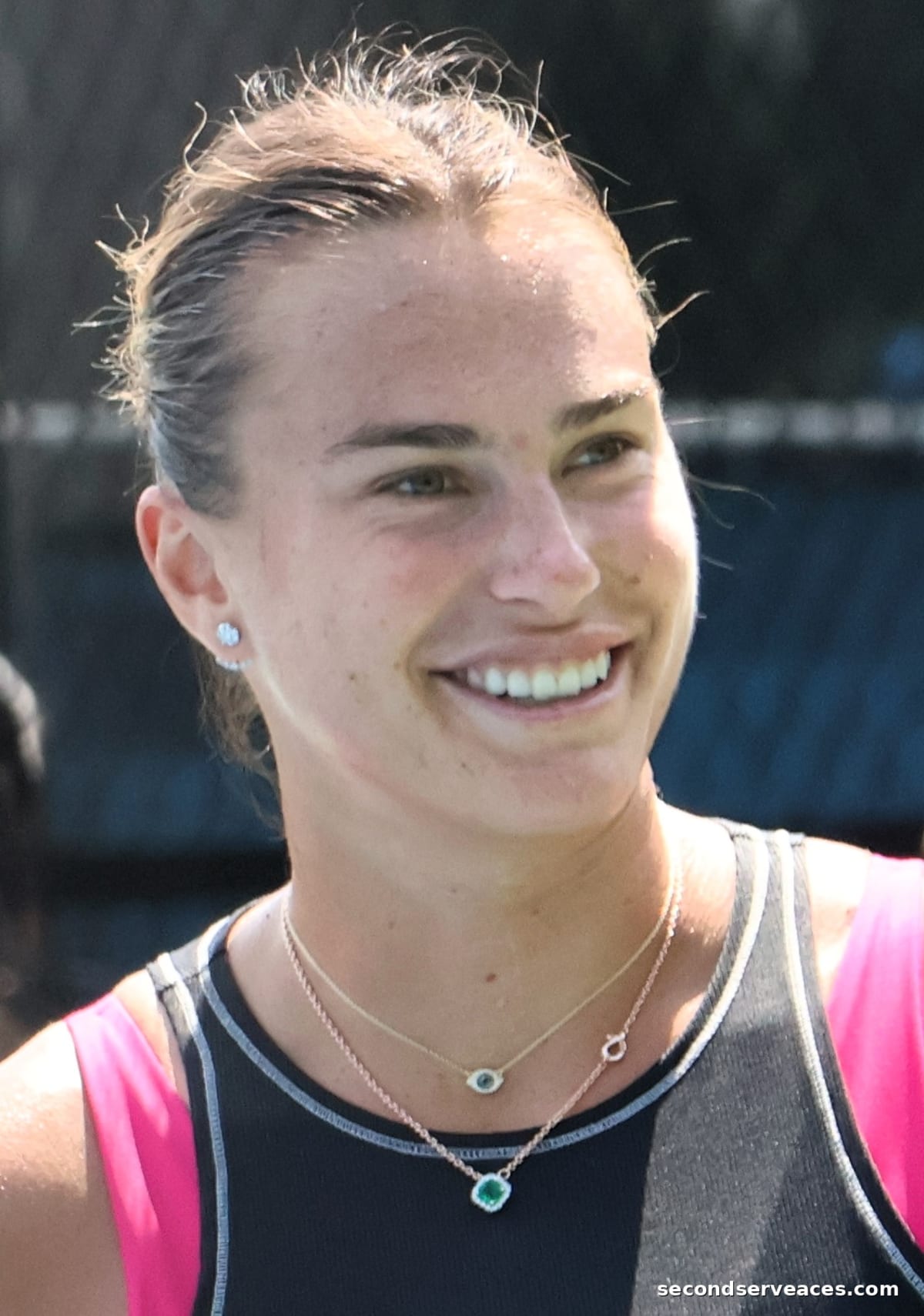
There is a specific, liminal quality to the Roland-Garros night session. It is a space where the heavy, ochre dust of the day settles into a cooler, more clinical atmosphere. When Aryna Sabalenka and Naomi Osaka walk onto the court at 8:15 p.m. local time, they will be doing more than merely competing for a spot in the next bracket; they will be participating in an institutional milestone. This match marks the first time in three years that a women’s encounter has been granted the prestigious night-session slot, and only the fifth time this window has been utilized for the WTA since its inception five years ago.
Listen to the Second Serve Podcast
Get our daily AI-synthesized audio briefings and match reviews on the go.
The scheduling choice reflects the gravity of the pairing. Sabalenka, whose power-based geometry often threatens to dismantle the very physics of the court, enters this contest leading the career head-to-head record 2-1. As detailed in our previous look at Osaka's advancement, the Japanese star has carved out a new personal milestone by reaching the fourth round here for the first time in her career. The collision of these two trajectories—one a perennial powerhouse, the other a reinvented force on the terre battue—is precisely the kind of narrative density the tournament directors were chasing when they established this late-night window.
Tactical Geometry and Historical Context
To understand the stakes, one must look at the WTA rankings and the inherent challenge of the surface. Clay is a great equalizer, a medium that demands a patience that neither Sabalenka nor Osaka is naturally inclined to offer. Sabalenka’s game is built on the violent, rhythmic redirection of pace; Osaka, conversely, relies on the surgical precision of her baseline depth. Watching them navigate the dampened, heavier air of a Paris night will be an exercise in adaptation.
Their paths to this point have been divergent, yet they arrive at this intersection with equal momentum. Osaka’s success in navigating the early rounds has been a testament to her tactical evolution, while Sabalenka’s consistency remains a formidable hurdle for any opponent. As we have observed in our analysis of recent Osaka performances, the mental fortitude required to survive these stages is as significant as the technical proficiency. Tonight, under the artificial stadium lights, the game will shift from an outdoor test of endurance to an indoor-like focus on point construction and serve-plus-one dominance.
What Aryna Sabalenka Plays With
Wilson Blade 98 v9 (16x19)
Luxilon ALU Power 125
Analyze Aryna Sabalenka vs. Naomi Osaka
Predict tactical adjustments, momentum swings, and serve strategy options for this match-up using our AI simulator.
The Aces Tactical Panel
This report was curated and edited by Bhaskar Goel. Tactical analysis and technical insights were provided by our specialized panel of expert correspondents.
Julian Price
Senior Tactical Correspondent
Stuffy, pedantic British academic and historian specializing in match momentum and historical context.
Elena Cruz
Director of Analytical Research
Data scientist specializing in court surface physics and movement patterns.
Bhaskar
The Editor & Fan
Passionate tennis player and site editor bringing everyday amateur insights and relatable fan commentary.
Arthur Vance
Senior Existential Analyst
Deep, eccentric, and DFW-inspired. Models court metaphysics, kinetic beauty, and player psychology.
Leo Sterling
High-Performance Consultant
Hard-nosed ex-trainer from Melbourne with a no-nonsense view on tour fitness.
Related Reports
Quick Answers
How rare is a women's night match at the French Open?+
This is only the fifth women's match held during the night session at the French Open since the slot was introduced five years ago.
What is the head-to-head record between Aryna Sabalenka and Naomi Osaka?+
Aryna Sabalenka currently leads the career head-to-head record against Naomi Osaka 2-1.
What milestone has Naomi Osaka achieved at this year's French Open?+
Naomi Osaka has reached the fourth round of the French Open for the first time in her professional career.