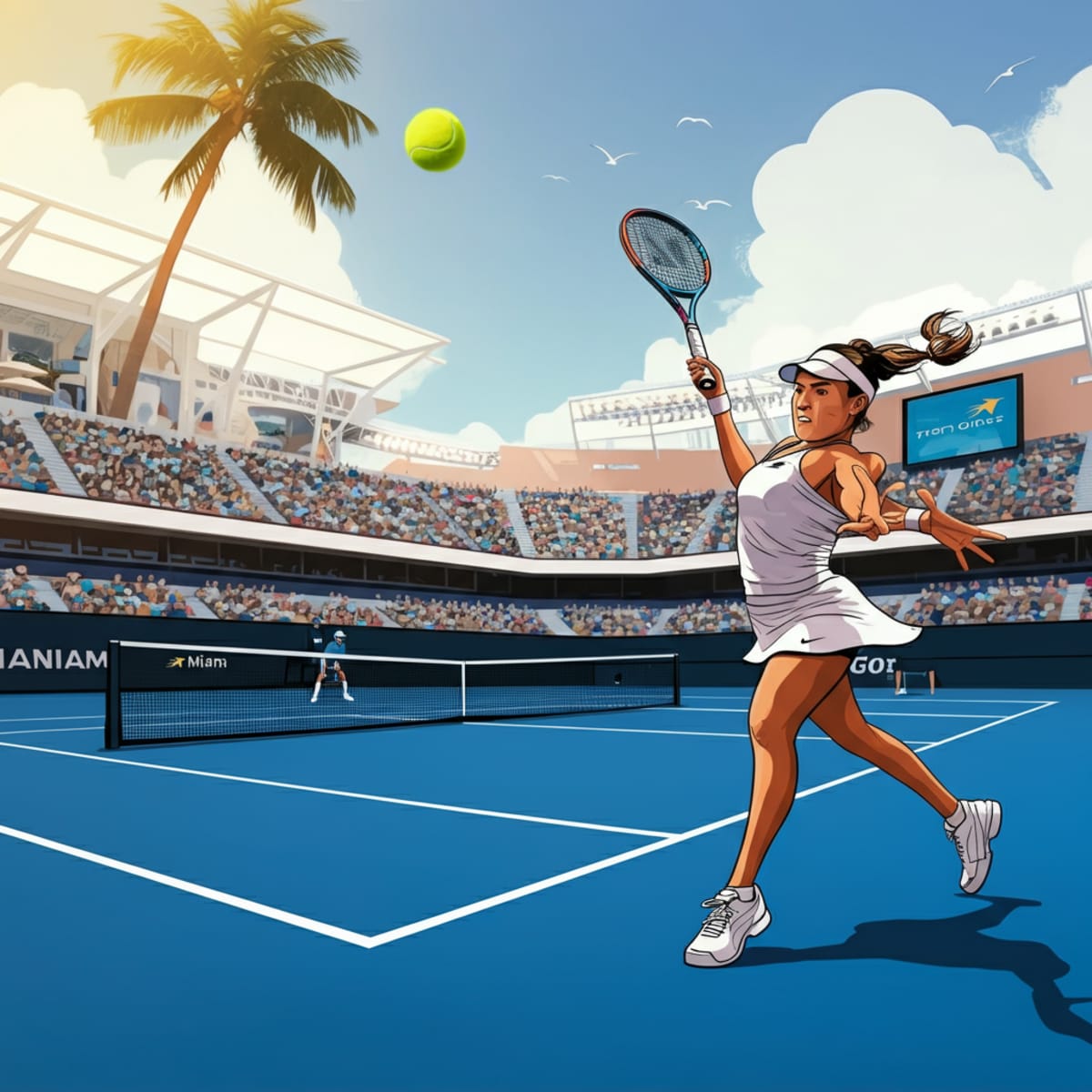
You want drama? Miami delivered. Elena Rybakina clawed her way out of an early hole to defeat Jessica Pegula 2-6, 6-3, 6-4, securing her hard-fought spot in the Miami Open semi-finals. For a minute there, it looked like the American was going to run away with it in front of a hungry home crowd. Instead, the ice-cool Kazakh flipped the script, relying on an absolute cannon of a serve when the margins were razor-thin.
Listen to the Second Serve Podcast
Get our daily AI-synthesized audio briefings and match reviews on the go.
Forget the baseline baseline grinding for a second—this match was decided strictly by clutch serving and nerve control. Rybakina fired down 15 aces and managed to erase eight of the ten break points she faced. When you are staring down the barrel of a crucial break point, you either panic or you hit your spots. She definitively chose the latter. With this grueling three-set victory, Rybakina notched her fifth consecutive win against Pegula, establishing a massive psychological edge in this hard-court rivalry.
Match By The Numbers
- Final Score: 2-6, 6-3, 6-4 in favor of Rybakina.
- Under Fire: Rybakina saved 80% of break points faced (8 out of 10).
- Service Heat: 15 aces critical to reversing the match momentum.
- Head-to-Head: A fifth consecutive win over Pegula for the Kazakh star.
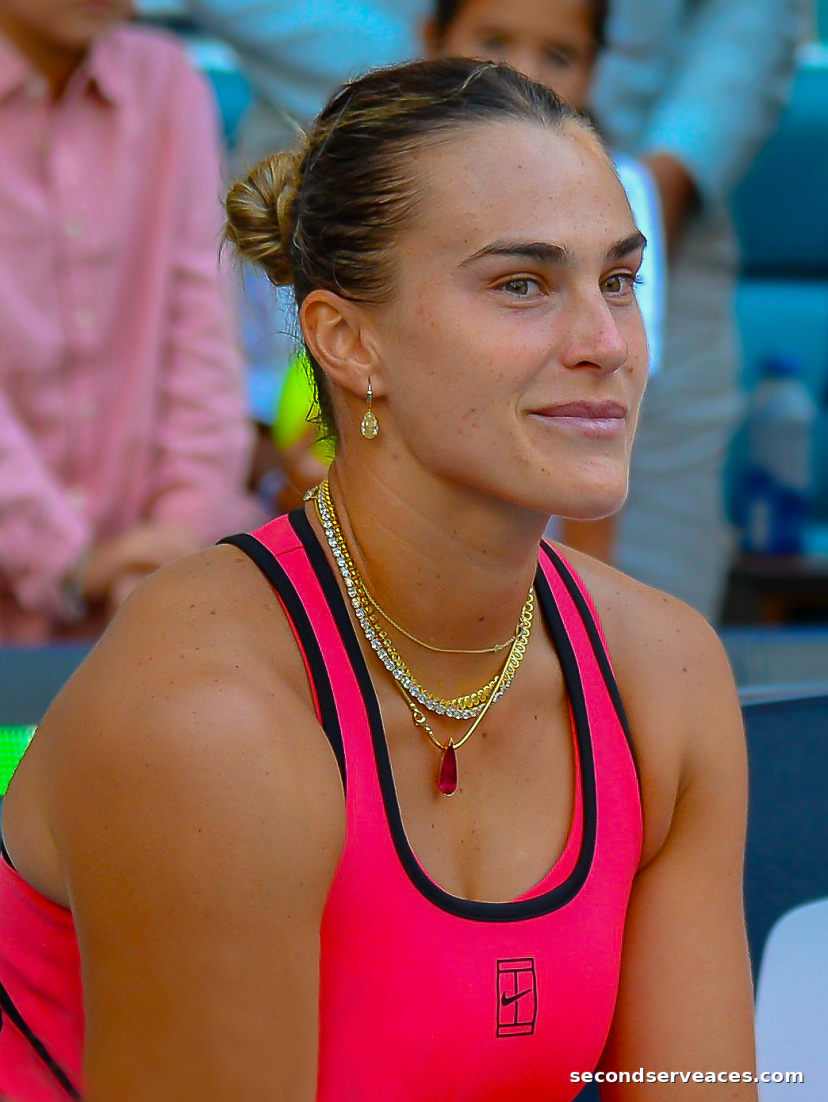
Now, the hard-hitting right-hander awaits her next challenger in the final four: either reigning Australian Open champion Aryna Sabalenka or American wild card Hailey Baptiste.
The Tactical Breakdown
If we look under the hood of this comeback, it is all about court positioning and first-serve reliance. Pegula is an expert at absorbing pace, hitting flat, deep balls that ruthlessly rob opponents of time. In the first set, the American completely neutralized the Rybakina serve, dictating the baseline exchanges by stepping inside the baseline and taking the ball aggressively early.
But elite players adjust. In sets two and three, Rybakina ramped up her first-serve percentage and started hunting the one-two punch. By hitting her spots out wide on the ad-court, she manipulated the court geometry, forcing Pegula into defensive, lunging returns. That tactical adjustment shifted the dynamic entirely. Once Rybakina stopped getting pinned behind the baseline and started dictating with heavy topspin off the first ball, Pegula's flat strikes suddenly found the net or flew long.
The Bigger Picture
Zooming out, the implications of this tournament are massive for the upper echelon of the tour. The other semi-final features a blockbuster clash between Coco Gauff and Karolina Muchova. The stakes for that matchup are astronomical. If Gauff manages to push through and reach the championship match, she will officially leapfrog Iga Swiatek to claim the world number three ranking. That kind of seismic shift at the top of the women's game changes the entire seeding calculus for the upcoming clay swing.
As for Rybakina, finding ways to win when the forehand isn't firing on all cylinders early on is the hallmark of a major contender. She already owns the pristine grass-court pedigree, but asserting this level of physical resilience on the notoriously slow, gritty Miami hard courts speaks volumes. It takes serious guts to drop a set 2-6 and come back swinging for the fences, but that's precisely why she continues to be a nightmare draw for anyone on tour.
What Aryna Sabalenka Plays With
Wilson Blade 98 v9 (16x19)
Luxilon ALU Power 125
Analyze Elena Rybakina vs. Jessica Pegula
Predict tactical adjustments, momentum swings, and serve strategy options for this match-up using our AI simulator.
The Aces Tactical Panel
This report was curated and edited by Bhaskar Goel. Tactical analysis and technical insights were provided by our specialized panel of expert correspondents.
Julian Price
Senior Tactical Correspondent
Stuffy, pedantic British academic and historian specializing in match momentum and historical context.
Elena Cruz
Director of Analytical Research
Data scientist specializing in court surface physics and movement patterns.
Bhaskar
The Editor & Fan
Passionate tennis player and site editor bringing everyday amateur insights and relatable fan commentary.
Arthur Vance
Senior Existential Analyst
Deep, eccentric, and DFW-inspired. Models court metaphysics, kinetic beauty, and player psychology.
Leo Sterling
High-Performance Consultant
Hard-nosed ex-trainer from Melbourne with a no-nonsense view on tour fitness.