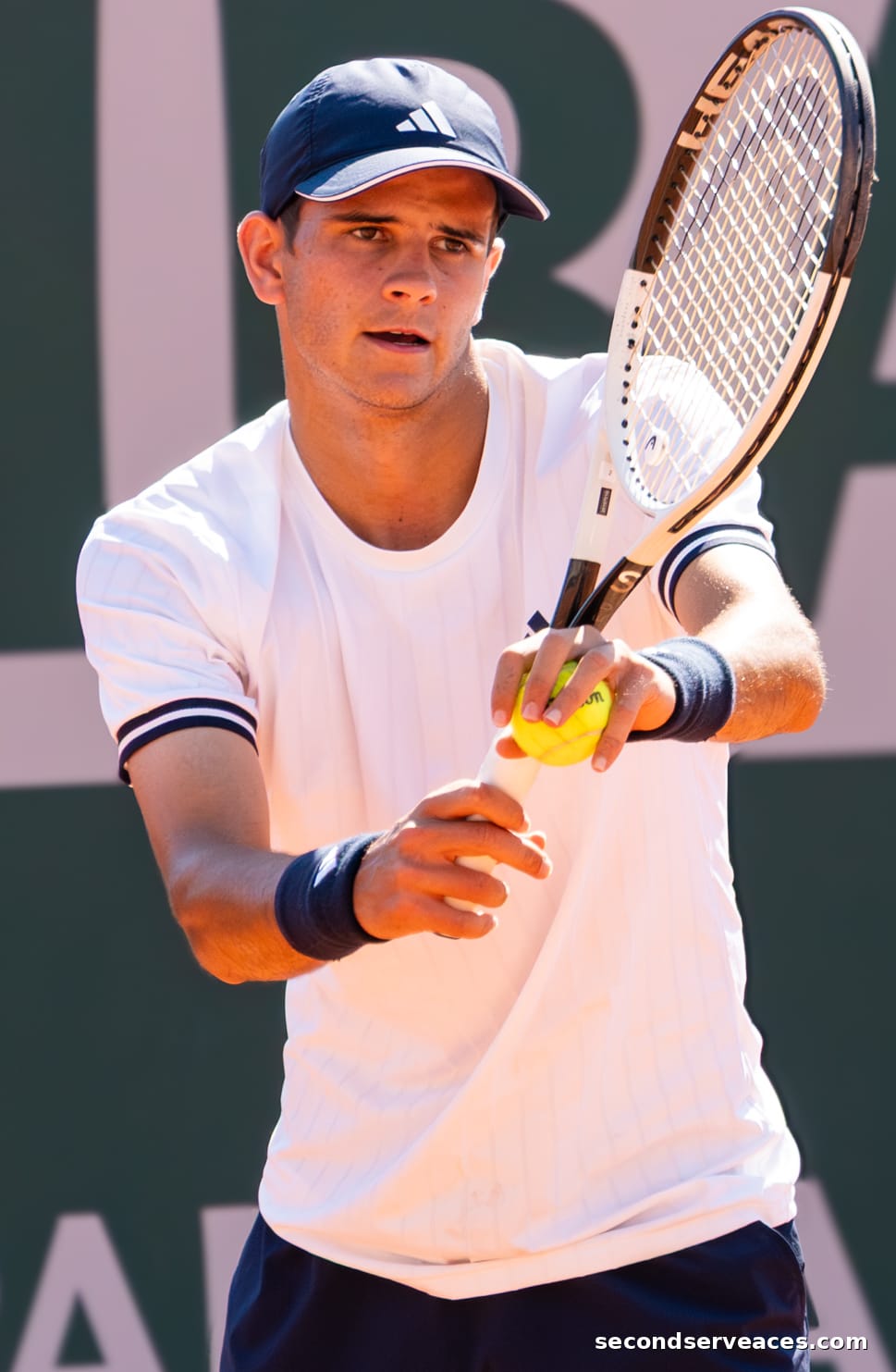
Are you kidding me? If you turned off your television when Denis Shapovalov was leading 5-1 in the final set, nobody would have blamed you. But Rafael Jódar proved once again why you never, ever walk away early in this sport. The No. 12 seed staged an absolute heist on the fast hard courts of Ohio, saving two match points and winning six consecutive games to pull off a stunning 7-5, 4-6, 7-5 victory in the second round of the Cincinnati Open.
Listen to the Second Serve Podcast
Get our daily AI-synthesized audio briefings and match reviews on the go.
The Meltdown in Mason: How Jódar Erased a 1-5 Decider Deficit
Let’s be completely honest: Denis Shapovalov had this match in the palm of his hand. Serving for a spot in the third round and holding a commanding 5-1 cushion in the deciding set, the Canadian left-hander looked destined to cruise across the finish line. Instead, the pressure cooked him. Jódar refused to miss, stepping up his aggression and forcing Shapovalov into uncomfortable defensive positions.
The turning point came when Jódar stared down two match points. With ice in his veins, the 19-year-old Spaniard hit through the court, finding the lines and forcing errors from a tightening Shapovalov. The crowd could feel the shift in match momentum as the teenager broke back once, then twice, turning what should have been a routine closing act into a psychological nightmare for the Canadian.
By the time Jódar leveled the set at 5-5, the psychological damage was done. Shapovalov’s first-serve percentage plummeted, and the double faults began to mount. Jódar kept his composure, winning 24 of the final 32 points of the match to complete one of the most absurd escapes we have seen on the tour this season.
Shoelaces and Stoppages: The Officiating Drama That Broke Shapovalov's Rhythm
Now, let’s get into the real drama, because this match wasn’t just about groundstrokes. It was a masterclass in gamesmanship—or a comedy of errors, depending on which side of the net you stand on. Shapovalov was visibly boiling over during the third set, and frankly, I don’t blame him one bit. Jódar called for a medical timeout and then proceeded to have multiple, highly convenient stoppages due to broken shoelaces.
In a sport where rhythm is everything, especially for an ultra-aggressive all-court player like Shapovalov, these constant interruptions are like throwing a wrench into a high-performance engine. You could see the frustration building in Denis's body language. He was pacing the baseline, muttering to the chair umpire, and completely lost his focus while waiting for Jódar to sort out his footwear.
The chair umpire completely lost control of the tempo of this match. If a player’s equipment keeps failing, there has to be a limit on how much time they get to fix it. Whether Jódar’s shoelace issues were genuine or a calculated tactical ploy to disrupt Shapovalov’s flow, it worked beautifully. It’s the kind of grey-area drama that drives purists crazy but makes for must-watch television.
Tactical Adjustments: Heavy Topspin and Second-Serve Pressure on the Cincinnati Hard Courts
On the technical side, Jódar’s tactical adjustments in the latter half of the match saved him. On these quick Cincinnati courts, he began targeting Shapovalov’s single-handed backhand with heavy, high-bouncing topspin. This forced Denis Shapovalov to hit his backhand from well above his shoulder, a notoriously difficult strike zone for single-handers.
Furthermore, Jódar put immense pressure on Shapovalov’s second serve. The Canadian won just 41% of his second-serve points throughout the match, leaving himself highly vulnerable. Jódar stood right on the baseline during returns, taking the ball early and engaging in deep backhand cross-court exchanges that eventually broke down Shapovalov’s consistency.
Jódar’s ability to absorb pace and redirect it was crucial. Instead of trying to match Shapovalov blow-for-blow in flat rallies, the young Spaniard used loopier depth to reset the point, waiting for the Canadian to beat himself. It wasn’t always pretty, but it was incredibly effective when the stakes were highest.
The Handshake Dialogue and Looking Ahead to Alejandro Tabilo
When the final ball flew long, confirming Jódar’s miracle victory, the handshake at the net was tense, to say the least. Jódar immediately appeared to explain the shoelace situation, gesturing toward his shoes in an attempt to diffuse the obvious anger radiating from his opponent. Shapovalov gave a cold, brief nod before marching off the court.
With this dramatic hurdle behind him, Jódar advances to the third round where he will face No. 22 seed Alejandro Tabilo. Tabilo is a crafty competitor who won’t be easily rattled by equipment delays or medical timeouts, meaning Jódar will need to clean up his game if he wants to reach the quarterfinals.
If Jódar starts as slowly against Tabilo as he did in the second set here, he won’t get another miracle escape. We saw similar high-intensity drama in our previous coverage of major hard-court events, such as the gritty tactical battles we analyzed in the Rybakina vs Osaka Toronto clash. Jódar has shown he has the fight, but now he needs the consistency.
Rivalry Matchup & Player Profiles
This dramatic encounter marks the latest chapter in what is becoming a highly entertaining rivalry. Jódar is currently making waves in the official ATP rankings, while Shapovalov is working hard to rebuild his standing after a series of inconsistent results.
| Metric | Rafael Jódar | Denis Shapovalov |
|---|---|---|
| Rank | No. 11 | No. 48 |
| Age | 19 | 27 |
| Country | Spain | Canada |
| Height | 1.91 m (6 ft 3 in) | 1.85 m (6 ft 1 in) |
| Handedness | Right-handed | Left-handed |
| Play Style | Aggressive baseliner | Aggressive all-court player |
| Career Titles | 1 | 4 |
Their head-to-head record is now deadlocked at 1-1. Shapovalov absolutely dominated their first meeting earlier this year at the Dallas Open, securing a swift 6-1, 6-2 victory. Jódar’s ability to turn the tables on the fast courts of the ATP Tour in Cincinnati shows his rapid development and tactical maturation.
The contrast between Jódar’s heavy, baseline-hugging topspin and Shapovalov’s high-risk, left-handed variety makes this a matchup we hope to see frequently. If Jódar can continue to handle the mental grind of these high-stakes matches, his ceiling is limitless.
What Coco Gauff Plays With
Head Boom MP 2024
Head Lynx Tour 1.25
Head Prime Tour (12-Pack)
Analyze Rafael Jódar vs. Denis Shapovalov
Predict tactical adjustments, momentum swings, and serve strategy options for this match-up using our AI simulator.
The Aces Tactical Panel
This report was curated and edited by Bhaskar Goel. Tactical analysis and technical insights were provided by our specialized panel of expert correspondents.
Julian Price
Senior Tactical Correspondent
Stuffy, pedantic British academic and historian specializing in match momentum and historical context.
Elena Cruz
Director of Analytical Research
Data scientist specializing in court surface physics and movement patterns.
Bhaskar
The Editor & Fan
Passionate tennis player and site editor bringing everyday amateur insights and relatable fan commentary.
Arthur Vance
Senior Existential Analyst
Deep, eccentric, and DFW-inspired. Models court metaphysics, kinetic beauty, and player psychology.
Leo Sterling
High-Performance Consultant
Hard-nosed ex-trainer from Melbourne with a no-nonsense view on tour fitness.
Related Reports
Quick Answers
What was the score of the match between Rafael Jódar and Denis Shapovalov at the Cincinnati Open?+
Rafael Jódar defeated Denis Shapovalov 7-5, 4-6, 7-5 in the second round of the tournament.
How did Rafael Jódar turn the match around in the final set?+
Jódar saved two match points and rallied from a 1-5 deficit in the deciding set, winning six consecutive games to secure the victory.
Why was Denis Shapovalov frustrated during the third set?+
Shapovalov was frustrated by Jódar taking a medical timeout and causing multiple match delays due to broken shoelaces.