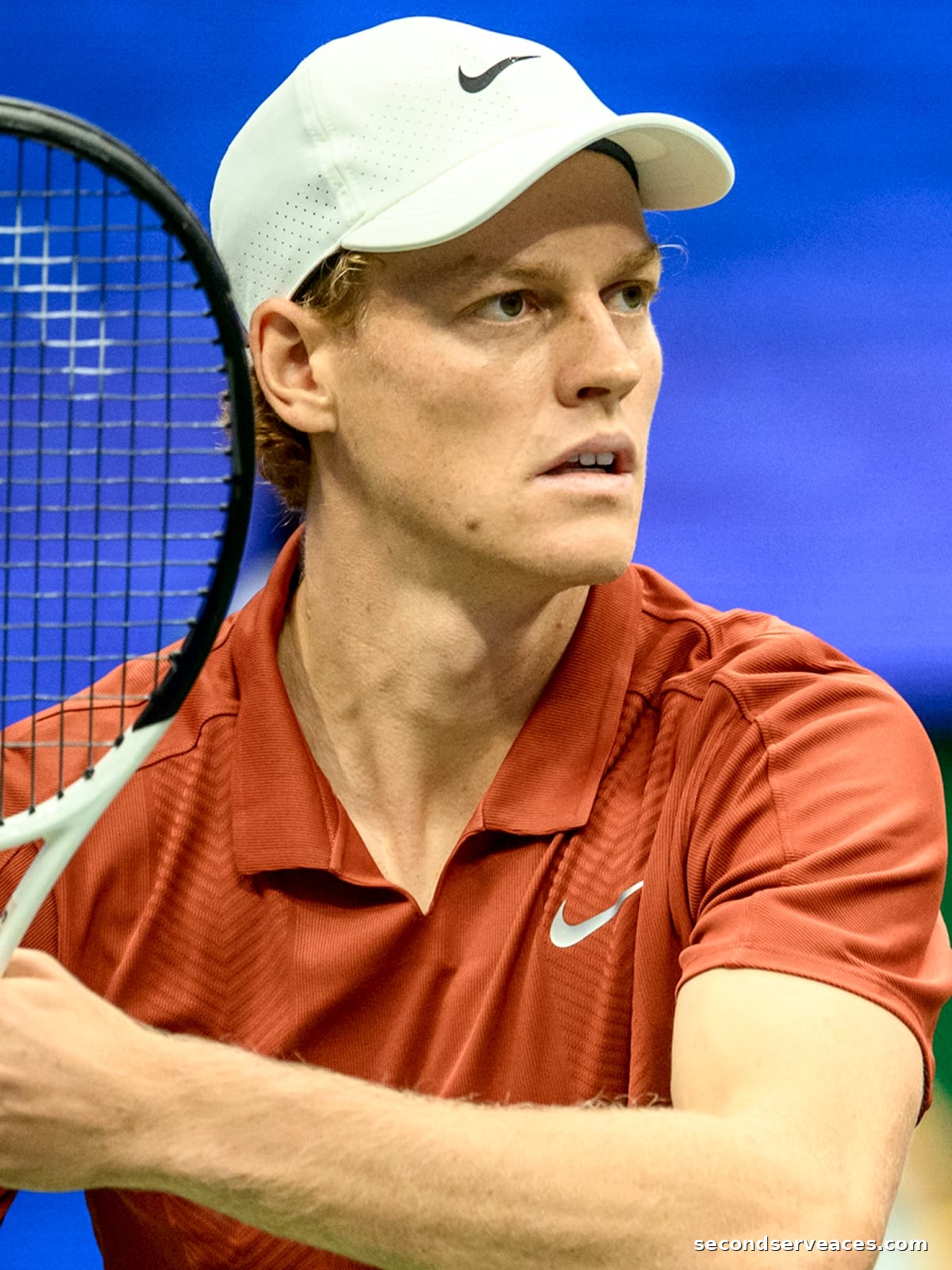
Sinner and Collignon Capitulate Under Heavy Structural Load
Jannik Sinner’s decision to pull out of the ATP Beijing event highlights the extreme torque modern hardcourts place on a player's knee joint. Sinner, the defending champion in Beijing, will not return to protect his crown due to a persistent knee injury. For a player relying on explosive change-of-direction to fuel his slide-and-strike baseline game, any patellar compromise acts as a major mechanical bottleneck.
Listen to the Second Serve Podcast
Get our daily AI-synthesized audio briefings and match reviews on the go.
Sinner is not the only high-profile casualty experiencing joint issues ahead of this swing. Belgium’s Raphael Collignon has also withdrawn from ATP Beijing, citing a knee injury of his own. When athletes operating with highly rigid racket frames and stiff polyester strings slide on abrasive hard court surfaces, their lower joints absorb the shockwaves that the frame refuses to dissipate.
The loss of these two competitors severely thins out the top half of the Beijing draw, showcasing the immense wear-and-tear of a relentless tour calendar. Our previous tactical breakdown highlighted similar physical limits in our Zverev vs Sinner retrospective, proving that even elite physical conditioning has its limits when mechanical load exceeds joint threshold.
Shelton Pays the Physical Price of Post-US Open Fatigue
Over in Japan, Tokyo's ATP event took a significant blow with the withdrawal of Ben Shelton. Shelton opted out of the tournament after an exhausting, winless 0-2 stretch at the Davis Cup, where his high-octane game looked visibly depleted. His heavy-duty service motion, which regularly clocks over 140 mph, demands an immaculate kinetic transfer from his lower lumbar through his shoulder, leaving very little margin for fatigue.
This withdrawal is a sobering reminder of the physical toll extracted by transcontinental travel. Shelton’s physical mechanics and his heavy frame require optimal recovery windows to maintain explosive torque, a reality noted during Andy Murray's assessment of Shelton's physical ceiling. Skipping Tokyo allows him to protect his shoulder cuff from the catastrophic fraying often associated with late-season exhaustion.
Tokyo's fast, low-bouncing court surface demands deep knee bends to handle slice returns and low-skidding balls. For a tall, explosive athlete like Shelton, playing on tired legs under those parameters is a recipe for chronic patellar tendinitis. Preserving his physical integrity for future events remains the smarter, high-value move over risking a long-term layoff.
Fonseca Shuts Down Asian Swing to Protect Vital Lumbar Alignment
Meanwhile, rising teenage sensation Joao Fonseca has announced a complete withdrawal from the entire Asian swing. The young Brazilian is battling an ongoing back injury, a classic structural red flag for players undergoing rapid physical development. The decision to shut down his tour schedule early is a mature approach to protecting his long-term career longevity.
Fonseca generates exceptional racket head speed through a violent torso rotation on his forehand wing. When the lower lumbar is compromised, attempting to force this rotational acceleration leads to compensatory movements that threaten the hips and thoracic spine. Skipping this rigorous swing prevents a temporary muscular strain from developing into a chronic herniation.
With top-tier talent sidelined, the entry list has opened up for resilient tour veterans. Alternates Quentin Halys and Sebastian Baez have officially entered the ATP Beijing main draw. Both players offer highly durable, low-maintenance baseline styles that are built to outlast opponents without the extreme mechanical stress that plagues their more explosive peers.
Rivalry Matchup & Player Profiles
| Metric | Jannik Sinner | Raphael Collignon |
|---|---|---|
| Rank | 1 | 47 |
| Age | 25 | 24 |
| Country | Italy | Belgium |
| Height | 6'3" (1.91 m) | 6'3" (1.91 m) |
| Handedness | Right-handed | Right-handed |
| Play Style | Aggressive baseliner | Power baseliner |
| Career Titles | 30 | 0 |
While Jannik Sinner and Raphael Collignon are currently in vastly different tiers of the ATP rankings, their physical profiles show striking structural similarities. Both stand 6'3", offering a long lever arm that is highly efficient for generating baseline power. Sinner has successfully translated these specs into 30 career titles, whereas Collignon is still working to establish a stable foothold on the main ATP Tour.
The head-to-head record between Sinner and Collignon officially stands at 0-0, meaning they have yet to test their respective strategies against one another in a competitive tour-level match. Their only shared court experience occurred during high-intensity practice sessions at the 2026 Indian Wells Masters. These sessions provided a rare look at how Collignon's raw power baselining matches up against Sinner’s world-class depth and court coverage.
Sinner's current knee setback stalls his quest to build on his massive title haul, while Collignon's physical stoppage prevents him from gaining the match play necessary to close the gap on the top 50. For both athletes, the road to recovery requires a meticulous adjustment of their mechanical loads and off-court training protocols to ensure their high-performance frames can withstand the brutal realities of professional hardcourt tennis.
What Jannik Sinner Plays With
Head Speed MP 2024
Head Hawk Touch 1.25
Head Prime Tour (12-Pack)
Nike GP Challenge 1
Analyze Jannik Sinner vs. Raphael Collignon
Predict tactical adjustments, momentum swings, and serve strategy options for this match-up using our AI simulator.
The Aces Tactical Panel
This report was curated and edited by Bhaskar Goel. Tactical analysis and technical insights were provided by our specialized panel of expert correspondents.
Julian Price
Senior Tactical Correspondent
Stuffy, pedantic British academic and historian specializing in match momentum and historical context.
Elena Cruz
Director of Analytical Research
Data scientist specializing in court surface physics and movement patterns.
Bhaskar
The Editor & Fan
Passionate tennis player and site editor bringing everyday amateur insights and relatable fan commentary.
Arthur Vance
Senior Existential Analyst
Deep, eccentric, and DFW-inspired. Models court metaphysics, kinetic beauty, and player psychology.
Leo Sterling
High-Performance Consultant
Hard-nosed ex-trainer from Melbourne with a no-nonsense view on tour fitness.
Related Reports
Quick Answers
Why did Jannik Sinner withdraw from the ATP Beijing tournament?+
Jannik Sinner withdrew from the ATP Beijing event due to a knee injury, preventing him from defending his title.
Which players entered the ATP Beijing main draw as alternates following the recent withdrawals?+
Quentin Halys and Sebastian Baez entered the ATP Beijing main draw as alternates to replace injured competitors.
What caused Ben Shelton to withdraw from the tournament in Tokyo?+
Ben Shelton withdrew from ATP Tokyo to recover from fatigue after going 0-2 during his Davis Cup matches.