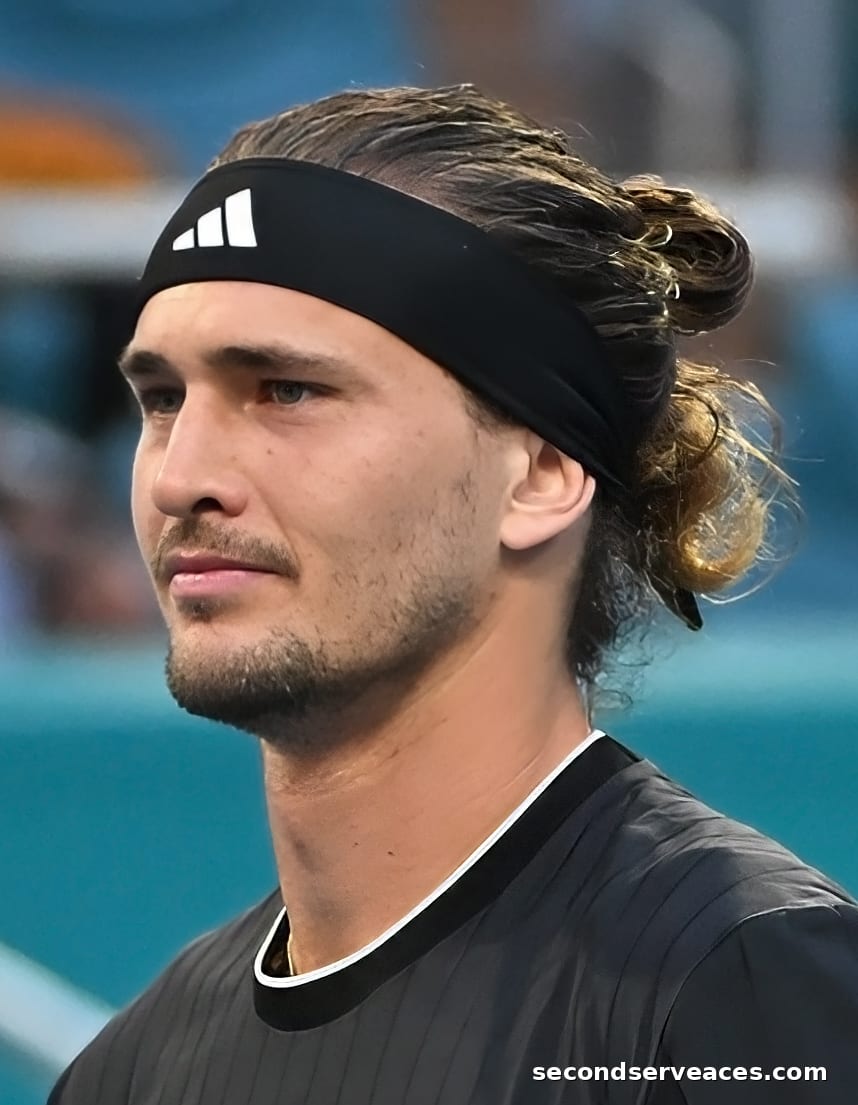
You want to talk about pressure? Try stepping onto a Grand Slam court with the weight of three agonizing runner-up finishes pressing down on your shoulders. For years, the tennis world watched Alexander Zverev knock on the door of tennis immortality, only to have it slammed in his face. It is the kind of pattern that breaks a player mentally. But in 2026, the German powerhouse flipped the script in a way that silenced every critic, including the ones inside his own head.
Listen to the Second Serve Podcast
Get our daily AI-synthesized audio briefings and match reviews on the go.
The journey to the top of the mountain is never linear, and Zverev's path was particularly treacherous. After coming so close yet remaining so far, his breakthrough season proved that the physical tools mean absolutely nothing if the mind isn't locked in. By capturing two of the sport's biggest prizes, he didn't just win trophies; he conquered the self-doubt that threatened to define his entire career.
The Melbourne Meltdown That Shattered Alexander Zverev's Self-Belief
To understand the magnitude of Zverev's triumph, you have to go back to the lowest point of his recent career: the 2025 Australian Open final. Standing across the net from Jannik Sinner, Zverev was playing for more than just a trophy; he was playing for validation. Instead, he suffered a devastating defeat that left his confidence in ruins. According to the latest ATP rankings, Zverev has established himself as a dominant force, but back then, he was a man lost in a psychological wilderness.
Losing to Sinner was a brutal reality check. Zverev later admitted that the defeat made him seriously question whether he would ever hoist a Grand Slam trophy. The ghost of his 2020 US Open collapse, combined with a runner-up finish at the 2024 French Open, created a compounding weight of disappointment. When you lose three major finals, the court starts to feel smaller, the net seems higher, and the lines seem to vanish under the pressure.
For months, the German struggled to find his rhythm. The tennis public wondered if he had reached his ceiling. It takes a special kind of resilience to look at those failures, accept the vulnerability of self-doubt, and keep putting in the work. Zverev didn't hide from his fear of never winning a major; instead, he used it as fuel to rebuild his mental approach from the ground up.
Clay-Court Redemption and the Breakthrough at Roland Garros
The turning point arrived on the red clay of Paris. Entering Roland-Garros, Zverev was no longer the heavy favorite burdened by expectation, but a determined challenger. He navigated a brutal draw to set up a high-stakes final against Italy's rising star, Flavio Cobolli. It was a matchup that tested every ounce of Zverev's resolve, forcing him to dig deeper than he ever had before.
The final was an absolute roller coaster. Zverev had to battle through five grueling sets of physical tennis, facing a relentless opponent who refused to back down. But unlike his previous major finals, where his serve would desert him or his forehand would turn passive under pressure, Zverev remained the aggressor. He trusted his massive first serve and dictated play from the baseline when the match hung in the balance.
When the final ball landed out, the relief was palpable. By defeating Cobolli, Zverev finally secured his maiden Grand Slam title. The victory was a massive release of years of frustration. The German had finally crossed the finish line, proving to himself and the world that he belonged in the champion's circle.
Shedding the Ghost of 2020 on the New York Hard Courts
If Paris was about relief, New York was about confirmation. Arriving at the US Open, Zverev was a different player. The self-doubt that had plagued him for years was replaced by a calm, calculated focus. He marched through the draw to set up a blockbuster final against American sensation Ben Shelton, a player whose explosive game we analyzed when Andy Murray praised Ben Shelton's rise on the global stage.
The atmosphere inside Arthur Ashe Stadium was electric, with the crowd firmly behind the young American. Shelton pushed Zverev with his thunderous serves and fearless shot-making. But Zverev, now a battle-tested Grand Slam champion, refused to let the crowd or the opponent disrupt his rhythm. He dismantled Shelton's weapons with clinical precision, showcasing the defensive skills that make his 1.98-meter frame so formidable.
The match concluded in bizarre fashion, highlighting the intense mental fog of championship Sunday. When the final point ended, Zverev momentarily forgot the score, genuinely believing it was only 4-1 in the set rather than match point. It was a hilarious, humanizing moment in an otherwise masterclass performance, proving that even when the brain temporarily short-circuits under the stadium lights, champion-level muscle memory takes over.
The Mental Shift That Redefined a Two-Time Major Champion
Winning two Grand Slams in a single season is an elite achievement that completely alters a player's legacy. Zverev went from being the ultimate bridesmaid of the ATP Tour to a multi-slam champion with a target on his back. This transformation was not a matter of changing his backhand or adding more topspin to his forehand; it was entirely a victory of the mind.
In the past, Zverev would let bad line calls or missed break points derail his entire match focus. In 2026, we saw a mature competitor who accepted adversity as part of the equation. Whether facing the hostile New York crowd or battling Cobolli on a damp Parisian afternoon, Zverev stayed present, refusing to let the ghosts of past failures dictate his present actions.
With Carlos Alcaraz and Jannik Sinner leading a youth movement, Zverev's resurgence adds a fascinating layer of drama to the top of the men's game. He has proven that experience, when coupled with mental fortitude, can still withstand the raw energy of the younger generation. The hunt for more majors is on, and Zverev is no longer doubting his place at the table.
Rivalry Matchup & Player Profiles
| Metric | Alexander Zverev | Flavio Cobolli |
|---|---|---|
| Rank | No. 2 | No. 7 |
| Country | Germany | Italy |
| Age | 29 | 24 |
| Height | 1.98 m (6 ft 6 in) | 1.83 m (6 ft 0 in) |
| Handedness | Right-handed | Right-handed |
| Play Style | Aggressive baseliner | Aggressive baseliner |
| Career Titles | 26 | 3 |
The rivalry between Alexander Zverev and Flavio Cobolli has quickly developed into one of the most compelling matchups on the ATP Tour. Zverev currently leads their head-to-head series 4-1, with their most significant meeting occurring in that historic 2026 Roland Garros final. In that match, Zverev's experience ultimately prevailed in a thrilling five-set battle, winning 6-1, 4-6, 6-4, 6-7(5), 6-1 to capture his first career Grand Slam title.
Tactically, both players like to dictate play from the baseline, but they go about it in very different ways. Zverev relies on his towering height to generate massive leverage on his serve and backhand, establishing a defensive wall that is incredibly difficult to penetrate. Cobolli, standing at 1.83 meters, counteracts this with superior lateral movement and explosive forehands. While Zverev's experience has given him the upper hand in their meetings so far, Cobolli's rapid rise to the top ten suggests this rivalry will continue to produce high-stakes drama for years to come.
What Alexander Zverev Plays With
Head Gravity Pro
Head Hawk Touch 1.25
Head Prime Tour (12-Pack)
Analyze Alexander Zverev vs. Flavio Cobolli
Predict tactical adjustments, momentum swings, and serve strategy options for this match-up using our AI simulator.
The Aces Tactical Panel
This report was curated and edited by Bhaskar Goel. Tactical analysis and technical insights were provided by our specialized panel of expert correspondents.
Julian Price
Senior Tactical Correspondent
Stuffy, pedantic British academic and historian specializing in match momentum and historical context.
Elena Cruz
Director of Analytical Research
Data scientist specializing in court surface physics and movement patterns.
Bhaskar
The Editor & Fan
Passionate tennis player and site editor bringing everyday amateur insights and relatable fan commentary.
Arthur Vance
Senior Existential Analyst
Deep, eccentric, and DFW-inspired. Models court metaphysics, kinetic beauty, and player psychology.
Leo Sterling
High-Performance Consultant
Hard-nosed ex-trainer from Melbourne with a no-nonsense view on tour fitness.
Related Reports

Quick Answers
Which Grand Slam titles did Alexander Zverev win in 2026?+
Alexander Zverev won his first Grand Slam title at Roland Garros by defeating Flavio Cobolli, and later won his second major title at the US Open by defeating Ben Shelton.
Who did Alexander Zverev lose to in the 2025 Australian Open final?+
Alexander Zverev lost the 2025 Australian Open final to Jannik Sinner, a defeat that he admitted caused him to struggle deeply with his self-belief.
What unusual moment occurred during the 2026 US Open final match point?+
Alexander Zverev momentarily forgot the score during the final against Ben Shelton, mistakenly believing the score was only 4-1 when the match actually concluded.