The Strategic Departure
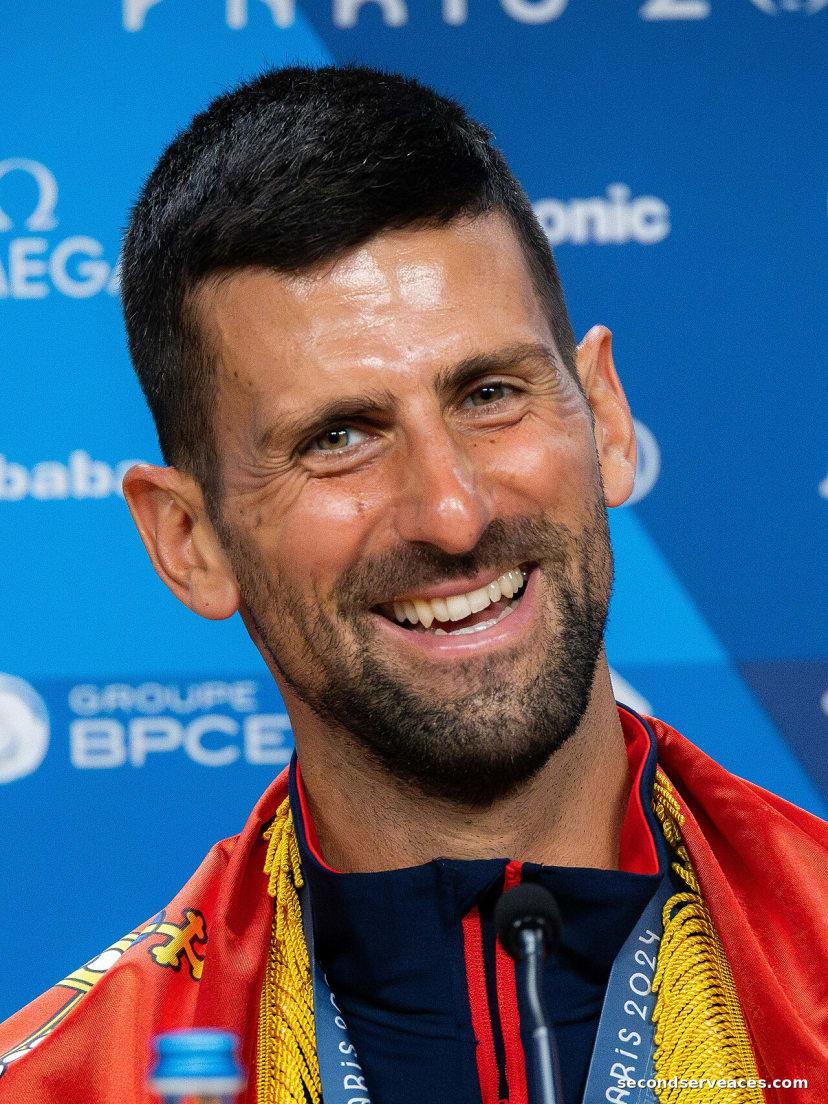
Novak Djokovic has officially withdrawn from the 2026 Monte Carlo Masters. For the veteran, this decision is not about injury; it is about the long-term conservation of energy. Having appeared at this tournament 20 times throughout his career, Djokovic is clearly recalibrating his schedule to prioritize physical longevity over the prestige of the Principality’s red clay.
Listen to the Second Serve Podcast
Get our daily AI-synthesized audio briefings and match reviews on the go.
The Tactical Breakdown
To understand why this tournament might be a logical one to skip, one must look at the geometry of the Monte Carlo Country Club. This surface is notoriously heavy. Unlike the quicker clay at some other stops, Monte Carlo demands exceptional slide recovery and relentless patience during baseline exchanges.
Djokovic’s game relies on his ability to transition from defense to offense by exploiting the lack of lateral coverage from his opponent. However, on this specific surface, the ball often sits up, allowing opponents to take a significant cut at the ball if the depth is even slightly off. We saw this reality manifest in his previous encounter here against Tabilo, who managed to dismantle Djokovic in straight sets. During that match, Djokovic leaked 29 unforced errors—a staggering number for a player of his calibration—suggesting that his typical rally tolerance was disrupted by Tabilo's ability to pull him wide and force him to hit off balance on the run.
- Rally Tolerance: On clay, the margins for error shrink; if you aren't hitting through the court, you are essentially feeding your opponent's counter-punching game.
- Court Positioning: Djokovic prefers to take the ball on the rise, but against high-kicking topspin common on this court, he is forced to move back, losing his preferred court position.
- Surface Variance: His 71% win rate here is his lowest among all nine Masters 1000 events, proving that even for the greatest, the geometry of a specific surface can complicate a baseline-heavy tactical framework.
The Bigger Picture
When you look at the landscape of the modern ATP, the transition to the European clay swing is where the physical toll is highest. With the likes of Jannik Sinner rising and legacy players like Stan Wawrinka still fighting for space in the draw, the margins for victory have never been thinner. By bypassing Monte Carlo, Djokovic is betting that a fresher set of legs in late spring will yield more significant dividends during the latter half of the season.
This is a tactical concession. He has spent two decades navigating these draws, and his 71% win rate at this specific Masters 1000 event, while impressive by any objective measure, reflects the unique difficulty he faces when the surface slows down to this degree. By pulling out, he avoids the potential of another sub-par run that could sap his confidence heading into the subsequent events on the calendar.
What Novak Djokovic Plays With
Head Speed Pro
Luxilon ALU Power 125
Head Prime Tour (12-Pack)
Asics Court FF 3 Novak
Analyze Novak Djokovic vs. Tabilo
Predict tactical adjustments, momentum swings, and serve strategy options for this match-up using our AI simulator.
The Aces Tactical Panel
This report was curated and edited by Bhaskar Goel. Tactical analysis and technical insights were provided by our specialized panel of expert correspondents.
Julian Price
Senior Tactical Correspondent
Stuffy, pedantic British academic and historian specializing in match momentum and historical context.
Elena Cruz
Director of Analytical Research
Data scientist specializing in court surface physics and movement patterns.
Bhaskar
The Editor & Fan
Passionate tennis player and site editor bringing everyday amateur insights and relatable fan commentary.
Arthur Vance
Senior Existential Analyst
Deep, eccentric, and DFW-inspired. Models court metaphysics, kinetic beauty, and player psychology.
Leo Sterling
High-Performance Consultant
Hard-nosed ex-trainer from Melbourne with a no-nonsense view on tour fitness.