The Shrinking Share of a Growing Enterprise
There is a curious, almost paradoxical mathematics inherent in the modern professional game. On one hand, the financial health of the sport’s crown jewels—the majors—seems to radiate a buoyant, unshakeable prosperity. Consider the recent disclosure that Roland Garros has committed to increasing its total prize fund by a robust 10% to £53.5 million for 2026. To the uninitiated observer, this figure suggests a league of infinite growth, a rising tide meant to lift every boat, from the top-seeded titan to the gritty qualifier grinding out a living on the outer courts.
Listen to the Second Serve Podcast
Get our daily AI-synthesized audio briefings and match reviews on the go.
Yet, the reality—the granular, uncomfortable reality—is that the percentage of tournament revenue actually trickling down to the competitors is trending in the inverse direction. Data indicates that the player share of revenue at the French Open has slipped from 15.5% to a projected 14.9%. This is not merely an accounting discrepancy; it is a structural friction point. It is the silent, widening chasm between the colossal valuations of the tournament enterprise and the athletes who, through the sheer kinetic exertion of their craft, serve as the sole source of that enterprise’s value.
The players are beginning to quantify this disparity, and the mood is shifting from resignation to organized dissent. When one looks at the balance sheet, one does not see a simple sum; one sees the physical toll of a sport that demands total commitment, juxtaposed against a financial model that seems to prioritize the infrastructure of the event over the human engine that drives it. This is not merely about currency; it is about the ethics of professional athletic labor.
The Coalition of the Discontented
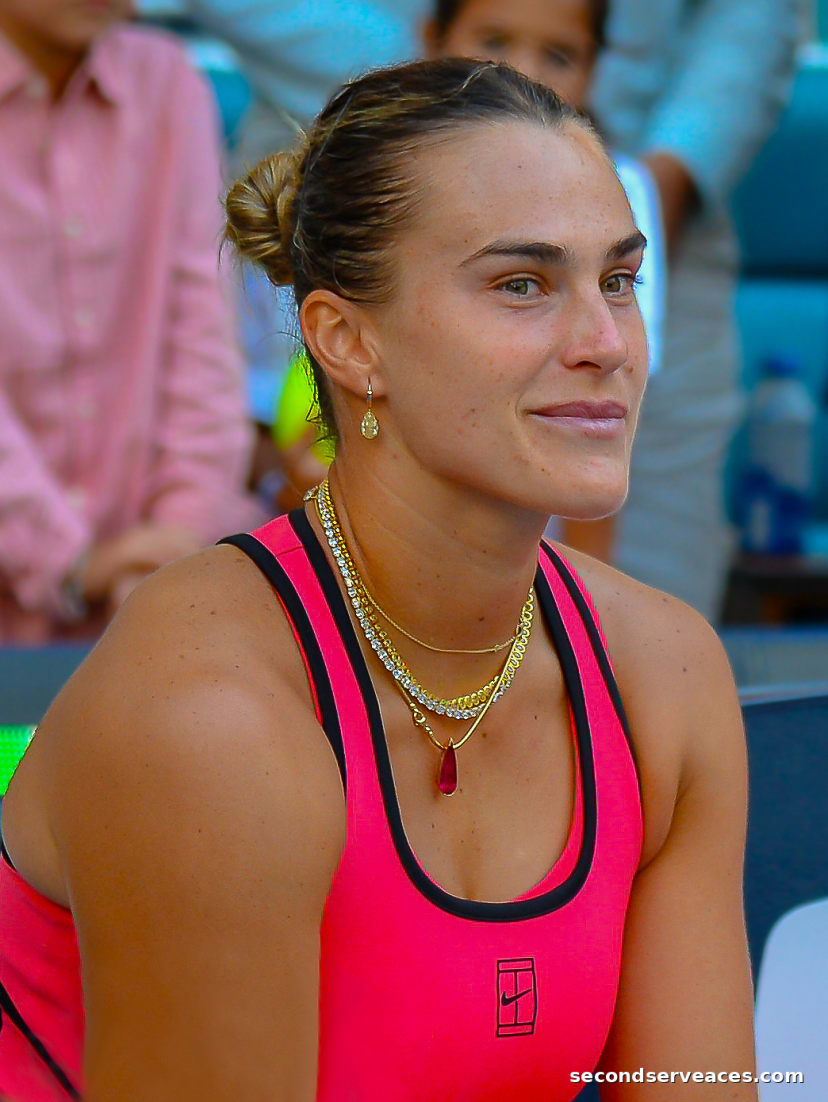
The murmurs of frustration have coalesced into a tangible, high-profile critique. Aryna Sabalenka and Jannik Sinner, both of whom reside at the absolute peak of the modern game, have recently issued formal statements challenging the current prize distribution models. Their intervention acts as a sobering mirror to the Grand Slam committees, signaling that the silence of the top echelon can no longer be taken for granted.
Supporting this surge is Novak Djokovic, whose role in this unfolding drama is deeply informed by his history as the co-founder of the Professional Tennis Players Association (PTPA) some six years ago. Djokovic’s backing of Sabalenka’s position is not a sudden eruption of opinion but the continuation of a long-term ideological campaign regarding the sustainability of the sport’s financial apparatus. He remains a central figure in questioning why the athletes, who bear the primary weight of the match intensity, remain peripheral to the primary revenue distribution.
The alignment of such significant names—Sinner, Sabalenka, and Djokovic—suggests a shift in the political landscape of the tour. They are not merely asking for incremental increases; they are questioning the fundamental architecture of how the sport compensates its primary assets. The tension is palpable, and for those who follow the politics of the tour, the message is clear: the current framework is being weighed and found wanting.
The Spectrum of Protest: From Dialogue to Boycott
As the rhetoric intensifies, the specter of a player boycott—a word that remains heavy with existential dread for tournament organizers—has surfaced in the public discourse. The prospect of such a radical pivot has sparked a variety of reactions among the players themselves, revealing a spectrum of professional philosophy. While the calls for change are widespread, the methods proposed are not monolithic.
Iga Swiatek, perhaps illustrating the pragmatic caution of the tour’s elite, has described the idea of a player boycott as 'a bit extreme.' This hesitation highlights the delicate needle the players must thread: how to exert enough leverage to force a restructuring of revenue without dismantling the very platforms—like the French Open—that provide their primary stage for greatness. It is a classic collective bargaining impasse, where the power of the players is only as effective as their unity.
The future of this conflict depends on whether the tournaments will engage with the PTPA and other player entities as true partners or if they will continue to view them as mere service providers. As the prize pools grow, the scrutiny of how that growth is allocated will only sharpen. The era where players were satisfied to exist solely within the shadow of the Slam’s prestige is effectively over. The modern game is now a conversation about equity, and for now, the math is not in the organizers’ favor.
Looking Toward the Future
As the circuit moves toward future iterations of the ATP Tour and WTA Tour, the question of long-term sustainability remains paramount. The current financial model is one that thrives on massive broadcast deals and corporate sponsorships, yet it fails to adequately account for the career longevity and competitive risks undertaken by the athletes. The agitation from players like Sabalenka and Sinner serves as a necessary, if disruptive, catalyst for a conversation long overdue.
The tennis industry sits at a fascinating intersection of tradition and modernization. While the history of the sport is etched into the red clay and the manicured grass, the business of the sport must eventually reconcile with the changing expectations of its stars. If the revenue share continues to drift downward, the moral imperative for a collective response will only gain momentum, turning the locker room into a laboratory for radical negotiation.
Ultimately, the beauty of the game relies on the tension of the rally—that precise, high-speed exchange between two individuals. But off the court, the tennis world is realizing that a different kind of tension—one born of equitable compensation and fiscal transparency—is equally critical to the game’s health. We are watching the evolution of a power dynamic, and whether it results in a harmonious settlement or a protracted stalemate remains the most intriguing narrative in the sport today.
What Novak Djokovic Plays With
Head Speed Pro
Luxilon ALU Power 125
Head Prime Tour (12-Pack)
Asics Court FF 3 Novak
Analyze Novak Djokovic vs. Aryna Sabalenka
Predict tactical adjustments, momentum swings, and serve strategy options for this match-up using our AI simulator.
The Aces Tactical Panel
This report was curated and edited by Bhaskar Goel. Tactical analysis and technical insights were provided by our specialized panel of expert correspondents.
Julian Price
Senior Tactical Correspondent
Stuffy, pedantic British academic and historian specializing in match momentum and historical context.
Elena Cruz
Director of Analytical Research
Data scientist specializing in court surface physics and movement patterns.
Bhaskar
The Editor & Fan
Passionate tennis player and site editor bringing everyday amateur insights and relatable fan commentary.
Arthur Vance
Senior Existential Analyst
Deep, eccentric, and DFW-inspired. Models court metaphysics, kinetic beauty, and player psychology.
Leo Sterling
High-Performance Consultant
Hard-nosed ex-trainer from Melbourne with a no-nonsense view on tour fitness.