A Calculated Return to the Red Dirt
There is a specific kind of silence that follows a champion after a defeat. When Novak Djokovic walked off the court at Indian Wells following his round of 16 loss to Jack Draper, the whispers started. But for those who have lived the grind, a layoff isn't a decline; it’s a recalibration. Djokovic returns to the Italian Open, a tournament he has claimed six times, not to prove he still belongs, but to sharpen his tools for the bigger prize in Paris.
Listen to the Second Serve Podcast
Get our daily AI-synthesized audio briefings and match reviews on the go.
His 2026 campaign has been a study in selective intensity, boasting seven wins from nine matches. It’s not the volume of matches that defines him anymore; it’s the quality of the preparation. He enters Rome with the heavy weight of history, knowing that the clay demands a level of movement that only comes from deep, match-hardened repetition. The hiatus since March was not about rest—it was about stripping his game back to the core mechanics required to withstand the sliding, grueling baseline rallies synonymous with the Foro Italico.
The absence of Carlos Alcaraz, who is sidelined with a wrist injury, changes the immediate tactical landscape. We remember the intensity of the Australian Open final, where Alcaraz took the match 2-6, 6-2, 6-3, 7-5. That result served as a violent reminder that the youth are no longer knocking on the door; they have kicked it off the hinges. Djokovic must navigate a draw filled with hungry challengers like Ugo Humbert and Karen Khachanov, players who view every point against him as a career-defining scalp.
The Geometry of the Italian Open Clay
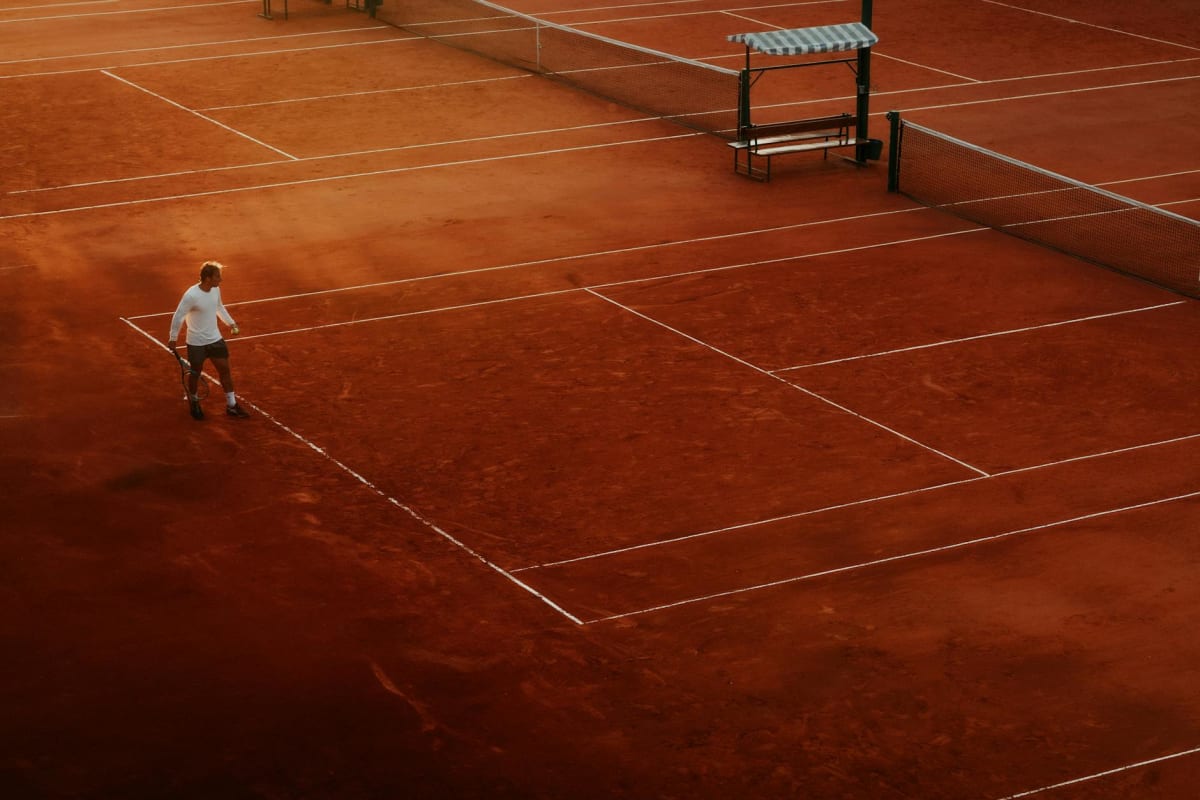
Rome is a different beast compared to the blue hard courts of the spring. It requires a patience that is almost painful for a perfectionist. Djokovic has spent years mastering the friction of this surface, having secured three titles at Roland Garros. His ability to construct points when the ball stops dead in the dirt is the benchmark for the rest of the tour. He isn't playing for highlights; he is playing for territory.
We’ve seen the emergence of a new guard. Players like Jannik Sinner and Lorenzo Musetti have changed the rhythm of the game, forcing veterans to adjust their flight paths and spin rates. The Italian Open serves as the ultimate laboratory for these adjustments. Djokovic’s coaching team, including figures like Rick Macci in the broader tennis orbit, would argue that the mental toll of these transitions is greater than the physical one. You have to unlearn the crisp, lightning-fast strikes of the hard court and embrace the slow, tactical grind of clay.
Ultimately, Rome is about match momentum. It is about seeing if the Serve and the Return—the two pillars of his dominance—hold up under the pressure of a three-set grind. With the shadow of the French Open looming, every game in Italy is an audition for the form he will need to carry through the second week in Paris. He has the records, but records don’t win points. Only the next serve does.
What Novak Djokovic Plays With
Head Speed Pro
Luxilon ALU Power 125
Head Prime Tour (12-Pack)
Asics Court FF 3 Novak
Analyze Novak Djokovic vs. Jack Draper
Predict tactical adjustments, momentum swings, and serve strategy options for this match-up using our AI simulator.
The Aces Tactical Panel
This report was curated and edited by Bhaskar Goel. Tactical analysis and technical insights were provided by our specialized panel of expert correspondents.
Julian Price
Senior Tactical Correspondent
Stuffy, pedantic British academic and historian specializing in match momentum and historical context.
Elena Cruz
Director of Analytical Research
Data scientist specializing in court surface physics and movement patterns.
Bhaskar
The Editor & Fan
Passionate tennis player and site editor bringing everyday amateur insights and relatable fan commentary.
Arthur Vance
Senior Existential Analyst
Deep, eccentric, and DFW-inspired. Models court metaphysics, kinetic beauty, and player psychology.
Leo Sterling
High-Performance Consultant
Hard-nosed ex-trainer from Melbourne with a no-nonsense view on tour fitness.