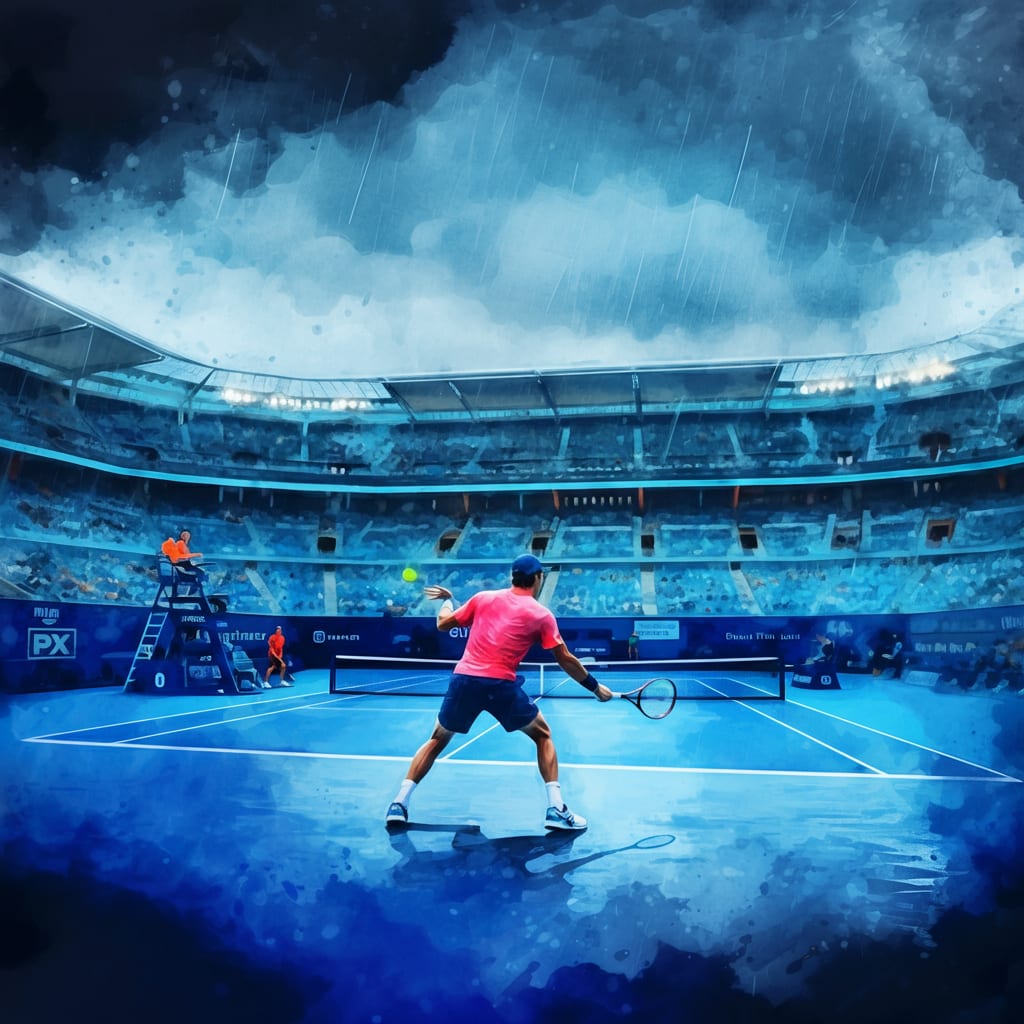
There is a specific kind of thermodynamic despair that settles over a professional tennis tournament when the sky simply refuses to hold its water. Wednesday at Hard Rock Stadium was less a festival of elite athletics and more an exercise in meteorological endurance. Thirty-seven matches across ten courts were outright canceled, erased from the day's geometry by persistent, unrelenting rain.
Listen to the Second Serve Podcast
Get our daily AI-synthesized audio briefings and match reviews on the go.
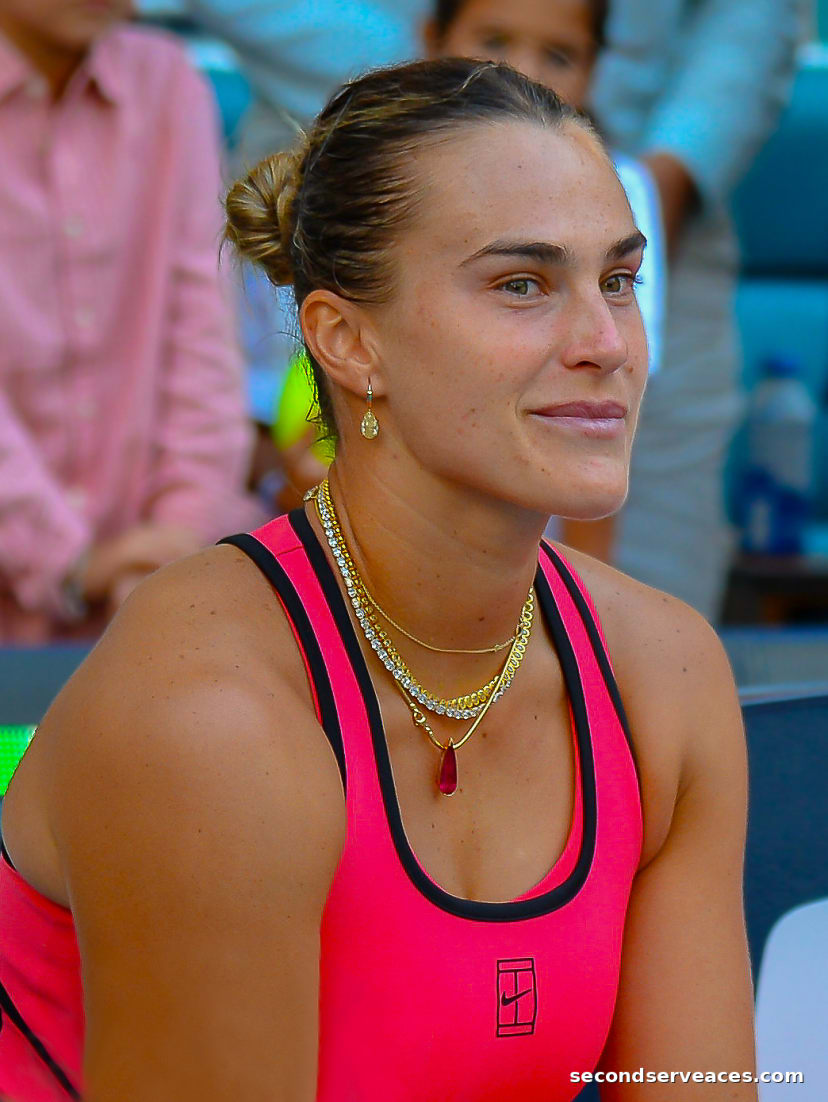
In the midst of this logistical hemorrhage, defending champion Aryna Sabalenka was unceremoniously evicted from the cavernous Stadium Court. Relocated to the venue's third-biggest stage to confront Ann Li, Sabalenka found herself navigating not just an opponent, but the psychic friction of a collapsed schedule. Against the backdrop of this atmospheric disruption, Sabalenka engineered a narrow escape, dispatching Li with a tight, nervous 7-6(5), 6-4 victory.
The Paradigm Shift in the Men's Draw
While the WTA bracket wrestled with the sky, the ATP draw underwent a sort of generational mitosis. The sheer statistical weight of what transpired on the men's side requires a pause. The modern game—built on grueling physicality and the grinding attrition of heavy topspin—rarely permits unbaked youth to thrive at the highest tiers simultaneously.
- A Nineteen-Year Anomaly: For the first time in nearly two decades, five teenagers navigated their way into the second round of an ATP Masters 1000 event.
- The Qualifier's Ascent: Twenty-year-old qualifier Martin Landaluce systematically dismantled the No. 14 seed, Karen Khachanov, advancing to the third round.
- The Apex Upset: In the most startling result of the tournament thus far, Sebastian Korda pulled off a massive upset against World No. 1 Carlos Alcaraz.
The Tactical Breakdown
Consider the physical and psychological mechanics of Sabalenka being moved to Court Three. Smaller courts radically alter the spatial perception of the incoming ball. The backdrops are tighter; the ambient noise is sharper, bouncing off temporary bleachers rather than dissipating into stadium air. Sabalenka's game relies on immense, lever-cracking power, requiring distinct timing that a sudden venue shift can instantly short-circuit. Against Li, the reigning champion had to marshal her sheer ball speed while compensating for diminished rhythm, leaning heavily on serve placement out wide to open the Euclidean angles of the deuce court and protect her baseline position.
Regarding the ATP side, the tactical blueprint against Alcaraz is largely theoretical until someone with Korda's specific biomechanical gifts applies it. Alcaraz feeds on time and parabolic bounce, utilizing his extraordinary footwork to run around backhands and dictate with heavy topspin. Korda, armed with arguably the cleanest, flattest two-handed backhand on the circuit, simply refused to give the Spaniard the requisite oxygen to operate. By hugging the baseline and taking the ball obscenely early, Korda effectively amputated Alcaraz's swing path. It is a terrifyingly low-margin strategy—requiring perfect hand-eye coordination to redirect pace—but when executed, it suffocates the World No. 1's heavy topspin repertoire.
The Bigger Picture
This iteration of the Miami Open is functioning as a strange, temporal junction box. On one hand, you have Sabalenka, the established reigning champion, surviving the ugly, grinding, disjointed matches that ultimately dictate who hoists trophies at the end of a fortnight. The ability to secure a straight-sets victory when the weather is miserable, the schedule is in tatters, and you have been exiled to an outer court is the literal definition of championship bandwidth. These are the matches that do not make the highlight reels but are functionally vital to a title defense.
Conversely, the men's draw is signaling a structural shift on the tour's hard courts. The nineteen-year drought of teenagers reaching the second round of a Masters 1000 being broken—coupled with Landaluce's third-round breakthrough against an established veteran like Khachanov—suggests the entry requirements for the ATP elite are morphing. The ball is being struck earlier, flatter, and with a brazen lack of hesitation by players barely out of adolescence. The established hierarchy is not yielding willingly, but as the Miami humidity breaks, a new vanguard is suddenly refusing to ask for permission to advance.
What Carlos Alcaraz Plays With
Babolat Pure Aero 98
Babolat RPM Blast 1.30
Babolat VS Original (12-Pack)
Nike Vapor Pro 2
Analyze Alex Eala vs. João Fonseca
Predict tactical adjustments, momentum swings, and serve strategy options for this match-up using our AI simulator.
The Aces Tactical Panel
This report was curated and edited by Bhaskar Goel. Tactical analysis and technical insights were provided by our specialized panel of expert correspondents.
Julian Price
Senior Tactical Correspondent
Stuffy, pedantic British academic and historian specializing in match momentum and historical context.
Elena Cruz
Director of Analytical Research
Data scientist specializing in court surface physics and movement patterns.
Bhaskar
The Editor & Fan
Passionate tennis player and site editor bringing everyday amateur insights and relatable fan commentary.
Arthur Vance
Senior Existential Analyst
Deep, eccentric, and DFW-inspired. Models court metaphysics, kinetic beauty, and player psychology.
Leo Sterling
High-Performance Consultant
Hard-nosed ex-trainer from Melbourne with a no-nonsense view on tour fitness.