A Changing of the Guard Amidst the Ochre Dust
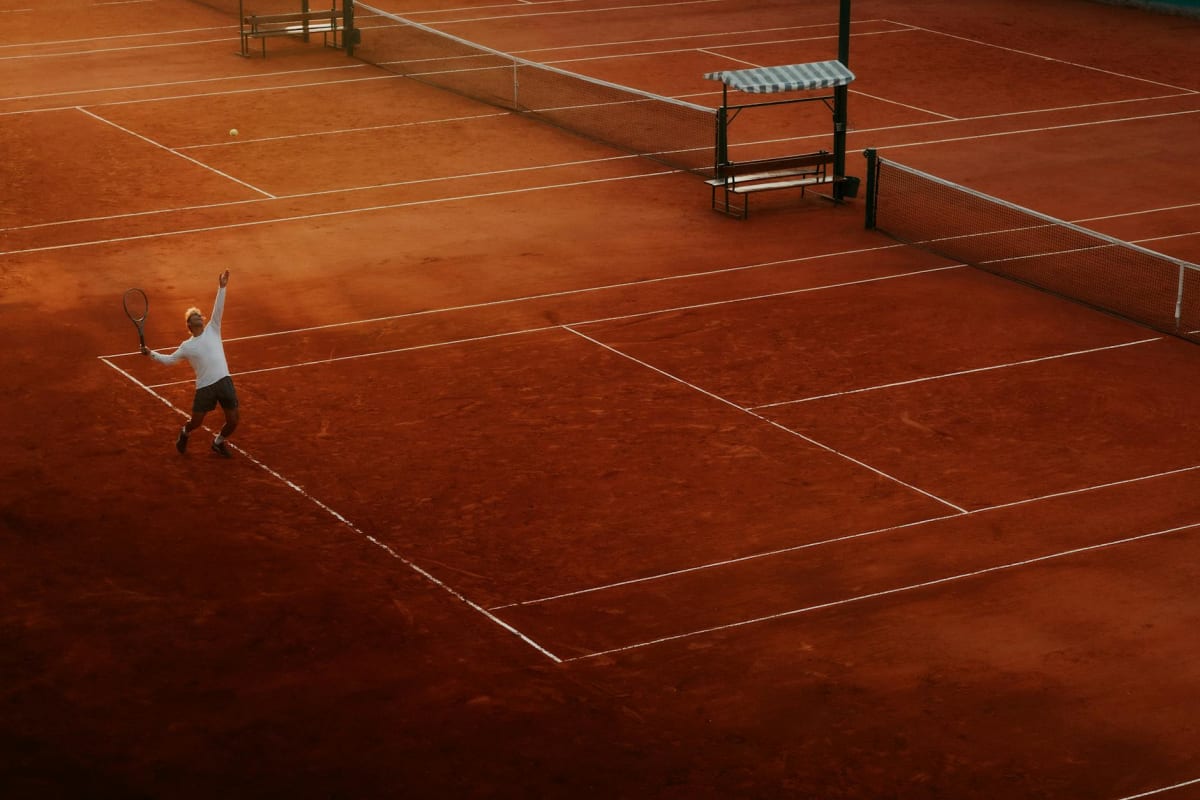
There is a peculiar, almost mournful physics to the Madrid clay in May—a surface that grips the ball with a begrudging stubbornness before releasing it into a high, unpredictable arc. It was upon this stage that Marta Kostyuk secured her title, weaving through a draw that felt as much like a psychological test as a physical one. Her victory over Mirra Andreeva in the final served as a visceral reminder that the WTA hierarchy is currently in a state of rapid, liquid reconfiguration.
Listen to the Second Serve Podcast
Get our daily AI-synthesized audio briefings and match reviews on the go.
While Kostyuk claimed the headlines, the tournament’s perimeter was defined by a haunting absence. The revelation that Carlos Alcaraz has been forced to shutter his 2026 clay-court season due to a wrist injury introduces a profound tactical void. Alcaraz represents the kinetic ideal of modern tennis—a fusion of raw power and court geometry. Without his presence, the pathway to the French Open title—the sport’s most unforgiving crucible—loses its primary protagonist, leaving the remaining field to redefine their roles as either aggressors or endurance specialists on the terre battue.
This vacuum of star power was filled by the surprising depth of the draw, most notably by the run of Alexander Blockx. Ranked No. 69, Blockx navigated the tournament with a poise that defied his station, eventually bowing out to Alexander Zverev. His progression into the semifinals serves as a testament to the volatility of the clay surface, where tactical variation and patience often override the sheer, unvarnished force of top-ten talent.
The Oura Partnership and the Quantified Athlete
The USTA’s announcement of a five-year strategic partnership with Oura signifies a pivot toward the hyper-quantification of the tennis body. In a sport where the margins between victory and a second-round exit are often measured in sub-millimeter trajectories and heart-rate variability, this wearable-tech integration is not merely branding—it is an attempt to map the unseen biological stressors that accumulate over a long, grueling season.
For players like Zverev or even the rising cohort of Kostyuk and Andreeva, these devices offer a feedback loop that might provide the edge required to extend a career. Yet, there remains a philosophical friction: tennis, at its core, is a game of sensory intuition—the sound of the strings, the texture of the clay, the visual feedback of a mark in the red dust. By offloading this sensory data to algorithmic monitors, the sport risks moving further away from the visceral, tactile connection that defined its most storied eras.
The marriage of high-performance wearables with the sport’s infrastructure suggests a future where peak physical condition is no longer just a result of training, but an output of data management. Whether this will lead to a more durable athlete or a more sterile form of competition remains the central, unspoken question of our current tour era.
The Persistence of Human Error in a Digital Age
Perhaps the most discordant note in Madrid was the ongoing resistance to electronic line calling. As the French Open stands alone as the only Grand Slam tournament refusing to adopt this technological standard, the Madrid Open provided a microcosm of the resultant frustration. Players are increasingly weary of the reliance on human umpires to judge marks in the dirt—marks that can be smeared, obscured, or simply misread by the naked eye.
The tension here is aesthetic as much as it is procedural. There is an argument that the lack of electronic line calling preserves a certain “human element” of the clay game, where the umpire’s descent from the chair provides a rhythmic, dramatic pause. However, in an era where the speed of play has evolved into a blur of topspin and reactive reflex, this tradition feels increasingly like a hurdle rather than a feature.
If the ATP and WTA tours are to align with the technological integration seen in other sports, the clay courts must eventually yield. The resistance is not just about the technical feasibility of tracking a ball on a granular surface, but about the preservation of a romanticized, archaic version of the sport that is becoming increasingly incompatible with the demands of modern professionalism.
Looking Toward the Grand Slam Horizon
As the tour turns its gaze toward the next major milestones, the narrative threads of the 2026 season feel frayed. We have a WTA tour that is gloriously unpredictable, as evidenced by Kostyuk’s rise, and an ATP tour that is missing its most radiant, albeit injury-prone, star. The physical toll of the clay—a surface that demands more from the lower back and wrists than any other—is clearly exacting a price.
We are watching a transition that is as much about biological fragility as it is about competitive dominance. The stories of Blockx’s semifinal run and Kostyuk’s title win are not just isolated results; they are echoes of a changing tide. As the season progresses, we will see whether these breakthroughs translate into consistency or if they remain beautiful, singular flashes of light before the tour recalibrates for the grass-court swing.
The absence of Alcaraz forces us to consider a Roland-Garros where the outcome is entirely opaque. It invites a form of tennis—and a form of reporting—that focuses less on the inevitable coronation of a king and more on the unpredictable, messy, and fascinating process of human performance under pressure. The dust has settled in Madrid, but the larger questions regarding technology, health, and hierarchy remain firmly in play.
What Alexander Zverev Plays With
Head Gravity Pro
Head Hawk Touch 1.25
Analyze Alexander Zverev vs. Mirra Andreeva
Predict tactical adjustments, momentum swings, and serve strategy options for this match-up using our AI simulator.
The Aces Tactical Panel
This report was curated and edited by Bhaskar Goel. Tactical analysis and technical insights were provided by our specialized panel of expert correspondents.
Julian Price
Senior Tactical Correspondent
Stuffy, pedantic British academic and historian specializing in match momentum and historical context.
Elena Cruz
Director of Analytical Research
Data scientist specializing in court surface physics and movement patterns.
Bhaskar
The Editor & Fan
Passionate tennis player and site editor bringing everyday amateur insights and relatable fan commentary.
Arthur Vance
Senior Existential Analyst
Deep, eccentric, and DFW-inspired. Models court metaphysics, kinetic beauty, and player psychology.
Leo Sterling
High-Performance Consultant
Hard-nosed ex-trainer from Melbourne with a no-nonsense view on tour fitness.