The Delicate Artistry of the Tuscan Maestro Interrupted in Tokyo
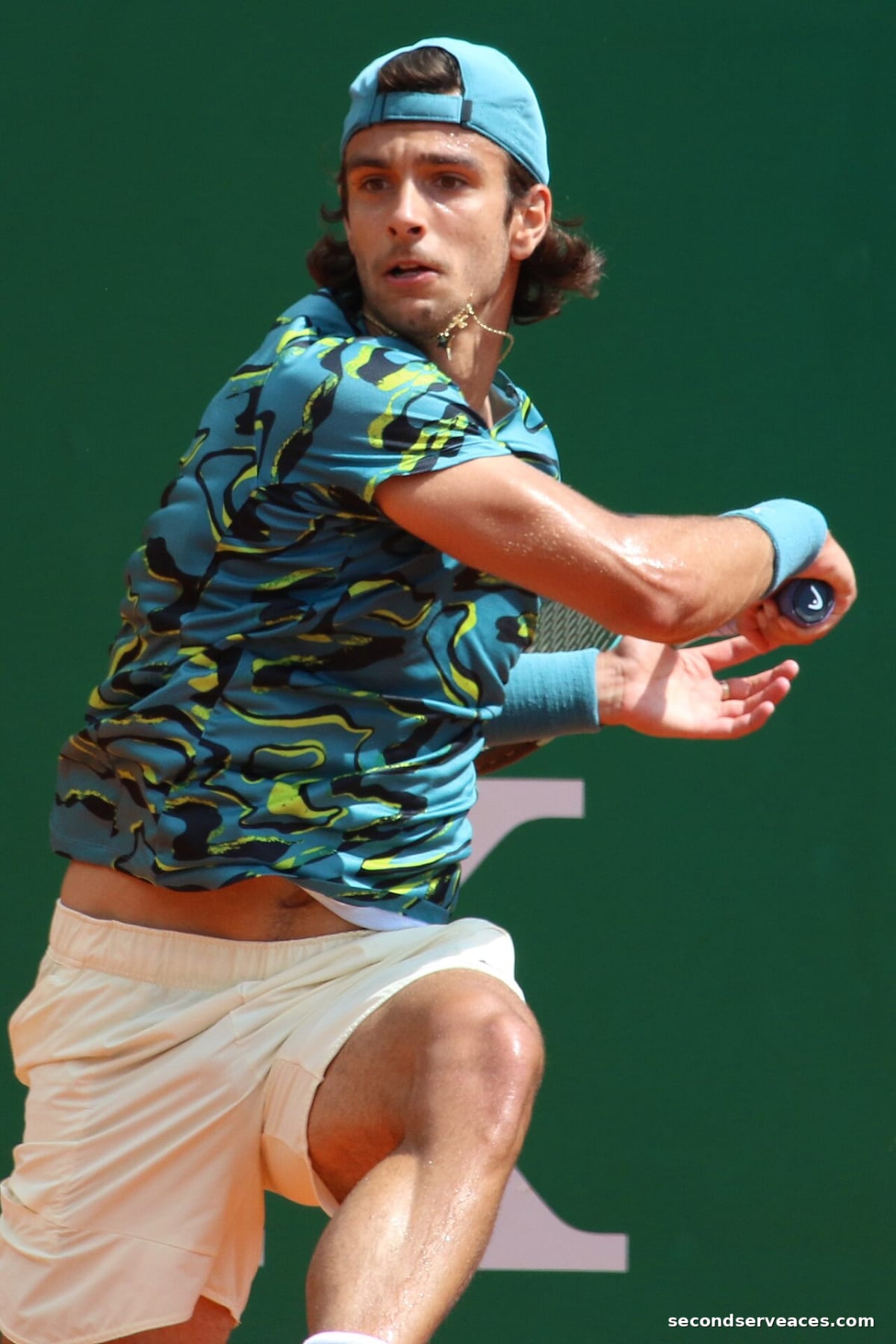
It is with a heavy heart and a nostalgic sigh for the rugged, tape-it-up era of 1970s tennis that we must report the withdrawal of Lorenzo Musetti from the Japan Open. The elegant Italian, frequently referred to by purists as the "Tuscan Maestro" for his flowing, single-handed backhand, was forced to forfeit his place in the draw after suffering a small fracture in the ring finger of his right hand. The injury, sustained during a routine practice session at the Ariake Tennis Forest Park, brings a premature end to a campaign that promised to delight Tokyo's highly discerning tennis public.
Listen to the Second Serve Podcast
Get our daily AI-synthesized audio briefings and match reviews on the go.
An injury to the dominant hand of a single-handed backhand practitioner is a minor tragedy in itself. Unlike the modern crop of baseliners who rely on a double-handed grip to mask physical frailties in their non-dominant limbs, Musetti requires absolute tactile precision from every digit to execute his sweeping, classical strokes. In my day, a gentleman of the court would simply bind the offending digit with heavy plaster and soldier on, but the high-velocity demands of the modern game dictate a far more cautious medical path.
Despite the obvious disappointment of missing out on the Tokyo showcase, the Italian camp has chosen to look toward the horizon rather than dwell on this eastern misfortune. Musetti has publicly stated that he still intends to travel and compete at the upcoming Shanghai Masters, suggesting that the fracture is minor enough to heal with a brief period of immobilization. Whether this is youthful optimism or a calculated gamble remains to be seen, but his presence in China will be a crucial litmus test for his autumn ambitions.
A Fractured Digit and the Hard-Court Realities of the Asian Swing
The grueling nature of the late-season hard-court circuit is notorious for testing the structural integrity of even the most finely tuned athletes. As we previously observed in our coverage of the Asian Swing showcase in Tokyo, the high-friction, abrasive surfaces of these courts offer zero margin for physical error. A split-second slip during a practice rally can translate into a season-altering injury, as Musetti so unfortunately discovered during his final preparations.
To appreciate the biomechanical gravity of a ring finger fracture, one must understand the mechanics of the eastern and semi-western grips. The ring finger acts as a critical stabilizing anchor on the racket handle, preventing the frame from twisting upon impact when facing heavy, modern topspin. Without this vital point of contact, Musetti's racket face would inevitably flutter, rendering his trademark backhand down-the-line highly vulnerable to the relentless pace of his contemporaries.
This withdrawal is particularly regrettable given the historical prestige of the Japan Open, a tournament that has traditionally rewarded players of versatile, all-court capabilities. The fast outdoor hard courts of Tokyo have historically been a playground for creative shot-makers. Musetti's absence deprives the tournament of a rare aesthetic stylist in an era increasingly dominated by uniform, mechanical baseline play.
From the Heights of Five to the Trenches of Twenty-Four
The trajectory of Musetti’s career over the past twelve months has been a study in extreme fluctuation, testing the resolve of even his most ardent supporters. At the dawn of the 2026 season, the Italian scaled the peak of the official ATP rankings, reaching a career-high of world number five. It was a milestone that suggested the classical style of tennis could still triumph against the brutal power of the modern baseline vanguard.
However, the subsequent months proved to be an unforgiving crucible for the young Italian. A difficult summer campaign culminated in a disappointing showing at Flushing Meadows, causing his ranking to plummet to world number 25 following the conclusion of the US Open. According to historical records on Wikipedia, this swift descent highlighted the volatile nature of the modern ranking system, where a failure to defend deep tournament runs can lead to a rapid slide down the ladder.
Musetti's current standing of world number 24 reflects a player in a state of transition, searching for the tactical consistency required to challenge the upper echelon on a weekly basis. While his natural talent remains undisputed, translating that artistry into sustained victories on fast hard courts remains his ultimate professional hurdle. This latest physical setback in Tokyo only complicates his quest to reclaim a spot among the elite top ten.
A Lucky Loser Steps into the Ariake Coliseum Spotlight
As the old theatrical adage goes, the show must go on, and Musetti's misfortune has opened the door of opportunity for Portugal's Jaime Faria. Entering the main draw as a lucky loser, Faria finds himself thrust into a high-stakes arena that he could scarcely have anticipated earlier in the week. Such is the unpredictable nature of tournament tennis, where a single phone call from the tournament referee can dramatically alter a player's career path.
Faria is scheduled to face Great Britain's Arthur Fery on Thursday, October 1, in what will be a first-time meeting between the two competitors. Fery, a player of immense tactical intelligence and collegiate pedigree, will undoubtedly look to exploit Faria's sudden transition from the qualifying rounds to the main draw. This encounter presents a fascinating contrast of styles and mentalities, as both men vie for a valuable spot in the second round.
For Faria, the match represents a rare free swing at ATP-level points and prize money. Lucky losers have historically caused significant disruption in tournament draws, playing with the liberating knowledge that they have already "died" once in the tournament. Fery must remain highly vigilant, as an opponent with nothing to lose is often the most dangerous obstacle on the court.
Rivalry Matchup & Player Profiles
| Metric | Lorenzo Musetti | Novak Djokovic |
|---|---|---|
| Rank | No. 24 | No. 12 |
| Age | 24 | 39 |
| Country | Italy | Serbia |
| Height | 1.85 m (6 ft 1 in) | 1.88 m (6 ft 2 in) |
| Handedness | Right-handed (one-handed backhand) | Right-handed (two-handed backhand) |
| Play Style | All-court player | Aggressive baseliner / Counterpuncher |
| Career Titles | 2 | 101 |
The head-to-head record between these two competitors is heavily tilted in favor of the legendary Novak Djokovic, who boasts a commanding 10-1 lead. Their encounters have often been physical tests of endurance, culminating in their most recent meeting at the 2026 Australian Open quarterfinals, where Musetti was unfortunately forced to retire due to injury while trailing 4-6, 3-6, 3-1.
While the "Belgrade Falcon" has historically proved to be an insurmountable obstacle for the young Italian, their matches have rarely lacked drama. Musetti's single-handed backhand has occasionally troubled the great Serb on clay, but Djokovic's metronomic consistency and superior return of serve on hard courts have consistently turned the tide in his favor, illustrating the vast gap in tactical execution between the master and the apprentice.
What Novak Djokovic Plays With
Head Speed Pro
Luxilon ALU Power 125
Head Prime Tour (12-Pack)
Asics Court FF 3 Novak
Analyze Lorenzo Musetti vs. Novak Djokovic
Predict tactical adjustments, momentum swings, and serve strategy options for this match-up using our AI simulator.
The Aces Tactical Panel
This report was curated and edited by Bhaskar Goel. Tactical analysis and technical insights were provided by our specialized panel of expert correspondents.
Julian Price
Senior Tactical Correspondent
Stuffy, pedantic British academic and historian specializing in match momentum and historical context.
Elena Cruz
Director of Analytical Research
Data scientist specializing in court surface physics and movement patterns.
Bhaskar
The Editor & Fan
Passionate tennis player and site editor bringing everyday amateur insights and relatable fan commentary.
Arthur Vance
Senior Existential Analyst
Deep, eccentric, and DFW-inspired. Models court metaphysics, kinetic beauty, and player psychology.
Leo Sterling
High-Performance Consultant
Hard-nosed ex-trainer from Melbourne with a no-nonsense view on tour fitness.
Related Reports

Quick Answers
Why did Lorenzo Musetti withdraw from the Japan Open?+
Lorenzo Musetti withdrew from the Japan Open after sustaining a small fracture in the ring finger of his right hand during a practice session.
Who is replacing Lorenzo Musetti in the Japan Open draw?+
Portuguese lucky loser Jaime Faria has replaced Lorenzo Musetti in the tournament draw.
When is Jaime Faria scheduled to play his first match at the Japan Open?+
Jaime Faria is scheduled to make his debut against Great Britain's Arthur Fery on Thursday, October 1.