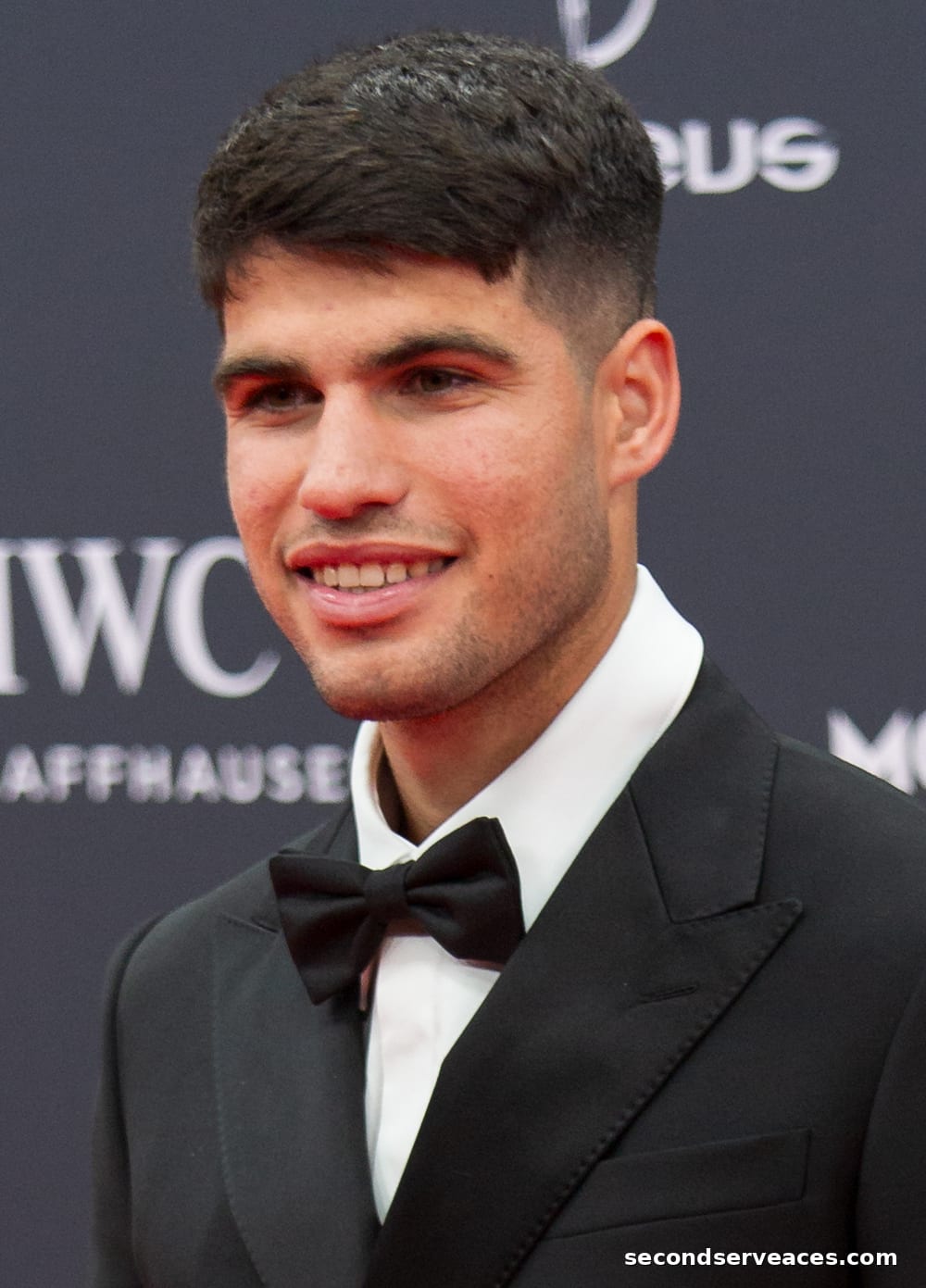
The Asian swing reaches a technical crescendo this week as the Ariake Coliseum hosts the 2026 edition of the Japan Open. As an ATP 500 event, the tournament presents a grueling physical test for the world's best, demanding rapid adjustments to high-density court surfaces and varying atmospheric conditions. For manufacturers and players alike, this week represents a critical junction where specialized gear configurations dictate tournament longevity.
Listen to the Second Serve Podcast
Get our daily AI-synthesized audio briefings and match reviews on the go.
Defending the Crown on the High-Speed DecoTurf of Ariake Coliseum
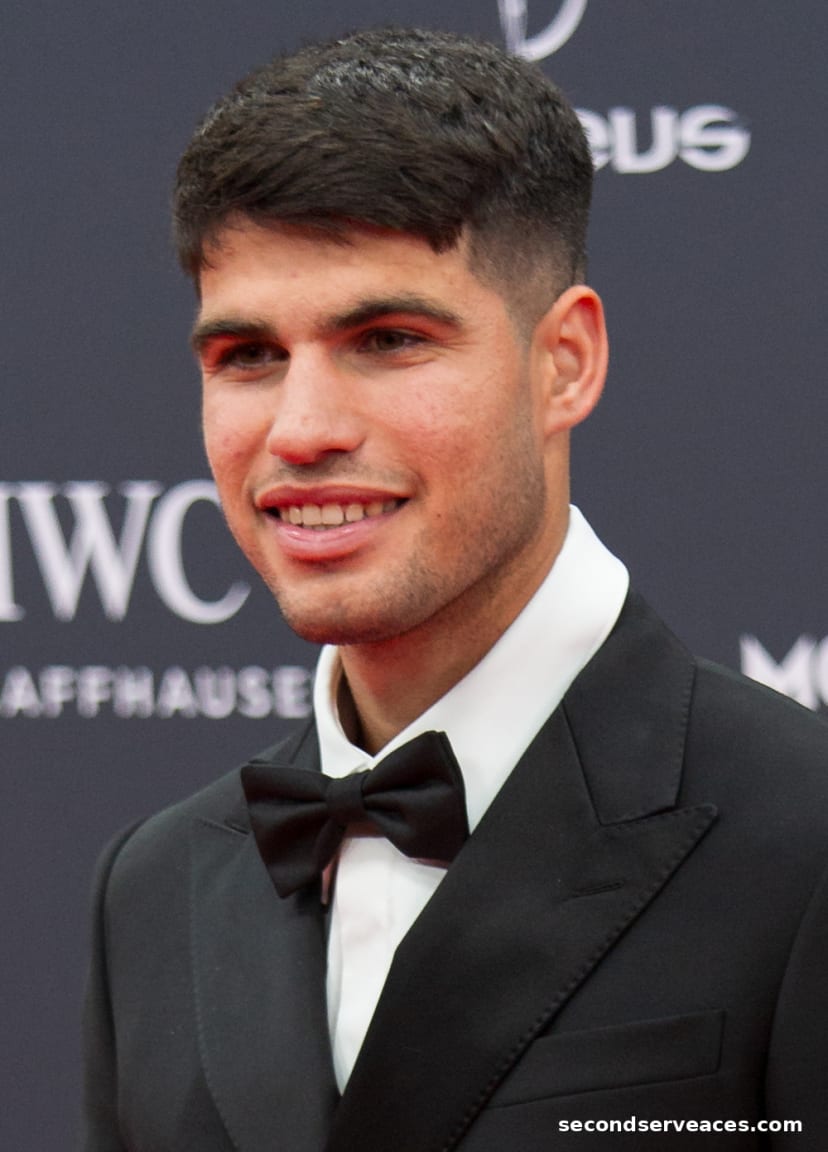
Reigning champion Carlos Alcaraz returns to Tokyo with the task of defending his title on one of the tour's most demanding hard courts. The DecoTurf surface utilized at the Ariake Coliseum is notorious for its medium-fast pace and low, skidding bounce, which rewards players who can accelerate quickly and strike the ball cleanly at a lower contact point. For Alcaraz, maintaining his low-center-of-gravity movement will be essential to handling the pace generated by flat-hitting opponents.
Currently positioned at No. 3 in the official ATP rankings, the young Spaniard must navigate a draw packed with aggressive baseliners who thrive in fast conditions. The Tokyo courts offer minimal friction, meaning that heavy topspin must be paired with extreme racket-head speed to prevent the ball from sailing long. Players who fail to calibrate their tension and swing paths to these specific parameters often struggle with depth control during the opening rounds.
The competitive landscape of the tournament shifted prior to the first serve with the official withdrawal of Ben Shelton. Shelton’s absence removes a major high-velocity serve from the draw, reshaping the seeding paths and elevating the strategic pressure on the remaining top seeds. With one less elite server to contend with, the baseline exchanges are expected to be longer and more physically demanding, putting a premium on physical conditioning and footwork efficiency.
The Engineering Behind the Yonex Tour Platinum Official Ball
A defining technical variable of this year's Japan Open is the introduction of the Tour Platinum ball, engineered and supplied by Yonex. Unlike standard tournament balls, the Tour Platinum features a proprietary woven felt designed to resist fluffing, maintaining a consistent aerodynamic profile even during high-velocity exchanges. This structural integrity allows players to maintain predictable trajectory control over extended service games.
In Tokyo's late-season humidity, standard rubber cores can soften rapidly, leading to a noticeable loss of internal pressure and a dead feel off the string bed. The Tour Platinum ball is engineered with a highly resilient core compound that mitigates this degradation, ensuring that the bounce remains uniform from the first serve to the ball change. For precision players who rely on exact depth targets, this consistency is a vital asset.
As a home-court showcase for Yonex, the tournament highlights the manufacturer's growing footprint on the professional tour. The integration of their flagship ball alongside their high-modulus graphite rackets creates a unified ecosystem where equipment synergy is highly visible. Stringers in the tournament village are reporting a high volume of requests for hybrid polyester setups to maximize the spin potential of this specific ball model.
Kei Nishikori Prepares for an Emotional Final Home Campaign
Japanese tennis icon Kei Nishikori is set to make his final appearance at the Japan Open, marking the end of an era for local fans. Nishikori’s career has been defined by his flawless timing and ability to take the ball exceptionally early on the rise. His presence in the draw adds an emotional weight to the event, drawing massive crowds to the Ariake Coliseum for one last look at his signature backhand down the line.
From a technical standpoint, Nishikori's longevity on the ATP Tour is a testament to his efficient biomechanics. Despite numerous physical setbacks throughout his career, his compact stroke production minimizes unnecessary stress on his wrist and shoulder joints. Watching him tune his equipment to match his declining physical baseline offers a masterclass in professional adaptability.
The home crowd’s energy will undoubtedly play a role in lifting Nishikori’s performance levels during tight moments. In fast indoor and outdoor hard-court environments, local support can disrupt an opponent's rhythm, making Nishikori a dangerous floater in the draw. His final campaign is not just a farewell tour, but a highly competitive test of his tactical acumen against a younger, hard-hitting generation.
Tactical Adaptations and Equipment Tuning for the Asian Swing
The transition to the Asian swing requires meticulous adjustments to racket specs and string tensions. Players migrating from slower European clay or North American hard courts must recalibrate their setups to handle the rapid court speed in Tokyo. Many competitors opt to increase their string tension by half a pound to a full pound to gain extra control over the lively Tour Platinum balls.
Polyester strings with pentagonal or hexagonal profiles are highly favored this week, as the geometric edges bite into the felt of the ball to generate the necessary RPMs to keep aggressive groundstrokes within the lines. String wear is accelerated under these fast-court conditions, forcing players to rotate rackets more frequently during a match to avoid tension loss that could lead to unforced errors.
Furthermore, racket customization specialists are working overtime to adjust swingweights. Adding small amounts of lead or tungsten tape to the hoop of the racket can increase stability against heavy incoming serves, allowing players to block returns back deep into the court. These minor adjustments often represent the difference between a first-round exit and a deep run in a highly competitive ATP 500 draw.
Rivalry Matchup & Player Profiles
The tournament features several high-profile contenders, including a potential clash between top seed Carlos Alcaraz and American star Taylor Fritz. Below is a side-by-side technical comparison of these two elite competitors:
| Metric | Carlos Alcaraz | Taylor Fritz |
|---|---|---|
| Rank | 3 | 10 |
| Country | Spain | United States |
| Age | 23 | 28 |
| Height | 1.83 m (6 ft 0 in) | 1.96 m (6 ft 5 in) |
| Handedness | Right-handed | Right-handed |
| Play Style | Aggressive baseliner / All-court player | Aggressive baseliner |
| Career Titles | 26 | 11 |
Carlos Alcaraz holds a dominant 6-1 lead in his head-to-head rivalry against Taylor Fritz. Their matchups are highly physical contests characterized by explosive baseline rallies and contrasting court coverage styles. Fritz relies heavily on his massive first serve and flat groundstrokes to dictate play, while Alcaraz utilizes his superior court coverage and variety to disrupt the American's rhythm.
This matchup follows their thrilling encounter at the Laver Cup in London, which we covered in our report on how Mensik & Cobolli Spark Team Europe Laver Cup Victory, where Alcaraz edged out Fritz in a tight match tiebreak, finishing 6-3, 4-6, 13-11. In the fast conditions of Tokyo, Fritz's flat ball-striking could prove highly effective, but Alcaraz's defensive transition skills remain the gold standard on hard courts.
What Carlos Alcaraz Plays With
Babolat Pure Aero 98
Babolat RPM Blast 1.30
Babolat VS Original (12-Pack)
Nike Vapor Pro 2
Analyze Carlos Alcaraz vs. Taylor Fritz
Predict tactical adjustments, momentum swings, and serve strategy options for this match-up using our AI simulator.
The Aces Tactical Panel
This report was curated and edited by Bhaskar Goel. Tactical analysis and technical insights were provided by our specialized panel of expert correspondents.
Julian Price
Senior Tactical Correspondent
Stuffy, pedantic British academic and historian specializing in match momentum and historical context.
Elena Cruz
Director of Analytical Research
Data scientist specializing in court surface physics and movement patterns.
Bhaskar
The Editor & Fan
Passionate tennis player and site editor bringing everyday amateur insights and relatable fan commentary.
Arthur Vance
Senior Existential Analyst
Deep, eccentric, and DFW-inspired. Models court metaphysics, kinetic beauty, and player psychology.
Leo Sterling
High-Performance Consultant
Hard-nosed ex-trainer from Melbourne with a no-nonsense view on tour fitness.
Related Reports
Quick Answers
Which official ball is being used at the 2026 Japan Open?+
The tournament is using the Tour Platinum ball, supplied by Yonex as part of their home-court showcase.
Is Ben Shelton playing in the 2026 ATP Tokyo tournament?+
No, Ben Shelton has officially withdrawn from the tournament, leaving Carlos Alcaraz as the top draw.
What is the head-to-head record between Carlos Alcaraz and Taylor Fritz?+
Carlos Alcaraz holds a dominant 6-1 lead over Taylor Fritz, including their most recent meeting at the 2026 Laver Cup.