
In the hyper-refined ecosystem of modern professional tennis, the relationship between coach and player is a delicate, often volatile, psychological contract. It is less about teaching the mechanical physics of a topspin forehand and more about aligning two disparate human wills toward a singular, brutal objective. When former World No. 1 Juan Carlos Ferrero joined forces with a young Alexander Zverev, the tennis world anticipated a masterclass in clay-court discipline meeting raw, explosive power.
Listen to the Second Serve Podcast
Get our daily AI-synthesized audio briefings and match reviews on the go.
Seven Months of Friction and the Canadian Open Apex
In July 2017, Ferrero stepped into the camp of the burgeoning German star. This was not a casual advisory role; it was an attempt to instill the spartan, highly structured work ethic of the Spanish academy system into a prodigiously gifted but raw talent. For a brief, glittering moment, the partnership bore elite fruit, culminating in Zverev capturing the prestigious Canadian Open Masters title in 2017, a performance that showcased his immense ceiling.
Yet, beneath the trophy lifts, a fundamental divergence in professional philosophy simmered. Ferrero, whose own career was forged on the relentless clay courts of Europe, demanded an absolute, borderline monastic commitment to the sport. Zverev, then a rising star navigating the sudden onset of global fame, possessed a different operational frequency, leading to friction off the court regarding daily habits and professional focus.
The Melbourne Meltdown and Divergent Paths
The inevitable rupture occurred in February 2018, catalyzed by a tense third-round exit at the Australian Open, where Zverev fell to South Korea’s Hyeon Chung. A disagreement in Melbourne sealed the end of their seven-month experiment. While Zverev would continue to consolidate his position at the upper echelons of the ATP Tour, as we explored in our analysis of Daniil Medvedev's thoughts on Zverev's season, the elusive Grand Slam title remained just out of reach.
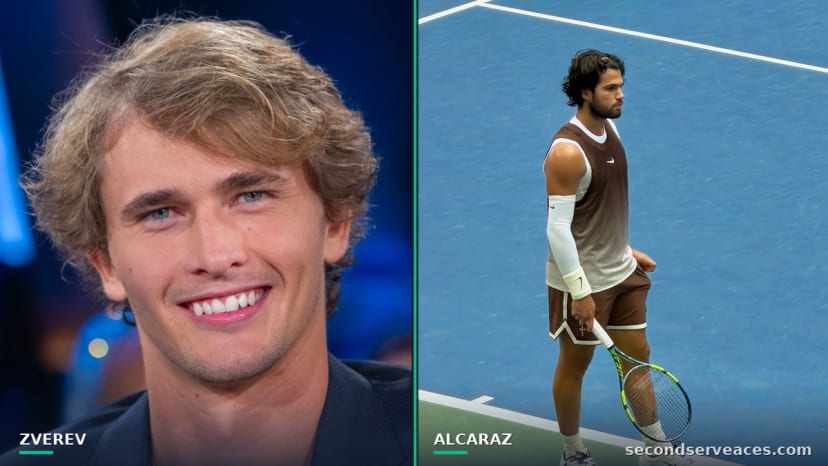
Ferrero, conversely, found his ultimate coaching canvas in Carlos Alcaraz, translating his rigorous philosophy into multiple Grand Slam titles. Looking back, Ferrero’s reflections on Zverev are not born of malice, but of a profound understanding of what it takes to cross the threshold from a great player to a legendary champion—a kinetic transformation that requires total alignment of lifestyle and athletic ambition.
Rivalry Matchup & Player Profiles
| Metric | Juan Carlos Ferrero |
|---|---|
| Rank | Retired (Former World No. 1) |
| Country | Spain |
| Age | 46 |
| Height | 1.83 m (6 ft 0 in) |
| Handedness | Right-handed |
| Play Style | Aggressive baseliner |
| Career Titles | 16 |
Juan Carlos Ferrero's aggressive baseline play defined the early 2000s, earning him the Roland Garros title in 2003 and the top ranking. His transition to coaching has proven equally influential, demonstrating that the meticulous preparation which defined his own playing career remains the ultimate currency in modern tennis player development.
What Alexander Zverev Plays With
Head Gravity Pro
Head Hawk Touch 1.25
Head Prime Tour (12-Pack)
Analyze Juan Carlos Ferrero vs. Alexander Zverev
Predict tactical adjustments, momentum swings, and serve strategy options for this match-up using our AI simulator.
The Aces Tactical Panel
This report was curated and edited by Bhaskar Goel. Tactical analysis and technical insights were provided by our specialized panel of expert correspondents.
Julian Price
Senior Tactical Correspondent
Stuffy, pedantic British academic and historian specializing in match momentum and historical context.
Elena Cruz
Director of Analytical Research
Data scientist specializing in court surface physics and movement patterns.
Bhaskar
The Editor & Fan
Passionate tennis player and site editor bringing everyday amateur insights and relatable fan commentary.
Arthur Vance
Senior Existential Analyst
Deep, eccentric, and DFW-inspired. Models court metaphysics, kinetic beauty, and player psychology.
Leo Sterling
High-Performance Consultant
Hard-nosed ex-trainer from Melbourne with a no-nonsense view on tour fitness.
Related Reports


Quick Answers
How long did Juan Carlos Ferrero coach Alexander Zverev?+
Juan Carlos Ferrero coached Alexander Zverev for seven months, from July 2017 to February 2018.
What title did Alexander Zverev win while working with Ferrero?+
During their brief partnership, Alexander Zverev won the prestigious Canadian Open Masters title in 2017.
Why did Juan Carlos Ferrero and Alexander Zverev split?+
The duo split following a disagreement at the 2018 Australian Open after Zverev lost to Hyeon Chung in the third round.