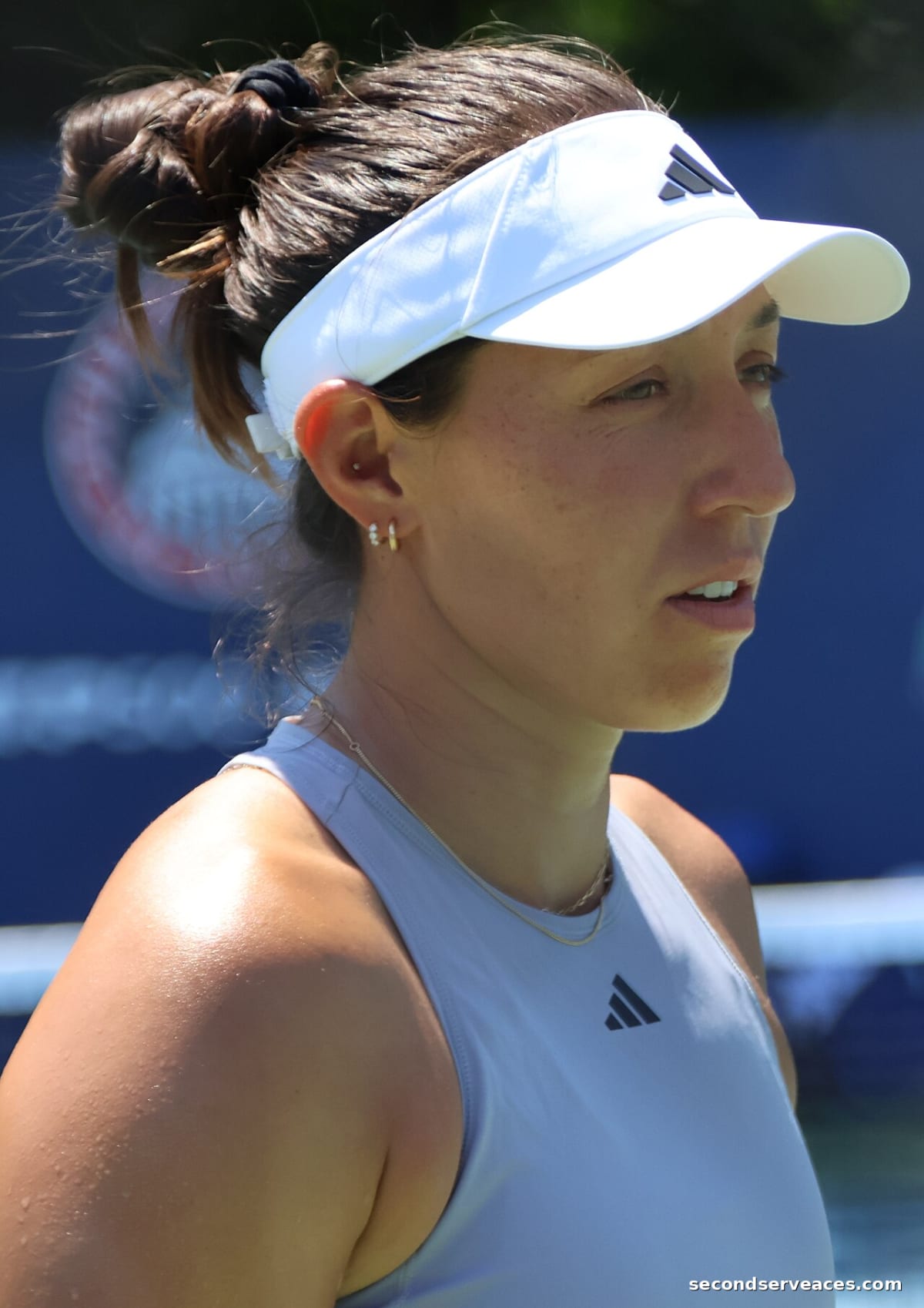
World No. 3 Jessica Pegula has officially withdrawn from the upcoming Singapore Open, citing incomplete recovery after her demanding run to the semifinals in New York. The American's high-octane baseline game, which relies on taking the ball exceptionally early to rob opponents of recovery time, took a heavy physical toll during her deep run at the US Open before she was defeated by Aryna Sabalenka.
Listen to the Second Serve Podcast
Get our daily AI-synthesized audio briefings and match reviews on the go.
This decision highlights a growing trend of late-season physical fatigue on the tour, a topic we recently detailed in our analysis of post-US Open WTA withdrawals. For an aggressive baseliner like Pegula, whose low-to-the-court strike zone requires constant knee flexion and lateral explosive movement, entering a tournament at less than one hundred percent physical capacity risks acute injury.
Physical Toll of Flushing Meadows Prompts Singapore Withdrawal
Pegula’s withdrawal reshapes the competitive landscape in Singapore. Her flat, clean ball-striking is highly effective on fast indoor surfaces, where her ability to redirect pace flatlines opponents' defensive recovery. Without her presence, the tournament loses one of its most disciplined tactical minds, leaving the field open for other aggressive baseliners to assert dominance.
The physical demands of modern hard-court tennis require immense deceleration capacity. Pegula’s deep run in New York featured high-intensity rallies that pushed her physical limits. Deciding to prioritize rest over immediate competition prevents the kind of chronic joint strain that often plagues players during the indoor autumn swing.
Singapore Draw Shifts as Alexandra Eala Assumes Seeded Position
With Pegula sidelined, and both Elena Rybakina and Aryna Sabalenka absent from the Singapore Open entry list, the draw undergoes a dramatic reshuffling. Philippines' Alexandra Eala moves up to the number three seed, thrusting the young prospect into a high-pressure seeding slot. This structural shift alters the projected quarterfinal matchups, offering a unique opportunity for players like Emma Navarro, Leylah Fernandez, Mirra Andreeva, and Amanda Anisimova to exploit the open draw.
Tactically, the absence of the top three seeds changes court dynamics. Without Pegula's elite counter-punching and Rybakina's devastating first serve, matches are highly likely to feature longer baseline exchanges. Players will need to focus on heavy topspin angles to pull opponents off the court rather than relying on pure pace redirection. Fans tracking the year-end standings can monitor the implications on the official WTA rankings as the Asian swing progresses.
Rivalry Matchup & Player Profiles
| Metric | Jessica Pegula | Elena Rybakina |
|---|---|---|
| Rank | No. 3 | No. 1 |
| Country | United States | Kazakhstan |
| Age | 32 | 27 |
| Height | 1.70 m (5'7") | 1.84 m (6'0") |
| Handedness | Right-handed | Right-handed |
| Play Style | Aggressive baseliner | Aggressive baseliner |
| Career Titles | 11 | 14 |
The rivalry between Jessica Pegula and Elena Rybakina remains one of the most compelling stylistic clashes on the WTA Tour. Rybakina currently leads their head-to-head series 5-3, asserting her dominance in recent matchups by winning all three of their encounters in 2026. Their last battle took place in the quarterfinals of the 2026 Miami Open, where Rybakina overcame a strong start from Pegula to secure a 2-6, 6-3, 6-4 victory.
While both players operate as aggressive baseliners, they generate power differently. Rybakina leverages her 1.84-meter frame to produce elite serve speed and steep downward angles, whereas Pegula relies on superior lateral movement and ultra-flat groundstrokes to rush her opponent's preparation. Rybakina's ability to absorb Pegula's flat pace and counter with heavy topspin depth has been the defining factor in their recent 2026 matchups.
What Aryna Sabalenka Plays With
Wilson Blade 98 v9 (16x19)
Luxilon ALU Power 125
Analyze Jessica Pegula vs. Elena Rybakina
Predict tactical adjustments, momentum swings, and serve strategy options for this match-up using our AI simulator.
The Aces Tactical Panel
This report was curated and edited by Bhaskar Goel. Tactical analysis and technical insights were provided by our specialized panel of expert correspondents.
Julian Price
Senior Tactical Correspondent
Stuffy, pedantic British academic and historian specializing in match momentum and historical context.
Elena Cruz
Director of Analytical Research
Data scientist specializing in court surface physics and movement patterns.
Bhaskar
The Editor & Fan
Passionate tennis player and site editor bringing everyday amateur insights and relatable fan commentary.
Arthur Vance
Senior Existential Analyst
Deep, eccentric, and DFW-inspired. Models court metaphysics, kinetic beauty, and player psychology.
Leo Sterling
High-Performance Consultant
Hard-nosed ex-trainer from Melbourne with a no-nonsense view on tour fitness.
Related Reports
Quick Answers
Why did Jessica Pegula withdraw from the Singapore Open?+
Pegula withdrew because she was not physically ready to compete following her deep and demanding run to the US Open semifinals.
Who took Jessica Pegula's place as the number three seed in Singapore?+
Alexandra Eala moved up to assume the number three seed in the Singapore Open draw following Pegula's withdrawal.
Are Elena Rybakina and Aryna Sabalenka playing in the Singapore Open?+
No, both Elena Rybakina and Aryna Sabalenka are absent from the Singapore Open tournament.