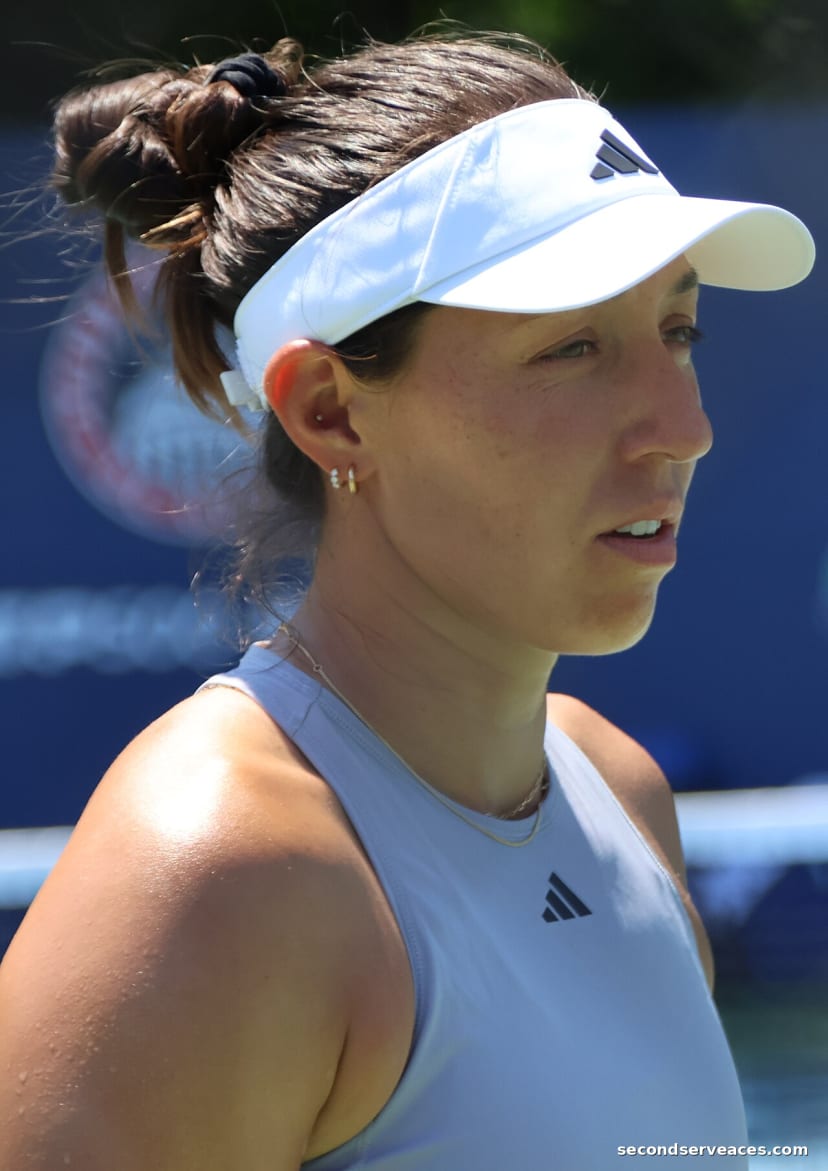
Charleston’s $2.5M Payday: Pegula’s Push for Equity
Let’s call a spade a spade: for decades, tennis has been dragging its feet on the pay gap. But in Charleston, we’re finally seeing a move that actually means something. The 2026 Charleston Open has hiked its total prize money to $2.5 million, marking it as the first standalone WTA 500 event to mirror the purse of its ATP 500 counterparts. It’s about time.
Listen to the Second Serve Podcast
Get our daily AI-synthesized audio briefings and match reviews on the go.
Jessica Pegula, who currently chairs the WTA Tour Architecture Council, is right at the epicenter of this shift. While she’s busy lobbying for a more structured, equitable tour, she’s also been doing the business on the court. Pegula’s clinical dispatching of Yulia Putintseva and Elisabetta Cocciaretto in straight sets is a reminder that she isn’t just looking at spreadsheets—she’s looking at trophies.
The Tactical Breakdown
When you watch Pegula, you’re not watching a highlight-reel flashy player who needs five match points to put someone away. You’re watching an efficiency machine. Her tactical brilliance lies in her rally tolerance and her ability to neutralize opponents who rely on change-of-pace, like Putintseva.
- Court Geometry: Pegula uses the full width of the court to stretch opponents wide before snapping the ball back down the line. It’s simple, high-percentage tennis that keeps her in control of the match momentum.
- Baseline Consistency: She minimizes unforced errors by keeping her strike zone consistent, forcing her opposition to play one extra, uncomfortable ball.
- Exploiting Weaknesses: Against players like Cocciaretto, Pegula excels at identifying serve patterns early, taking the ball on the rise to cut off reaction time.
The Bigger Picture
The Charleston Open has deep roots, dating back to 1973. It’s a tournament with heritage, and having it lead the charge in prize money equity feels appropriate. When you look at the legends who walked these courts—names like Rosemary Casals and Nancy Richey—you realize this event has always been a bellwether for the women’s game.
Pegula’s involvement in the Architecture Council suggests a player who understands that the future of the WTA isn't just about the next set; it’s about the infrastructure of the entire organization. By matching the ATP 500 prize pools, Charleston is forcing the rest of the tour to get comfortable with the idea that the women’s game carries just as much weight and demands the same investment. If you want to keep the best players in the world coming back, you pay them what they’re worth. It’s a simple concept, and I’m glad someone is finally putting it into practice.
What Novak Djokovic Plays With
Head Speed Pro
Luxilon ALU Power 125
Head Prime Tour (12-Pack)
Asics Court FF 3 Novak
Analyze Jessica Pegula vs. Rosemary Casals
Predict tactical adjustments, momentum swings, and serve strategy options for this match-up using our AI simulator.
The Aces Tactical Panel
This report was curated and edited by Bhaskar Goel. Tactical analysis and technical insights were provided by our specialized panel of expert correspondents.
Julian Price
Senior Tactical Correspondent
Stuffy, pedantic British academic and historian specializing in match momentum and historical context.
Elena Cruz
Director of Analytical Research
Data scientist specializing in court surface physics and movement patterns.
Bhaskar
The Editor & Fan
Passionate tennis player and site editor bringing everyday amateur insights and relatable fan commentary.
Arthur Vance
Senior Existential Analyst
Deep, eccentric, and DFW-inspired. Models court metaphysics, kinetic beauty, and player psychology.
Leo Sterling
High-Performance Consultant
Hard-nosed ex-trainer from Melbourne with a no-nonsense view on tour fitness.