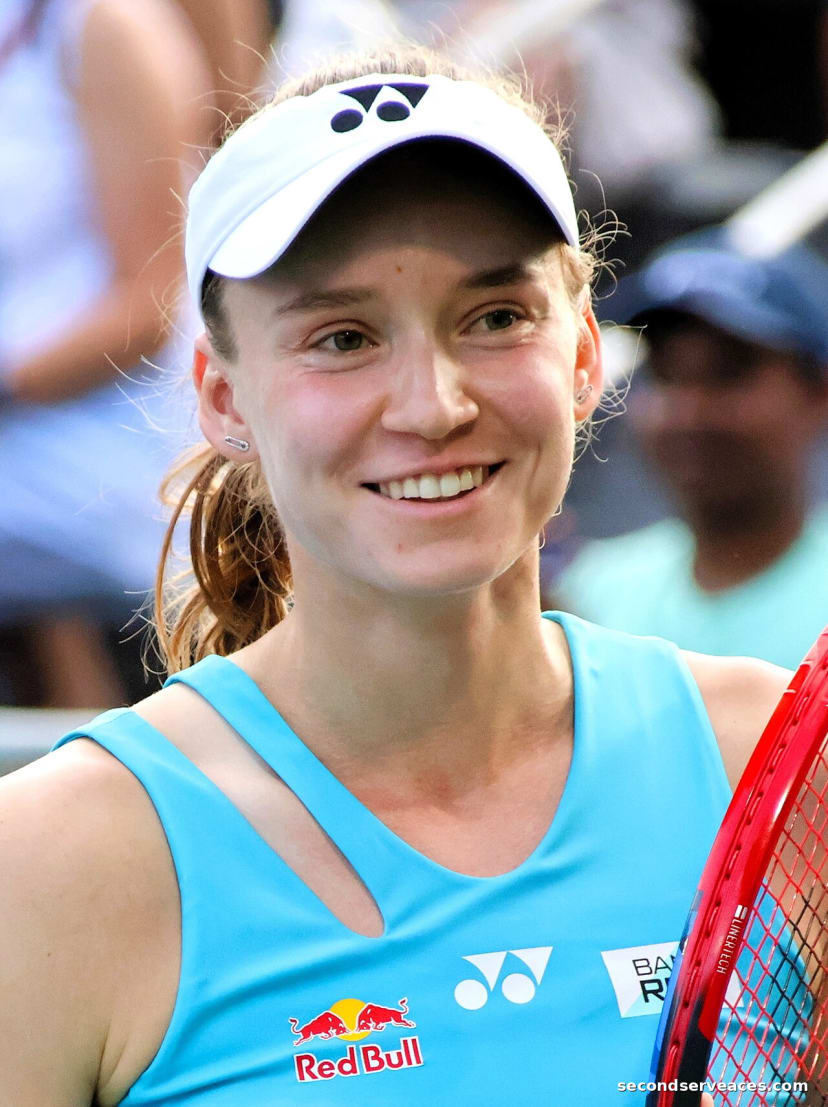
Listen up, tennis fans. If there’s one thing I’ve learned covering this circus of a tour for decades, it’s that Indian Wells is the ultimate equalizer. The ball flies through the thin desert air and then grabs the gritty, sandpaper-like surface like a tractor tire. It’s a court that can make a pure, flat-hitting striker look like a weekend hacker struggling in a country club ladder match. And let's be brutally honest—for years, Jessica Pegula looked absolutely miserable in Tennis Paradise.
Listen to the Second Serve Podcast
Get our daily AI-synthesized audio briefings and match reviews on the go.
But not this week. Wipe the dust out of your eyes, because Pegula has officially advanced to the Indian Wells quarterfinals. She didn't just survive the elements; she conquered a historical track record that would have sent lesser players packing for Miami early.
Conquering the Desert Demons
Let’s talk facts, because the numbers here are staggering. Before this week, Pegula had accumulated just eight wins in 15 appearances at the Indian Wells tournament. You cannot be serious! Eight wins in fifteen tries for a player of her caliber? That’s a stat line that usually results in a player suddenly developing a "mysterious wrist niggle" to avoid the humiliation of another early exit. The conditions out in the California desert have historically been absolute kryptonite to her game.
Yet, here we are. This milestone marks only the second time in her entire career that Pegula has reached the quarterfinals at Indian Wells. She didn’t complain about the heavy balls. She didn’t whine about the blinding sun or the inconsistent bounce that seems to happen every time a ball hits the lines out there—which, by the way, the umpires still struggle to call correctly half the time. She put her head down, made the necessary adjustments, and played world-class tennis.
The Tactical Breakdown
So, how do you flip the script at a tournament that has historically chewed you up and spit you out? As an analyst, this is what I live for. Pegula’s resurgence in the desert isn't just about trying harder; it’s a tactical masterclass in adapting to hostile geometry.
Historically, Pegula is a player who relies on supreme timing. She stands hugging the baseline, takes the ball exceptionally early, and drives it flat through the court. On a slick, fast indoor surface or a traditional hard court, that playstyle suffocates opponents. But at Indian Wells, the gritty surface absorbs the pace. Opponents can load up massive topspin, kicking the ball up above Pegula's strike zone, forcing her to hit from awkward heights.
To overcome this, Pegula had to completely revamp her rally tolerance and court positioning. Here’s what’s changed:
- Stepping In to Cut the Angles: Instead of retreating when the ball kicks up, Pegula is taking the ball on the short hop. It requires impeccable hand-eye coordination, but it robs her opponents of the time they desperately want.
- Patience Over Power: Rather than going for broke on the second or third shot of a rally—which is a death sentence in the slow desert air—she is working the point. She’s willing to hit five, six, or seven neutral balls before finding her opening.
- Exploiting the Down-the-Line: When you are playing on a slow hard court, changing direction is risky. But Pegula has been fearless with her down-the-line backhand, using it to completely break open the cross-court monotony and catch defenders leaning the wrong way.
It’s a gritty, ugly, blue-collar style of tennis masquerading behind her usual clean ball-striking. And frankly, it’s about time. I’ve screamed from the press box for years that you can't play the same way in the desert as you do in New York. Pegula finally got the memo, and her tactical execution has been nothing short of brilliant.
The Officiating and The Mental Grind
We also have to talk about the mental fortitude it takes to make a deep run here. The crowd at Indian Wells is massive, the stakes are absurdly high, and let's face it, the officiating during the swing can test anyone's patience. With the implementation of automated line calling and the shot clock, players are rushed, forced to adapt to a robotic rhythm. When the conditions are already frustrating, a missed challenge or a rushed serve can spiral into a lost set. Pegula has historically let her frustration show when the match gets out of her control, but this week? Ice in her veins. She’s dictating the pace of play and refusing to let external factors dictate her emotional state.
The Bigger Picture
What does this mean for the rest of the WTA Tour? It means everyone else should be on high alert. Reaching the quarterfinals at a venue where you historically average a 33% win rate is a massive psychological breakthrough.
The WTA Tour right now is a battlefield of power players and defensive wizards. Pegula has always occupied a unique space—she’s not the biggest server, and she’s not the fastest runner, but her tennis IQ is off the charts. By proving she can grind out victories in slow, high-bouncing conditions, she’s stripping away the one blueprint her rivals had to defeat her.
This run is a testament to the fact that you can always reinvent yourself, even deep into a professional career. Pegula has firmly entrenched herself at the top of the women's game not through sheer explosive talent, but through a relentless, agonizing commitment to improvement. Whether she raises the trophy at the end of the week or not, proving she can dominate at Indian Wells alters the trajectory of her entire season. She’s not just a fast-court specialist anymore. She’s a certified, all-weather threat.
The desert curse is dead. Long live Jessica Pegula’s baseline brilliance.
Simulate Jessica Pegula Match Scenarios
Simulate high-pressure scenarios, score leverage points, and tactical responses for ATP and WTA players.
The Aces Tactical Panel
This report was curated and edited by Bhaskar Goel. Tactical analysis and technical insights were provided by our specialized panel of expert correspondents.
Julian Price
Senior Tactical Correspondent
Stuffy, pedantic British academic and historian specializing in match momentum and historical context.
Elena Cruz
Director of Analytical Research
Data scientist specializing in court surface physics and movement patterns.
Bhaskar
The Editor & Fan
Passionate tennis player and site editor bringing everyday amateur insights and relatable fan commentary.
Arthur Vance
Senior Existential Analyst
Deep, eccentric, and DFW-inspired. Models court metaphysics, kinetic beauty, and player psychology.
Leo Sterling
High-Performance Consultant
Hard-nosed ex-trainer from Melbourne with a no-nonsense view on tour fitness.