The Geometry of a Title Defense Gone Awry
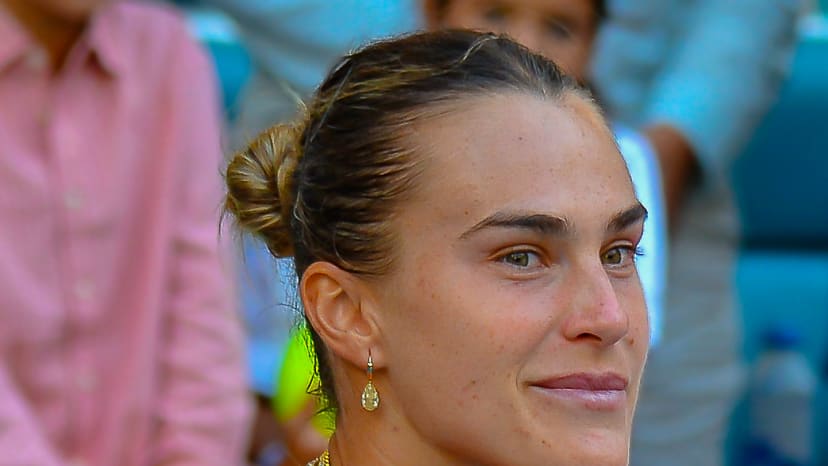
Tennis is, at its most existential level, a game of lines and margins, a delicate physics experiment played out on the red dust of the Porsche Tennis Grand Prix. When Jelena Ostapenko stepped onto the court as the defending champion, the air in Stuttgart carried the weight of expectation. Yet, the 6-4, 5-7, 6-3 defeat at the hands of Ekaterina Alexandrova was a stark reminder that momentum on clay is as volatile as a top-spin kick serve on a damp afternoon.
Listen to the Second Serve Podcast
Get our daily AI-synthesized audio briefings and match reviews on the go.
Watching the rallies unfold, one observed the familiar chaotic brilliance of Ostapenko’s groundstrokes, though they lacked the requisite calibration required to displace a tactical opponent like Ekaterina Alexandrova. The ball-striking remained visceral, but the court geometry—the way the red clay slows the velocity and demands a higher, more patient arc—seemed to betray her aggressive, flat-hitting proclivities.
This early-round exit is not merely a statistical anomaly in a season; it is a structural concern. In a sport governed by the WTA rankings, where every point serves as currency for seeding, this loss ripples outward. For a player whose career is defined by high-variance tennis, the loss of defensive points from a tournament title is a heavy toll to pay just weeks before the primary test of the surface.
The Shadow of 2017 and the Roland-Garros Horizon
The upcoming French Open, scheduled for May 26, looms like a monolith. Since her triumph in 2017, Ostapenko has navigated the red clay of Paris with a fluctuating degree of success, never once piercing beyond the third round. This historical pattern suggests a friction between her hyper-aggressive philosophy and the grinding, lung-busting requirements of the Parisian surface.
We must ask whether the intensity required to sustain her game style is sustainable over the long arc of a best-of-three tournament on clay. While she holds a surprising and statistically lopsided 6-0 head-to-head record against Iga Swiatek—a psychological edge that defies conventional analytical logic—that dominance does little to stabilize the seeding concerns currently facing her team.
The mathematical reality of her ranking is now a pressing narrative. As she descends from the Stuttgart podium—quite literally, in the eyes of the tour—the road to the second week of a major becomes significantly more treacherous. She will need to reconcile the physics of her power game with the unforgiving nature of the clay if she wishes to avoid an early exit in the French capital.
Tactical Volatility and the Cost of Unforced Errors
The Stuttgart encounter exposed the fragility of the ‘all-or-nothing’ approach. Against a disciplined opponent like Alexandrova, the margin for error narrows to the point of absurdity. Every ball pushed wide or launched into the back screen acts as a miniature catastrophe, shifting the weight of the match toward the side of the court that is willing to endure the attrition.
Observers often mistake this style of play for a lack of focus, when in reality, it is a high-stakes calculation. Ostapenko attempts to dictate the baseline territory, essentially forcing the opponent to react to her pace. However, when the ball velocity drops or the timing is fractionally off, the return of serve and the neutral-ball exchanges become liabilities rather than assets.
It is a fascinating tension to watch: the collision of a player who refuses to yield the baseline against a court that begs for compromise. With the French Open on the horizon, one wonders if this loss will force a recalibration of her tactical approach, or if the rhythm that brought her a Grand Slam trophy remains the only language she knows how to speak.
The Seeding Calculus in a Post-Stuttgart Landscape
As we analyze the fallout, we look at the larger ecosystem of the tour. Players like Mirra Andreeva, Coco Gauff, and Jessica Pegula are moving with a different kind of gravitational pull, one predicated on consistency and court coverage. Ostapenko’s ranking slide is significant not because it suggests a lack of talent—her ability to produce winners from nowhere is legendary—but because it risks placing her in the path of the top seeds too early.
The absence of a deep run in Stuttgart deprives her of the competitive rhythm required to navigate the unique sliding and movement demands of the European clay swing. One does not simply flip a switch to find the sliding mechanics and patience required for Parisian glory; it is built through the very matches she has now surrendered.
Ultimately, the numbers are objective, but the psychology is entirely subjective. Whether this loss functions as a catalyst for a refined approach or a harbinger of a stagnant spring remains the primary question. Paris will offer the final verdict, but for now, the path forward appears increasingly complex.
What Iga Swiatek Plays With
Tecnifibre Tempo 298 Iga
Tecnifibre Razor Code 1.25
Tecnifibre Pro Contact Overgrip
Analyze Jelena Ostapenko vs. Ekaterina Alexandrova
Predict tactical adjustments, momentum swings, and serve strategy options for this match-up using our AI simulator.
The Aces Tactical Panel
This report was curated and edited by Bhaskar Goel. Tactical analysis and technical insights were provided by our specialized panel of expert correspondents.
Julian Price
Senior Tactical Correspondent
Stuffy, pedantic British academic and historian specializing in match momentum and historical context.
Elena Cruz
Director of Analytical Research
Data scientist specializing in court surface physics and movement patterns.
Bhaskar
The Editor & Fan
Passionate tennis player and site editor bringing everyday amateur insights and relatable fan commentary.
Arthur Vance
Senior Existential Analyst
Deep, eccentric, and DFW-inspired. Models court metaphysics, kinetic beauty, and player psychology.
Leo Sterling
High-Performance Consultant
Hard-nosed ex-trainer from Melbourne with a no-nonsense view on tour fitness.