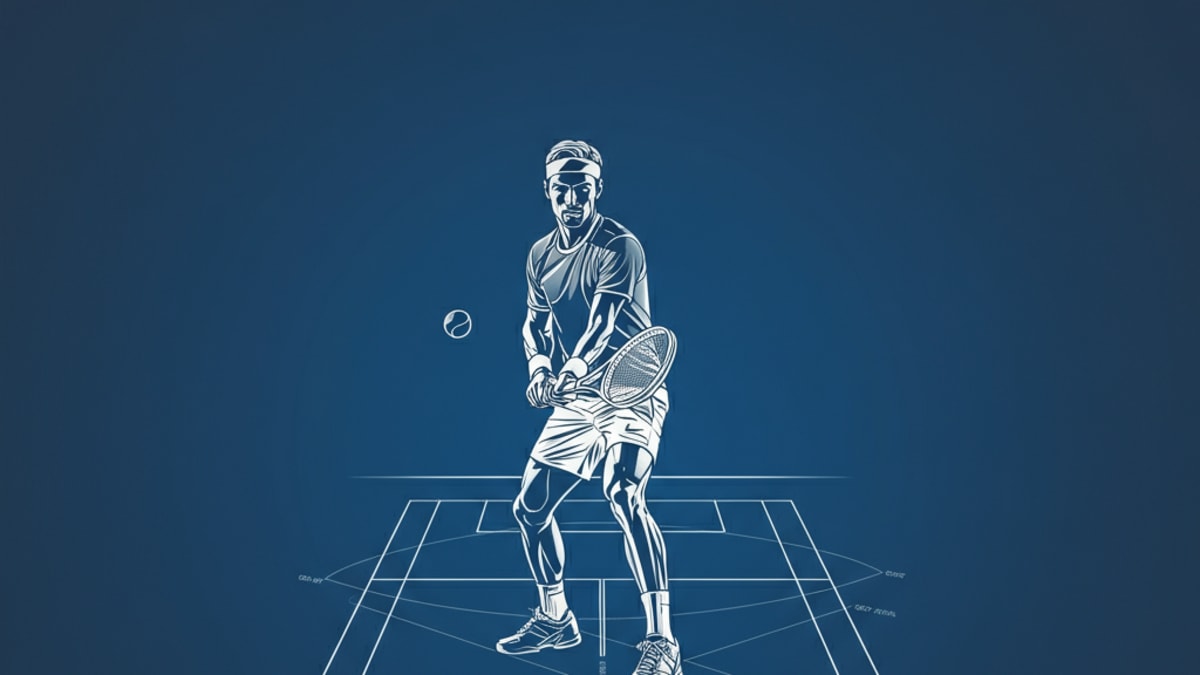
Professional doubles is a game of geometry, reflexes, and, above all, the unspoken chemistry between two athletes sharing a 27-foot wide strip of real estate. For 22 years, Jamie Murray has been a primary architect of the modern doubles game, a player who understood that the point is rarely won by pure velocity, but by the subtle manipulation of court geometry. His retirement marks the conclusion of a career defined not by individual bravado, but by a consistent ability to elevate his partner’s tactical output.
Listen to the Second Serve Podcast
Get our daily AI-synthesized audio briefings and match reviews on the go.
Defining Success Through Fourteen Seasons and Seven Majors
To quantify a career that spans over two decades, one must look at the sheer endurance required to remain relevant in the ATP Tour. Murray did not just compete; he excelled at the highest levels, securing seven Grand Slam titles. His reach was remarkable, appearing in 13 Grand Slam finals across both men’s and mixed doubles, a testament to his versatility at the net.
While many players struggle to find a permanent home on the tour, Murray displayed a rare aptitude for adaptability. He famously noted the significance of his partnership with Martina Hingis, with whom he claimed two of his seven major trophies in 2017 at both Wimbledon and the US Open. The synergy in that pairing, characterized by Hingis's unmatched tactical intuition and Murray's coverage of the alley, remains a masterclass in mixed doubles configuration.
Despite his ability to thrive with various partners, it is important to distinguish his achievements in standard men's doubles. It is a specific historical footnote that Bruno Soares remains the only partner with whom Murray captured a standard doubles Grand Slam title. This fact highlights the narrow margins required to maintain sustained success in a field where point-by-point momentum is the only currency that matters.
The Evolution of Court Positioning and Net Coverage
Throughout his career, Murray’s game was anchored in the 'i' formation and traditional Australian movement, tactics he employed to dismantle opponents who relied too heavily on baseline rhythm. Watching him operate, one noticed that he rarely conceded the center of the court. His ability to anticipate the direction of a return before the ball left the opponent’s racket created a defensive blanket that made him an incredibly difficult player to pass.
His tactical longevity can be attributed to an understanding of break point management that few of his contemporaries possessed. Rather than forcing the issue with erratic power, Murray utilized consistent topspin to keep the ball deep, forcing his opponents into awkward hitting zones that neutralized their ability to generate pace. It was a cerebral approach to a format often mistaken for a mere display of reflexes.
As the tour shifts toward a more baseline-dominant style, Murray’s reliance on classic doubles positioning served as a necessary reminder of the value of the forecourt. His exit from the tour leaves a vacuum in tactical net play that will be felt by anyone who appreciates the nuance of the double-team dynamic.
Essential Matchday Add-Ons
Tournament-tested accessories and high-frequency consumables every competitive player keeps in their bag.
Tourna Grip Original Dry Feel Overgrip (10-Pack)
4.8 ★ (12,000+ reviews)
The gold standard for sweaty hands. Proprietary dry feel absorbs moisture better as play intensifies.
Luxilon ALU Power 125 Silver String Set
4.9 ★ (3,500+ reviews)
Unrivaled control and spin potential used by over 50% of the ATP Top 100 players.
Babolat Custom Damp Vibration Dampener (2-Pack)
4.7 ★ (4,200+ reviews)
Customizable dampening with removable central O-ring for fine-tuning court feedback and sound.
Penn Championship Extra Duty Tennis Balls (4-Can Pack)
4.7 ★ (8,900+ reviews)
Official ball of USTA League Tennis with extra-duty felt designed for abrasive hard courts.
Analyze Jamie Murray vs. Andy Murray
Predict tactical adjustments, momentum swings, and serve strategy options for this match-up using our AI simulator.
The Aces Tactical Panel
This report was curated and edited by Bhaskar Goel. Tactical analysis and technical insights were provided by our specialized panel of expert correspondents.
Julian Price
Senior Tactical Correspondent
Stuffy, pedantic British academic and historian specializing in match momentum and historical context.
Elena Cruz
Director of Analytical Research
Data scientist specializing in court surface physics and movement patterns.
Bhaskar
The Editor & Fan
Passionate tennis player and site editor bringing everyday amateur insights and relatable fan commentary.
Arthur Vance
Senior Existential Analyst
Deep, eccentric, and DFW-inspired. Models court metaphysics, kinetic beauty, and player psychology.
Leo Sterling
High-Performance Consultant
Hard-nosed ex-trainer from Melbourne with a no-nonsense view on tour fitness.