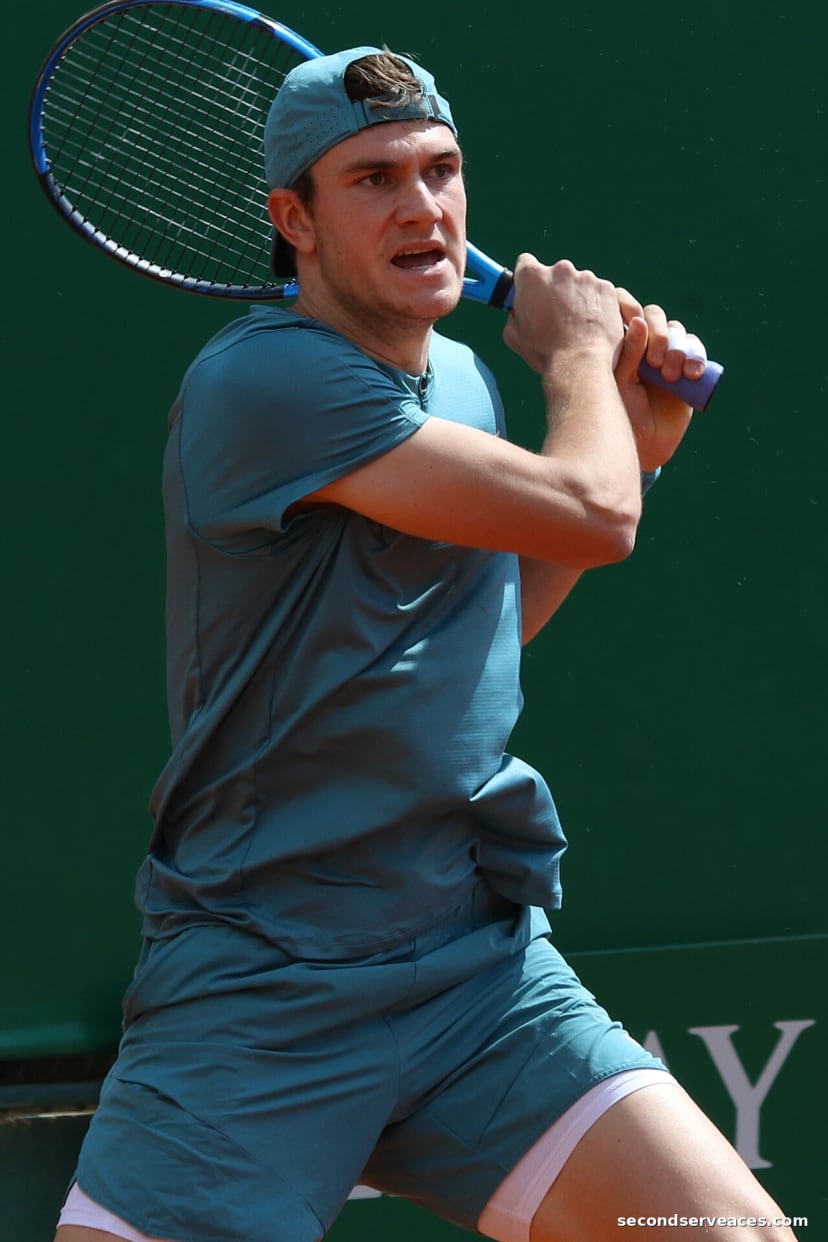
Pain changes a player. When the medical team diagnoses a bone bruise in your primary swinging arm, it isn't just a physical hurdle; it is a psychological prison. The racket you've trusted since you were a junior suddenly feels like a foreign object, a heavy, vibrating rod of consequence. For a left-handed talent whose entire identity is built on crushing the ball, an arm injury is the ultimate existential threat.
Listen to the Second Serve Podcast
Get our daily AI-synthesized audio briefings and match reviews on the go.
Jack Draper spent seven agonizing months off the ATP Tour staring down that exact reality. While his peers were hoarding points in Paris, London, and New York, he was relegated to the sterile environment of the rehab clinic, fighting a bone bruise to his left arm. It is the kind of quiet, unglamorous struggle that breaks a player’s spirit long before they ever step back onto the baseline.
Yet, adversity often breeds innovation. Rather than merely waiting to heal, Draper chose to completely deconstruct his weapon of choice. He made dramatic, sweeping modifications to his game—specifically changing his racket and entirely re-engineering his serve. Fast forward to the blistering hard courts of the California desert. In only his second ATP tournament back since recovering, Draper navigated the draw to face Novak Djokovic in the fourth round of Indian Wells. Then, he beat him.
The Tactical Breakdown
To fully grasp the magnitude of this result, you have to understand the risk of tinkering with professional mechanics. Changing a racket specification on the professional tour is akin to a Formula 1 driver changing their steering column mid-race. You lose your muscle memory. You lose your immediate sense of court geometry. But for Draper, the racket swap was born out of necessity—likely adjusting weight, balance, and string tension to protect the arm while maximizing free power.
More crucial, however, is the revamped serve. Historically, a left-handed serve is a massive tactical advantage on the ATP Tour, particularly swinging out wide on the Ad court. By tweaking his motion, Draper has seemingly found a way to generate more bite without the violent arm-snap that led to his bone bruise. This tactical shift requires tremendous faith in the new mechanics, especially when facing down a break point against the greatest returner the sport has ever seen.
Against Djokovic, rallying tolerance is typically where younger challengers fall apart. The Serbian meticulously probes for weaknesses, applying suffocating depth until an unforced error leaks out. By leaning on his reconstructed serve, Draper bypassed that baseline grind. He generated free points, dictating the match momentum from the first strike. When Djokovic attempted to lock him into long, grueling baseline exchanges, Draper utilized heavy topspin to push the ball deep, refusing to be bullied off the baseline. It wasn't merely a contest of shot-making; it was a battle of strategic endurance, where Draper’s modified mechanics held up under the most extreme pressure imaginable.
The Bigger Picture
Returning to the tour after a long hiatus usually comes with a massive caveat: lowered expectations. Players need matches to find their lungs. They need repetition to rediscover their timing. Beating Novak Djokovic in just your second tournament back utterly shatters that timeline. It forces the rest of the locker room to recalibrate their scouting reports entirely.
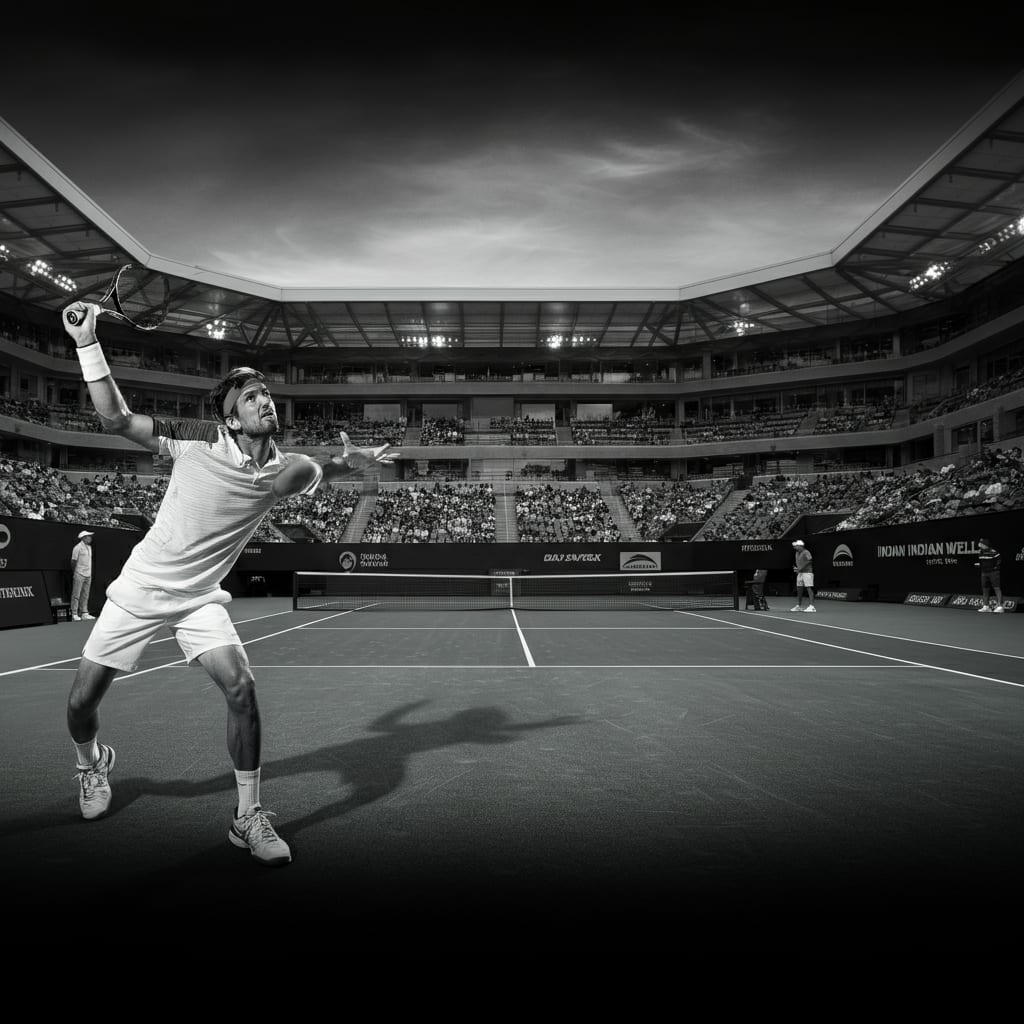
Indian Wells is notoriously brutal on returning players. The slow, gritty hard courts demand peak physical conditioning, forcing players to hit three or four extra balls per rally. For Draper to survive the physical toll of this environment, let alone thrive against a legendary tactician, speaks volumes about the intensity of his off-court conditioning. He didn't just rehabilitate his arm; he armored his entire body for the rigors of top-tier tennis.
This result alters the trajectory of Draper’s season. The British sensation has long possessed the raw firepower to challenge the elite, but fragility was always the lingering question mark. By defeating a player of Djokovic's caliber with a retooled game, Draper validates every lonely, frustrating hour spent in the gym over the last seven months. He steps out of the shadow of his injury and firmly inserts himself into the conversation of elite contenders. If a player can rebuild his engine mid-flight and immediately outrace a legend, the ceiling for his career is virtually limitless.
What Novak Djokovic Plays With
Head Speed Pro
Luxilon ALU Power 125
Head Prime Tour (12-Pack)
Asics Court FF 3 Novak
Analyze Jack Draper vs. Novak Djokovic
Predict tactical adjustments, momentum swings, and serve strategy options for this match-up using our AI simulator.
The Aces Tactical Panel
This report was curated and edited by Bhaskar Goel. Tactical analysis and technical insights were provided by our specialized panel of expert correspondents.
Julian Price
Senior Tactical Correspondent
Stuffy, pedantic British academic and historian specializing in match momentum and historical context.
Elena Cruz
Director of Analytical Research
Data scientist specializing in court surface physics and movement patterns.
Bhaskar
The Editor & Fan
Passionate tennis player and site editor bringing everyday amateur insights and relatable fan commentary.
Arthur Vance
Senior Existential Analyst
Deep, eccentric, and DFW-inspired. Models court metaphysics, kinetic beauty, and player psychology.
Leo Sterling
High-Performance Consultant
Hard-nosed ex-trainer from Melbourne with a no-nonsense view on tour fitness.