The Charleston Crucible
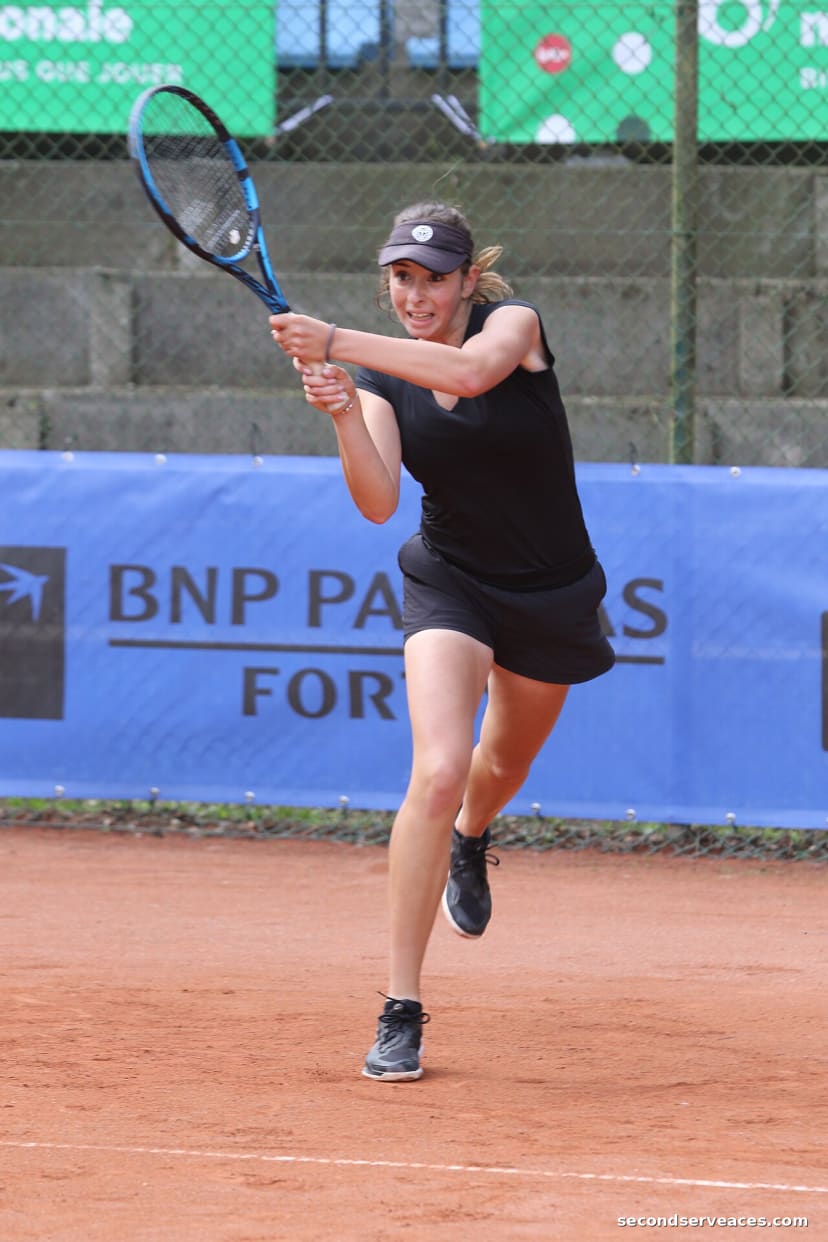
There is a specific, almost ascetic beauty to the way Iva Jovic approaches the clay courts of the Charleston Open. Following her quarter-final victory over Anna Kalinskaya, Jovic did not retreat into the ephemeral glow of social media or the vanity of accolades. She returned, as she always does, to the practice court. It is a ritualized discipline that informs the physics of her game, a reminder that at the elite level, tennis is as much a victory of repetition over entropy as it is a contest of wills.
Listen to the Second Serve Podcast
Get our daily AI-synthesized audio briefings and match reviews on the go.
Jovic, currently ranked No. 16 in the world and the fourth-highest-ranked American on the WTA tour, has arrived at this semi-final berth with a quiet, efficient ferocity. Her path to this stage, underscored by previous wins over Sofia Kenin and Alycia Parks, signals a player who has transitioned from promising talent to a formidable tactical presence.
The Tactical Breakdown
To watch Jovic on red clay is to observe a masterclass in court geometry. Her game, which has been sharpened since her notable run to the Grand Slam quarter-finals at the Australian Open earlier this year, relies on a high degree of rally tolerance. Unlike the players who treat the ball as an object to be punished into submission, Jovic treats the clay as a canvas for spin and placement.
- Serve Placement Patterns: Jovic utilizes a high toss to maximize heavy kick serves, pushing opponents off the baseline to dictate the opening shot of the rally.
- Court Geometry: By favoring sharp cross-court angles, she forces opponents to move horizontally, exploiting the sliding limitations that define clay-court movement.
- Net Approach Frequency: When the short ball presents itself, her transition game is clinical, cutting off angles before the opponent can reset their defensive posture.
The Bigger Picture
The 2026 season has been an inflection point for the American contingent, and Jovic is currently the quiet engine of that narrative. With a Grand Slam quarter-final under her belt and a consistent climb into the Top 20, she is effectively bridging the gap between the established stars like Jessica Pegula, Coco Gauff, Naomi Osaka, Amanda Anisimova, and Madison Keys, and the next generation of baseline tacticians. The mental fortitude required to maintain her post-match training regimen suggests a player who is not merely interested in the result of the Charleston Open, but in the structural integrity of her own evolution as an athlete. In a sport often obsessed with the immediate peak, Jovic represents the long-form approach, a player building a career layer by layer, match by grueling match.
What Coco Gauff Plays With
Head Boom MP 2024
Head Lynx Tour 1.25
Head Prime Tour (12-Pack)
Analyze Iva Jovic vs. Anna Kalinskaya
Predict tactical adjustments, momentum swings, and serve strategy options for this match-up using our AI simulator.
The Aces Tactical Panel
This report was curated and edited by Bhaskar Goel. Tactical analysis and technical insights were provided by our specialized panel of expert correspondents.
Julian Price
Senior Tactical Correspondent
Stuffy, pedantic British academic and historian specializing in match momentum and historical context.
Elena Cruz
Director of Analytical Research
Data scientist specializing in court surface physics and movement patterns.
Bhaskar
The Editor & Fan
Passionate tennis player and site editor bringing everyday amateur insights and relatable fan commentary.
Arthur Vance
Senior Existential Analyst
Deep, eccentric, and DFW-inspired. Models court metaphysics, kinetic beauty, and player psychology.
Leo Sterling
High-Performance Consultant
Hard-nosed ex-trainer from Melbourne with a no-nonsense view on tour fitness.