A Schism in the Church of Tennis
There is a specific, suffocating geometry to the politics of modern tennis. It is a sport perpetually caught in the tension between its aristocratic, club-bound roots and the brutal, capital-heavy realities of the global stadium circuit. At the heart of this friction lies the Italian Open, where Angelo Binaghi, the orchestrator of the Italian Tennis and Padel Federation, has begun to articulate a desire for structural upheaval. The current conversation in Rome is no longer merely about topspin or court coverage; it is about the existential distribution of the sport’s economic lifeblood.
Listen to the Second Serve Podcast
Get our daily AI-synthesized audio briefings and match reviews on the go.
Binaghi’s ambition is calibrated with a surgical precision that mirrors the game itself: he wants the Foro Italico to function as the sport's fifth Grand Slam. This is not a request for parity; it is a calculated challenge to the entrenched financial hierarchy maintained by the four majors. Behind the scenes, the Italian organizers are backing a player-led movement that threatens a wholesale boycott of Grand Slam events. The catalyst is the perceived inequity in prize money distribution, a point of contention that has simmered beneath the surface of post-match press conferences for far too long.
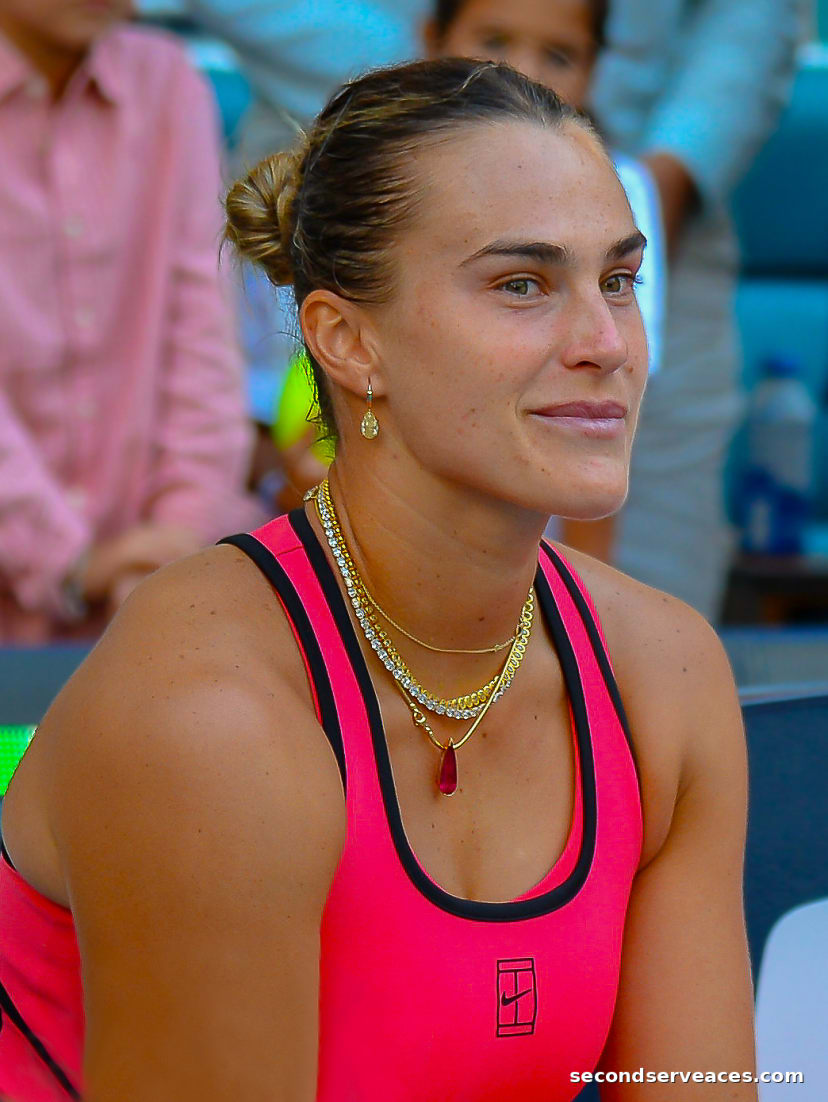
With current prize pools standing at $9.6 million for the men and $8.3 million for the women, the Italian Open is positioning itself as a high-stakes alternative for the elite. This is a cold-eyed maneuver. By aligning with the players' discontent, the tournament is effectively leveraging the prestige of stars like Aryna Sabalenka, Coco Gauff, and Jannik Sinner to force a dialogue that the established Slams have historically treated as a settled matter.
The Architecture of Expansion
If a tournament is to claim the mantle of a major, it must possess the physical capacity to hold the attention of the world. Currently, the infrastructure at the Foro Italico is a bottleneck. However, the plan is already in motion: a massive, multi-year construction project is currently underway, aiming to inflate the site’s capacity from the present 10,500 up to 12,400 spectators. The deadline for this expansion is 2028, a date that serves as a silent, ticking clock for the tournament's evolution.
This is where the physics of the game meets the logistics of commerce. A tournament is, in essence, a giant resonator, and space is the primary amplifier. By enlarging the spectator base, the Italian Open is betting that the cumulative velocity of its growth will eventually surpass the gravitational pull of the existing Slams. The optics are crucial here; an empty seat is a lost opportunity for revenue, and a packed stadium is the only currency that commands respect in the boardroom.
While the administrative maneuvering continues, the clay remains indifferent. The absence of Carlos Alcaraz, sidelined by a right wrist injury, serves as a grim reminder of the frailty inherent in the sport’s primary assets. His removal from the Italian Open and the French Open is a significant loss in kinetic energy for the tour, yet it only highlights the necessity for the tournament’s institutional resilience. The show must continue, even when the luminaries of the game are sidelined by the mechanical failures of the human body.
The Shadow of the Greats
We are witnessing a moment of transition that echoes the influence of legends like Adriano Panatta, whose spirit remains woven into the DNA of Roman tennis. When we analyze the current landscape, the involvement of talents like Lorenzo Musetti, Flavio Cobolli, and Luciano Darderi, alongside the veteran grit of Jasmine Paolini and Sara Errani, we see a nation that has moved beyond merely hosting events. Italy is now setting the agenda for the future of the sport.
The push for a fifth Slam is a classic power play, a move designed to redistribute the wealth of the ATP Tour and the WTA Tour ecosystem. Whether this pressure will ultimately force a restructuring of the Grand Slam prize pools or create a permanent fracture in the professional circuit remains to be seen. What is clear, however, is that the current status quo is no longer viewed as an immutable law of nature.
As the tour turns its gaze toward these upcoming changes, we must consider the cost of such an ambition. Is the sport capable of sustaining five pillars of equal weight, or is the architecture of the game fundamentally designed to support only four? Rome is asking this question loudly, and for the first time in a long time, the powers that be are being forced to listen to the echo of their own fading dominance.
What Aryna Sabalenka Plays With
Wilson Blade 98 v9 (16x19)
Luxilon ALU Power 125
Wilson Pro Overgrip (12-Pack)
Analyze Aryna Sabalenka vs. Coco Gauff
Predict tactical adjustments, momentum swings, and serve strategy options for this match-up using our AI simulator.
The Aces Tactical Panel
This report was curated and edited by Bhaskar Goel. Tactical analysis and technical insights were provided by our specialized panel of expert correspondents.
Julian Price
Senior Tactical Correspondent
Stuffy, pedantic British academic and historian specializing in match momentum and historical context.
Elena Cruz
Director of Analytical Research
Data scientist specializing in court surface physics and movement patterns.
Bhaskar
The Editor & Fan
Passionate tennis player and site editor bringing everyday amateur insights and relatable fan commentary.
Arthur Vance
Senior Existential Analyst
Deep, eccentric, and DFW-inspired. Models court metaphysics, kinetic beauty, and player psychology.
Leo Sterling
High-Performance Consultant
Hard-nosed ex-trainer from Melbourne with a no-nonsense view on tour fitness.