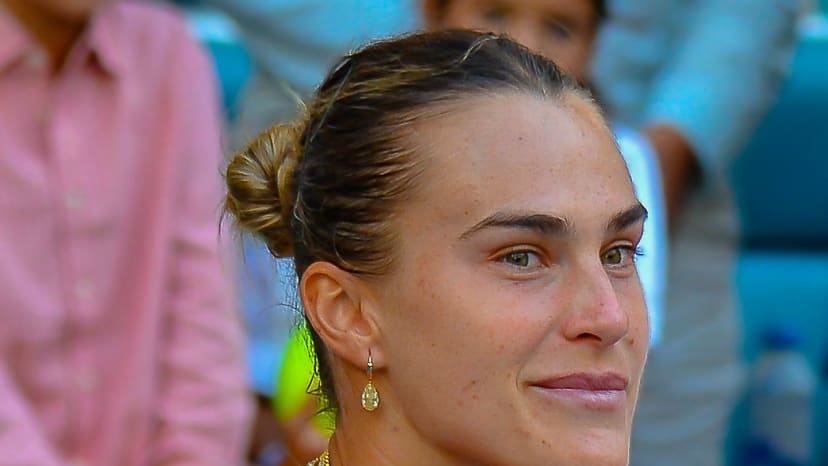
Professional tennis operates as a relentless, self-correcting ecosystem. Dominance is never a static condition; it is perpetually analyzed, tested, and eventually eroded by the collective intelligence of the locker room. For Iga Swiatek, the 2026 season is rapidly accelerating into a structural crisis. The Miami Open hard courts provided the latest staging ground for her struggles, where veteran compatriot Magda Linette handed Swiatek her sixth loss of the young year.
Listen to the Second Serve Podcast
Get our daily AI-synthesized audio briefings and match reviews on the go.
The sheer volume of defeats before the European clay swing even commences highlights a profound shift in tour dynamics. Following the match, a visibly rattled Swiatek candidly characterized the unfolding scenario surrounding her early exit as her "worst nightmare." We are witnessing the demystification of an apex predator. When an all-time great begins accumulating early-season losses, the narrative often defaults to fatigue or a lack of motivation. Yet, the reality on the ground in South Florida suggests something far more clinical: a tactical blueprint to dismantle the Polish superstar is actively circulating among her peers.
Linette, an experienced campaigner who has spent a career navigating the margins of the elite tier, executed exactly the kind of strategic framework required to disrupt a modern baseline metronome. Unburdened by the pressure of favoritism, the fellow Polish player capitalized on a shifting paradigm within the women's game.
The Tactical Breakdown
Linette’s victory was not forged through overwhelming baseline firepower, but rather through meticulous geometric disruption. Swiatek’s game is architecturally dependent on time—specifically, the crucial milliseconds required to wind up her extreme Western forehand grip. When opponents can steal that time, the Polish star's heavily spun balls lose their penetrative quality, often landing short and sitting up perfectly in the strike zone.
Historically, players who successfully attack the Swiatek forehand on hard courts employ a flat, linear ball flight. Linette possesses a remarkably stable backhand wing and a veteran knack for redirecting pace rather than generating it from scratch. By standing tight to the baseline and taking the ball early, Linette effectively truncated the court. This robbed Swiatek of the necessary runway to establish her heavy topspin patterns.
Consider the fundamental mechanics of hard-court rally tolerance. Swiatek thrives when she can dictate the tempo, using aggressive court positioning to smother opponents. However, to execute a successful upset against a player of Swiatek's caliber, Linette’s strategy likely revolved around several core tactical tenets:
- Directional Changes: Keeping the ball low and frequently changing directions down the line to stretch Swiatek’s defensive movement, forcing her to hit from awkward, outstretched positions.
- Targeting the Forehand Wing: Rushing the Swiatek forehand on the return of serve, forcing defensive chips, abbreviated swings, or mistimed frames.
- Absorbing Pace: Utilizing Swiatek’s own ball speed to generate depth, rather than over-hitting and risking unnecessary unforced errors.
When Swiatek is rushed, the heavy spin that makes her nearly unbeatable on dirt becomes a distinct liability on unforgiving hard courts. The ball fails to bite and jump as it does on clay, allowing a savvy tactician like Linette to step inside the baseline, take the ball on the rise, and dictate the terms of engagement.
The Bigger Picture
A sixth defeat prior to the transition to European clay is an alarming metric for the multi-time Grand Slam champion. To understand the gravity of Swiatek’s 2026 slump, we must look at the historical precedent of WTA dominance. Players who build their empires on suffocating consistency often face a sudden, jarring resistance when the tour finally decodes their patterns. The structural evolution of tennis dictates that you either add layers to your game or risk obsolescence.
The "worst nightmare" comment from Swiatek is particularly telling. It reveals a psychological vulnerability that transcends mere mechanical failure. She is not simply dropping matches; she is losing her aura of inevitability. Furthermore, playing a compatriot always carries its own unique psychological baggage. Linette knows Swiatek’s tendencies intimately, having shared practice courts, Billie Jean King Cup ties, and the heavy weight of national expectations. In matches burdened by national pride, the underdog often swings freely, while the heavy favorite wrestles with localized, internal pressure.
Zooming out, the broader WTA landscape is adapting rapidly. We are witnessing a renaissance of aggressive, flat-hitting baseliners who simply refuse to be pushed back by heavy topspin. For Swiatek, the immediate remedy lies in tactical diversification. Whether that means incorporating a higher frequency of net approaches, utilizing a flatter, more penetrating first serve to buy free points, or developing a more aggressive slice to change the rhythm of baseline exchanges, standing still is no longer an option.
As the tour eventually departs the North American hard-court swing, Swiatek’s focus will inevitably shift toward her sanctuary: the red clay of Europe. However, the psychological scar tissue accumulated in Miami and throughout the early months of 2026 will undoubtedly follow her across the Atlantic. The locker room senses an opening. Linette’s triumph in Miami stands as a stark reminder that on the modern WTA tour, no fortress is entirely impenetrable. The prevailing question now is whether Swiatek can rebuild her defensive walls before the most crucial stretch of her season begins.
What Iga Swiatek Plays With
Tecnifibre Tempo 298 Iga
Tecnifibre Razor Code 1.25
Tecnifibre Pro Contact Overgrip
Analyze Iga Swiatek vs. Magda Linette
Predict tactical adjustments, momentum swings, and serve strategy options for this match-up using our AI simulator.
The Aces Tactical Panel
This report was curated and edited by Bhaskar Goel. Tactical analysis and technical insights were provided by our specialized panel of expert correspondents.
Julian Price
Senior Tactical Correspondent
Stuffy, pedantic British academic and historian specializing in match momentum and historical context.
Elena Cruz
Director of Analytical Research
Data scientist specializing in court surface physics and movement patterns.
Bhaskar
The Editor & Fan
Passionate tennis player and site editor bringing everyday amateur insights and relatable fan commentary.
Arthur Vance
Senior Existential Analyst
Deep, eccentric, and DFW-inspired. Models court metaphysics, kinetic beauty, and player psychology.
Leo Sterling
High-Performance Consultant
Hard-nosed ex-trainer from Melbourne with a no-nonsense view on tour fitness.