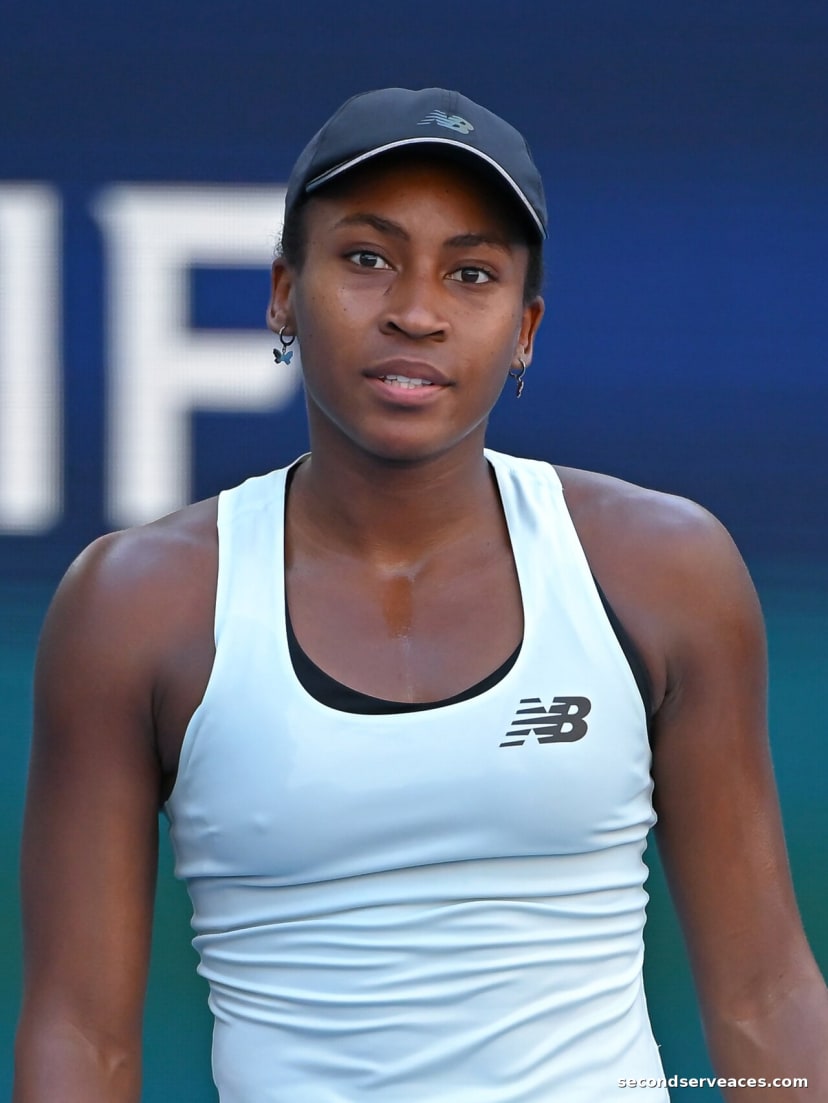
Entering the Foro Italico as the fourth seed, Iga Swiatek finds herself at a career crossroads that defies her typical dominance. With a modest 2026 season record of 14-8, the statistical drop-off is impossible to ignore. For a player who has historically owned the European clay-court swing, this year feels structurally different, marked by a palpable disconnect between her aggressive baseline intent and her actual execution on court.
Listen to the Second Serve Podcast
Get our daily AI-synthesized audio briefings and match reviews on the go.
The Lingering Shadow of the Madrid Retirement
The immediate concern remains the circumstances surrounding her third-round exit at the Madrid Open, where an illness-forced retirement truncated her campaign. When you look at the WTA rankings, it is clear that the lack of match toughness is a luxury Swiatek cannot afford. Elite movement on clay requires high-intensity aerobic capacity, and the break in continuity disrupts the muscle memory required for her signature whip-heavy topspin forehand.
Her camp, including Daria Abramowicz, is currently managing a narrative of uncertainty that permeates her recent performances. Without the match rhythm earned through deep runs, her timing on returns has dipped. The pressure is no longer just about defending ranking points; it is about finding a functional baseline rhythm that can withstand the heavy-hitting depth being deployed by the likes of Aryna Sabalenka and Elena Rybakina.
Observing the movement patterns in recent matches, it is evident that Swiatek is opting for more conservative court positioning. By failing to step inside the baseline to dictate with her inside-out forehand, she is allowing opponents to pull her into defensive, lateral scuttling. This change in court geometry is exactly what elite returners look for when they decide to capitalize on a short ball.
The Hunt for the Missing Gear
Swiatek’s resume, headlined by four of her six career Grand Slam titles at Roland Garros, remains the gold standard, but historical success does not insulate a player from the present day's tactical shifts. The tour has clearly adjusted to her pace; players are no longer intimidated by the depth of her rally ball, instead choosing to stand their ground and redirect pace back into the corners.
There is a visible struggle in her transition game. Where she once used her serve as a setup for a one-two punch, she is now often forced into a neutral rally sequence. Her inability to find cheap points in late-set tie-breaks is a direct byproduct of a serve that, while technically sound, has lacked the requisite variation to keep opponents guessing this spring.
We are watching a process of re-calibration. Whether it is a lack of confidence or a physical hindrance, the result is a player who seems to be playing behind the baseline rather than on top of it. She needs to reclaim the shorter rallies—the "three-shot-or-less" patterns—to alleviate the mounting frustration that has crept into her body language during recent losses.
Measuring the Distance to the Top
Meanwhile, the stability of the #1 spot remains a point of contrast. Aryna Sabalenka has maintained the world number one ranking for 81 consecutive weeks, providing a consistent standard of aggression that demands a response from the rest of the field. For Swiatek, the Italian Open is less about the trophy and more about finding a structural blueprint that translates to Paris.
Every match at the Internazionali BNL d'Italia must be viewed through the lens of prep work for Roland Garros. She needs to test her defensive depth against challengers like Ann Li or Karolina Pliskova, ensuring her defensive sliding is back at 100%. If the court positioning remains passive, the French Open title defense will become exponentially more difficult.
The bottom line is that the field is no longer afraid of the "Swiatek aura." The tactical blueprint to beating her—aggressive redirecting of her pace and forcing her to hit on the run—is now being implemented by everyone from the seeded veterans to the surging qualifiers. She must rediscover her tactical autonomy or risk a significant shift in the power dynamic of the WTA Tour.
The Psychology of the Transition
Rennae Stubbs has often noted the mental fortitude required to stay at the top when the game feels like a grind. Swiatek’s emotional readiness is being tested under the glare of a season where expectations have morphed from inevitable wins to hard-fought battles. The transition from being the hunted to being the one in pursuit is never easy.
There is no substitute for the internal conviction that comes from winning. Swiatek has built her entire game on an unrelenting intensity that, when hampered by doubt, can lead to over-pressing. Her shot selection in high-leverage moments in 2026 has suffered from this, as she occasionally forces winners from positions where the high-percentage play is simply to reset the point.
As she navigates Rome, the objective must be simplification. Focusing on target zones rather than outcomes will be the key to rebuilding her match momentum. If she can find a way to dictate from the center of the court rather than the corners, the trajectory toward Roland Garros will look vastly different than the one currently being debated by experts.
What Iga Swiatek Plays With
Tecnifibre Tempo 298 Iga
Tecnifibre Razor Code 1.25
Tecnifibre Pro Contact Overgrip
Analyze Iga Swiatek vs. Ann Li
Predict tactical adjustments, momentum swings, and serve strategy options for this match-up using our AI simulator.
The Aces Tactical Panel
This report was curated and edited by Bhaskar Goel. Tactical analysis and technical insights were provided by our specialized panel of expert correspondents.
Julian Price
Senior Tactical Correspondent
Stuffy, pedantic British academic and historian specializing in match momentum and historical context.
Elena Cruz
Director of Analytical Research
Data scientist specializing in court surface physics and movement patterns.
Bhaskar
The Editor & Fan
Passionate tennis player and site editor bringing everyday amateur insights and relatable fan commentary.
Arthur Vance
Senior Existential Analyst
Deep, eccentric, and DFW-inspired. Models court metaphysics, kinetic beauty, and player psychology.
Leo Sterling
High-Performance Consultant
Hard-nosed ex-trainer from Melbourne with a no-nonsense view on tour fitness.