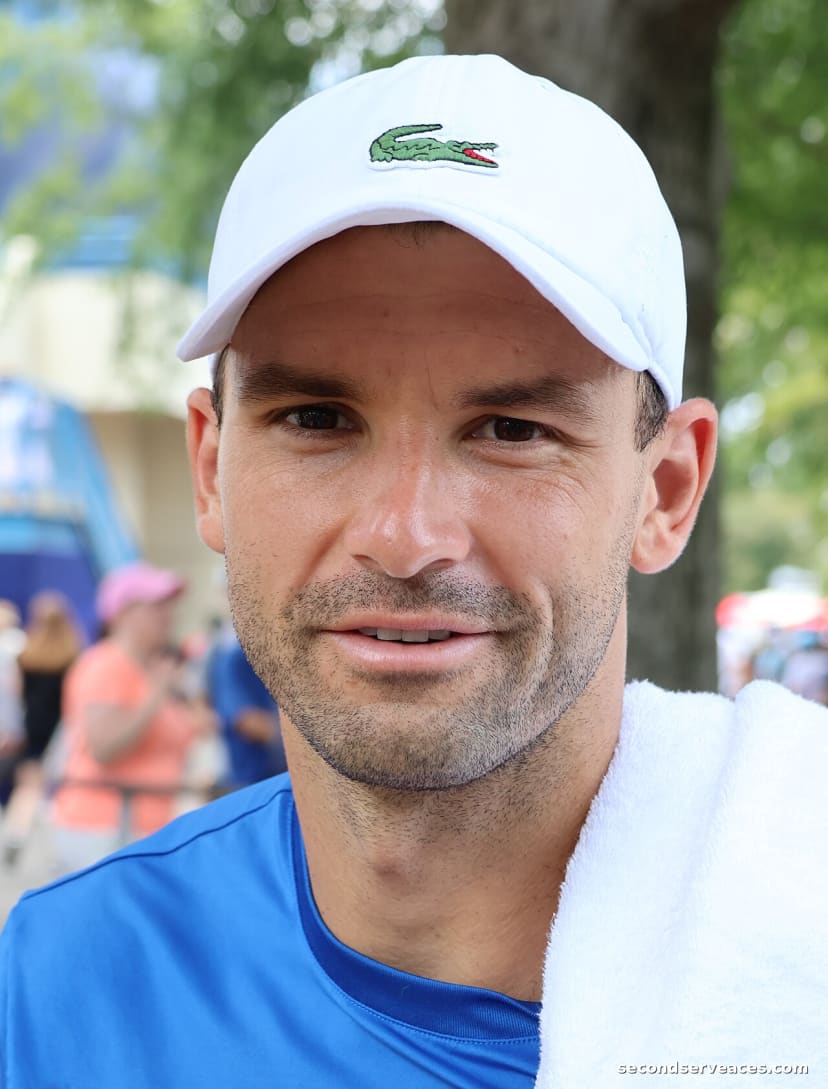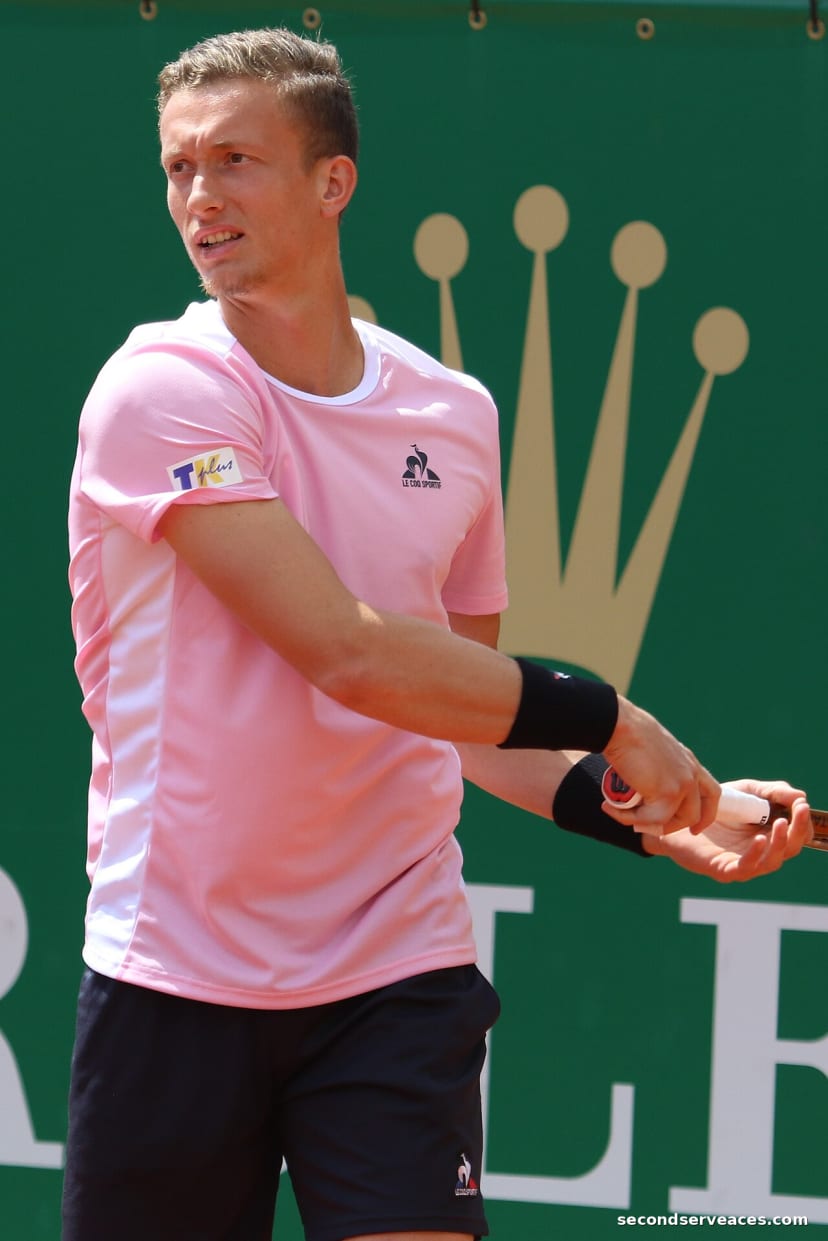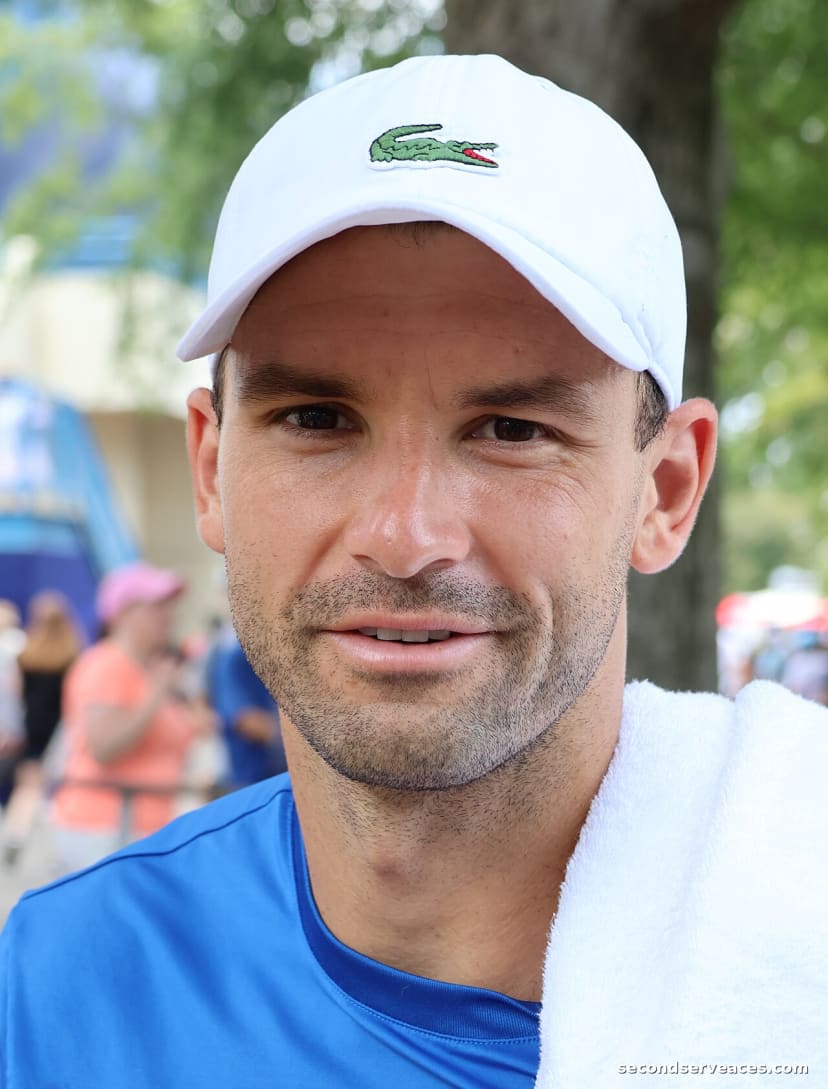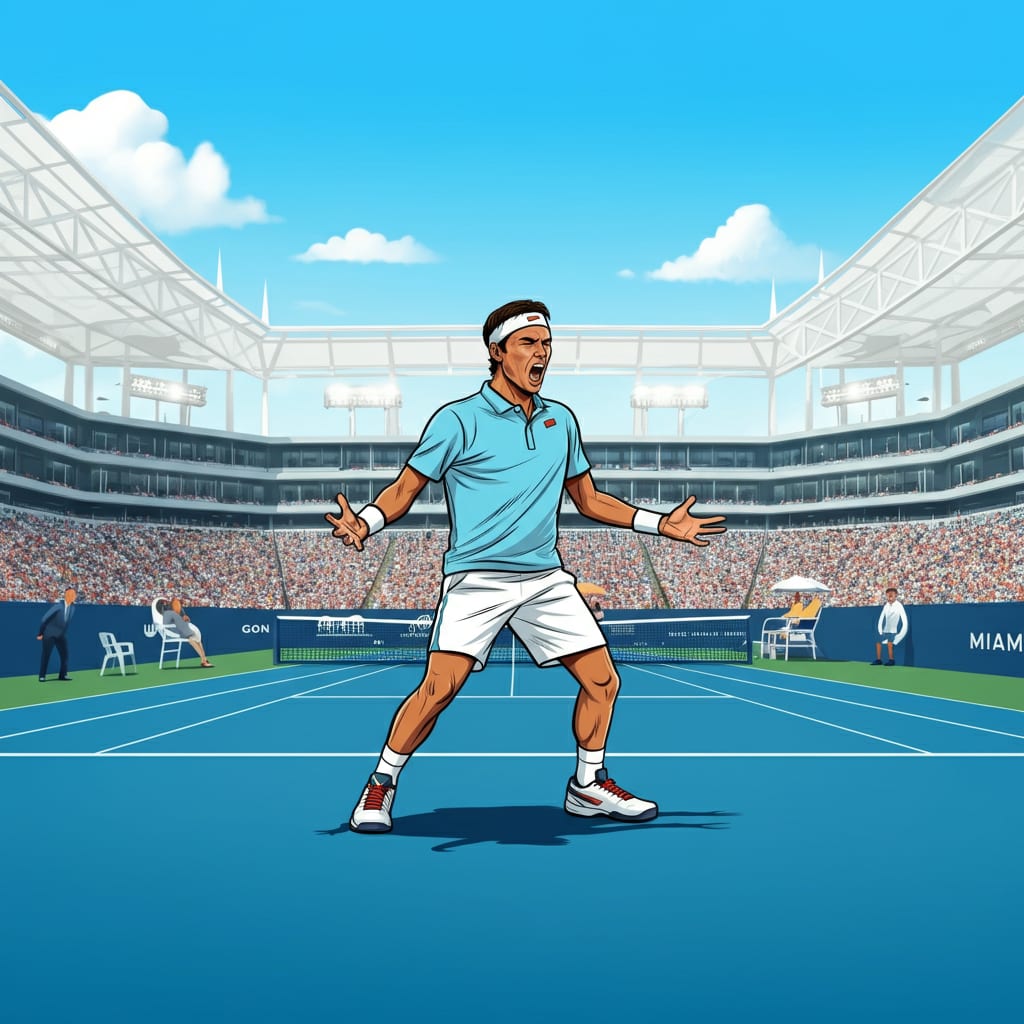
Florida sun is notoriously unforgiving, but the draw sheets at Masters 1000 events are entirely merciless. Grigor Dimitrov learned this the hard way on the Miami hardcourts, suffering a devastating opening-round defeat to Belgian qualifier Raphael Collignon. The final scoreline—a grueling 6-7, 6-4, 6-7 battle—tells the story of a veteran unable to snatch the big points from a hungry, lesser-known opponent with nothing to lose.
Listen to the Second Serve Podcast
Get our daily AI-synthesized audio briefings and match reviews on the go.
Dropping a match in dual tiebreaks is the tennis equivalent of losing a heavyweight fight on a split decision. It stings, it lingers, and it raises immediate questions about mental fortitude. For Dimitrov, a player whose career has been a rollercoaster of sublime aesthetics and baffling inconsistency, this loss represents a significant backward step. According to the tournament data, this early exit marks Dimitrov's worst result at the Miami Open since 2011.
Let’s be brutally honest: when you are a top-tier seed playing a qualifier in the opening round, you dictate the terms of engagement. You don't get dragged into a baseline scrap, and you certainly do not surrender two separate tiebreaks. Yet, that is precisely what occurred, leading to a catastrophic mathematical reality. Following this defeat, Dimitrov is facing his biggest ranking drop in more than a decade.
The Tactical Breakdown
Any coach worth their salt knows the blueprint for neutralizing a single-handed backhand on a gritty hard court. You do not try to out-hit the veteran; you out-position him. Tactical mechanics dictate that extending rallies and forcing contact above the shoulder on the backhand wing will eventually elicit unforced errors. Collignon, capitalizing on his qualifier momentum, likely stuck to this exact script.
In a matchup separated by two sudden-death tiebreaks, court geometry becomes the deciding factor. Players with explosive, high-risk arsenals—like Dimitrov—thrive when they can dictate the center of the court. However, when an opponent effectively uses heavy topspin to push them deep into the ad-court corner, it neutralizes their ability to step inside the baseline. The Belgian did not need to hit winners; he merely needed to maintain superior rally tolerance and force Dimitrov into low-percentage shotmaking when the pressure peaked.
- Return Positioning: Squeezing the server in tiebreaks often yields immediate dividends. By standing deeper, an underdog can neutralize pace and reset the rally.
- The Backhand Attrition: Single-handers traditionally struggle with high, heavy balls on warm hard courts. Targeting that wing relentlessly is standard operating procedure for modern baseline grinders.
- Break Point Conversion: While we lack the exact match metrics, losing two sets in tiebreaks guarantees that crucial breakpoint opportunities were squandered. Tennis is won in the margins.
Furthermore, the court speed in Miami often plays tricks on offensive shotmakers. The heavy humidity slows the ball through the air, demanding an extra ball be struck to win a point. For a qualifier who has already adapted to the conditions over several days, that physical requirement is a distinct advantage. Dimitrov walked onto a court expecting a sprint and found himself locked in a marathon he was ill-equipped to finish.
The Bigger Picture
Ranking mathematics are a cruel mistress. Points fall off the board on a 52-week cycle, and the ATP computer doesn't care about how pretty your groundstrokes look. Facing his steepest ranking plunge in over a decade is a bitter pill for Dimitrov, especially given the late-career renaissance he has enjoyed over the past eighteen months.
Veterans rely on early-round stability at Masters 1000 events to maintain their seeding for the upcoming Grand Slams. By crashing out in Miami—his worst showing here in 13 years—Dimitrov compromises his draw protection for the European clay swing. He will now undoubtedly face higher-ranked opponents much earlier in tournaments like Monte-Carlo, Madrid, and Rome.
Can he recover? Certainly. Dimitrov possesses an arsenal that few on the tour can match when he is firing on all cylinders. But elite tennis is rarely about your peak level; it is entirely about your base level on an off day. If a seasoned professional cannot consistently dispatch qualifiers on hard courts, the twilight of their career might arrive much faster than the fans are ready to accept.
Essential Matchday Add-Ons
Tournament-tested accessories and high-frequency consumables every competitive player keeps in their bag.
Tourna Grip Original Dry Feel Overgrip (10-Pack)
4.8 ★ (12,000+ reviews)
The gold standard for sweaty hands. Proprietary dry feel absorbs moisture better as play intensifies.
Luxilon ALU Power 125 Silver String Set
4.9 ★ (3,500+ reviews)
Unrivaled control and spin potential used by over 50% of the ATP Top 100 players.
Babolat Custom Damp Vibration Dampener (2-Pack)
4.7 ★ (4,200+ reviews)
Customizable dampening with removable central O-ring for fine-tuning court feedback and sound.
Penn Championship Extra Duty Tennis Balls (4-Can Pack)
4.7 ★ (8,900+ reviews)
Official ball of USTA League Tennis with extra-duty felt designed for abrasive hard courts.
Analyze Grigor Dimitrov vs. Raphael Collignon
Predict tactical adjustments, momentum swings, and serve strategy options for this match-up using our AI simulator.
The Aces Tactical Panel
This report was curated and edited by Bhaskar Goel. Tactical analysis and technical insights were provided by our specialized panel of expert correspondents.
Julian Price
Senior Tactical Correspondent
Stuffy, pedantic British academic and historian specializing in match momentum and historical context.
Elena Cruz
Director of Analytical Research
Data scientist specializing in court surface physics and movement patterns.
Bhaskar
The Editor & Fan
Passionate tennis player and site editor bringing everyday amateur insights and relatable fan commentary.
Arthur Vance
Senior Existential Analyst
Deep, eccentric, and DFW-inspired. Models court metaphysics, kinetic beauty, and player psychology.
Leo Sterling
High-Performance Consultant
Hard-nosed ex-trainer from Melbourne with a no-nonsense view on tour fitness.