An Arena of Geometric Distortion
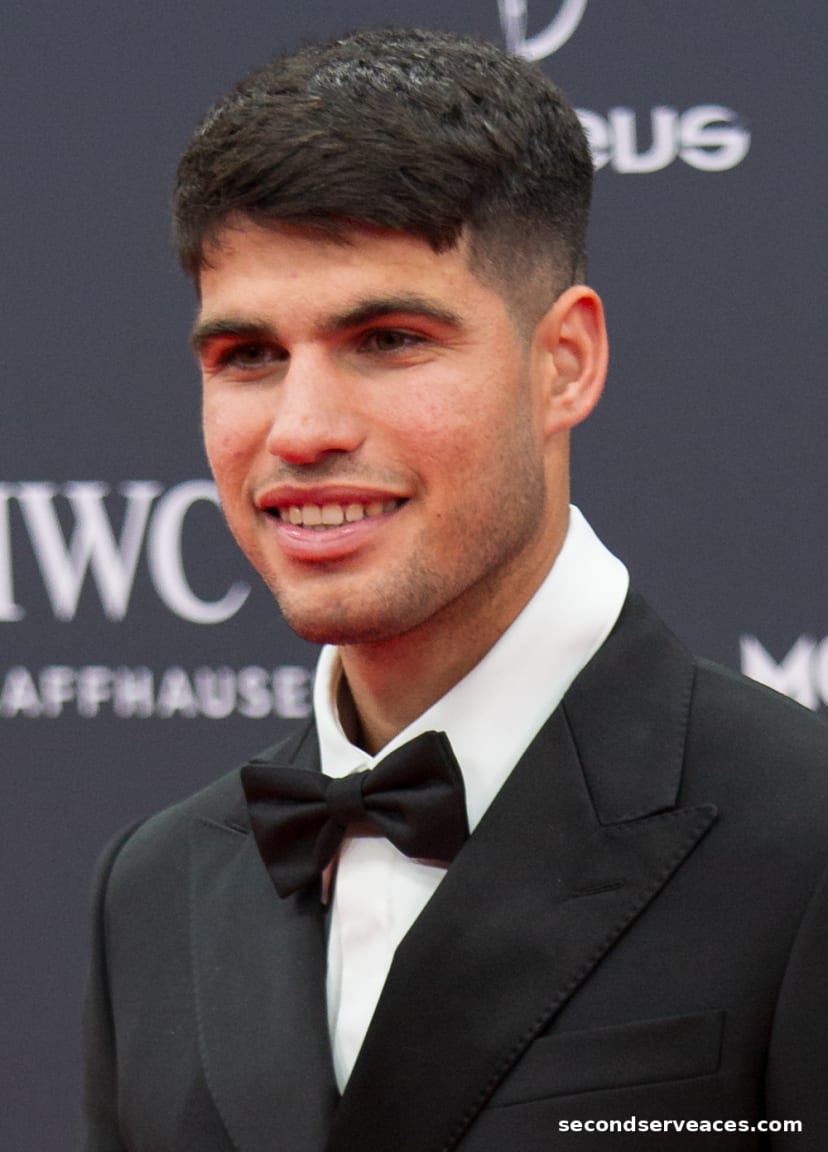
There is a specific, frantic beauty to the Ultimate Tennis Showdown (UTS) format that fundamentally alters the Cartesian geometry of the game. This Friday and Saturday, the ancient stone walls of the Arenes de Nimes will enclose a 12,500-capacity amphitheater, not for gladiatorial combat, but for a distilled, high-velocity iteration of professional tennis. As the ATP circuit converges on the clay of the Monte Carlo Masters, players like Felix Auger-Aliassime, Casper Ruud, Stefanos Tsitsipas, Andrey Rublev, Alex de Minaur, Ben Shelton, Jack Draper, Alexander Zverev, Carlos Alcaraz, and Jannik Sinner engage in a structural experiment that demands a complete recalibration of rally tolerance and temporal urgency.
Listen to the Second Serve Podcast
Get our daily AI-synthesized audio briefings and match reviews on the go.
The Mechanics of the UTS Deviation
- Spatial Reduction: By removing the tramlines, the court becomes a narrowed corridor of risk, forcing players to abandon the safety of cross-court patterns in favor of aggressive, linear trajectories.
- Temporal Constraint: The non-traditional scoring format erodes the standard ‘deuce-ad’ psychological cushion, replacing the slow build of game-set-match momentum with a frenetic, clock-driven anxiety.
- The Mouratoglou Effect: Co-founded by Patrick Mouratoglou in 2020, this format treats tennis not as a narrative marathon, but as a series of isolated, high-entropy events.
The Tactical Breakdown
On a clay surface—where the friction of the red dust usually allows for the gradual accumulation of tactical advantage—the UTS format forces an immediate, unrefined aggression. For players like Stefanos Tsitsipas or Casper Ruud, who rely on the methodical construction of points through heavy topspin, the loss of the doubles alleys is a non-trivial spatial shock. Without the lateral width to stretch an opponent, the geometry of the court favors the flat-hitter who can punish the center-mass of the baseline. We are watching a deliberate compression of the professional game, where the instinctual reliance on the ‘safe’ serve-plus-one sequence is replaced by the need for immediate, high-leverage winners.
The Bigger Picture
Why do these athletes subject themselves to such a jarring departure from tradition? The proximity of the UTS Nimes event to the Monte Carlo Masters is the primary variable. The transition from the artificial pace of UTS to the traditional, glacial gravity of Monte Carlo requires a psychological reset. Players are utilizing this format to sharpen their reactive instincts—the ability to find a winner when the clock expires or to manage the erratic spikes in dopamine that accompany the non-standard scoring. It is a dress rehearsal for the clay season, stripped of its formalities, designed to test the mental resilience of the ATP’s elite as they prepare for the traditional demands of the Mediterranean swing.
What Stefanos Tsitsipas Plays With
Wilson Blade 98 v9
Luxilon 4G 125
Analyze Felix Auger-Aliassime vs. Casper Ruud
Predict tactical adjustments, momentum swings, and serve strategy options for this match-up using our AI simulator.
The Aces Tactical Panel
This report was curated and edited by Bhaskar Goel. Tactical analysis and technical insights were provided by our specialized panel of expert correspondents.
Julian Price
Senior Tactical Correspondent
Stuffy, pedantic British academic and historian specializing in match momentum and historical context.
Elena Cruz
Director of Analytical Research
Data scientist specializing in court surface physics and movement patterns.
Bhaskar
The Editor & Fan
Passionate tennis player and site editor bringing everyday amateur insights and relatable fan commentary.
Arthur Vance
Senior Existential Analyst
Deep, eccentric, and DFW-inspired. Models court metaphysics, kinetic beauty, and player psychology.
Leo Sterling
High-Performance Consultant
Hard-nosed ex-trainer from Melbourne with a no-nonsense view on tour fitness.