The Brutal Truth: Why We Sacrifice Ourselves on Clay Courts
There is a specific kind of agony that only a clay court can deliver. It’s not the sharp, immediate sting of a hard court bruise or the desperate, frantic scramble of grass. It’s a slow, grinding erosion of your soul. You don’t play on clay; you survive it. You pay for every point in lung-searing effort and red-stained sweat.
Listen to the Second Serve Podcast
Get our daily AI-synthesized audio briefings and match reviews on the go.
The Geometry of Despair
On clay, the ball doesn’t just bounce; it breathes. It holds the spin, grips the grit, and kicks up into your chest, forcing you to adjust your swing again and again. You aren’t just battling the man across the net. You are battling the surface itself. Every slide is a calculated risk, a micro-second of surrender where you trust your ankles to the gods of physics.
"Clay is the only surface that asks you to be a mathematician, a gladiator, and a martyr all at once. You are never finished with a point until you are gasping for air."
The Mental Grind
When I think of the titans who owned the dirt, I don’t think about their technique. I think about their willingness to be bored by pain. The greatest clay-courters possess a sickness—a beautiful, terrifying ability to watch a ball come back one, two, ten, twenty times, and never once let the frustration cloud their eyes. They treat every rally like a hostage negotiation where they refuse to blink.
If you lose your patience, you lose the match. It’s that simple. On hard courts, you can blast your way out of a slump. On clay, you have to dig your way out of a grave you’ve been building for three hours. It’s a physical conversation with your own limits. Do you have the legs for the fifth set? Can you ignore the burn in your quads and the grit in your teeth? If not, the clay will eat you alive.
The Lasting Mark
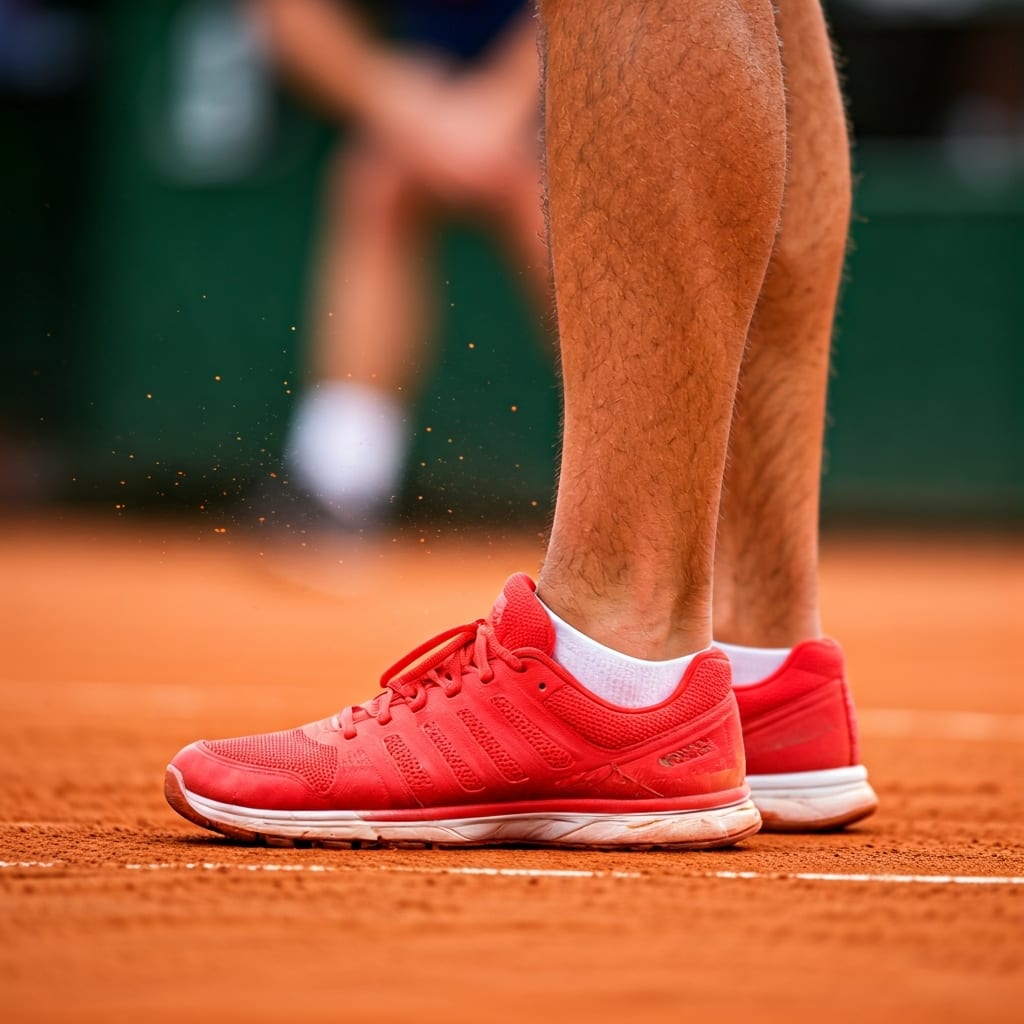
There is something inherently honest about the red dust. It hides nothing. By the end of a match, you are painted in the color of the court. Your clothes, your racket, your skin—it all becomes a testament to the fact that you were there, you fought, and you were humbled. It’s not just a sport; it’s an initiation. And once you’ve learned to slide, you never quite walk the same way again.
Essential Matchday Add-Ons
Tournament-tested accessories and high-frequency consumables every competitive player keeps in their bag.
Tourna Grip Original Dry Feel Overgrip (10-Pack)
4.8 ★ (12,000+ reviews)
The gold standard for sweaty hands. Proprietary dry feel absorbs moisture better as play intensifies.
Luxilon ALU Power 125 Silver String Set
4.9 ★ (3,500+ reviews)
Unrivaled control and spin potential used by over 50% of the ATP Top 100 players.
Babolat Custom Damp Vibration Dampener (2-Pack)
4.7 ★ (4,200+ reviews)
Customizable dampening with removable central O-ring for fine-tuning court feedback and sound.
Penn Championship Extra Duty Tennis Balls (4-Can Pack)
4.7 ★ (8,900+ reviews)
Official ball of USTA League Tennis with extra-duty felt designed for abrasive hard courts.
Analyze Rafael Nadal vs. Bjorn Borg
Predict tactical adjustments, momentum swings, and serve strategy options for this match-up using our AI simulator.
The Aces Tactical Panel
This report was curated and edited by Bhaskar Goel. Tactical analysis and technical insights were provided by our specialized panel of expert correspondents.
Julian Price
Senior Tactical Correspondent
Stuffy, pedantic British academic and historian specializing in match momentum and historical context.
Elena Cruz
Director of Analytical Research
Data scientist specializing in court surface physics and movement patterns.
Bhaskar
The Editor & Fan
Passionate tennis player and site editor bringing everyday amateur insights and relatable fan commentary.
Arthur Vance
Senior Existential Analyst
Deep, eccentric, and DFW-inspired. Models court metaphysics, kinetic beauty, and player psychology.
Leo Sterling
High-Performance Consultant
Hard-nosed ex-trainer from Melbourne with a no-nonsense view on tour fitness.