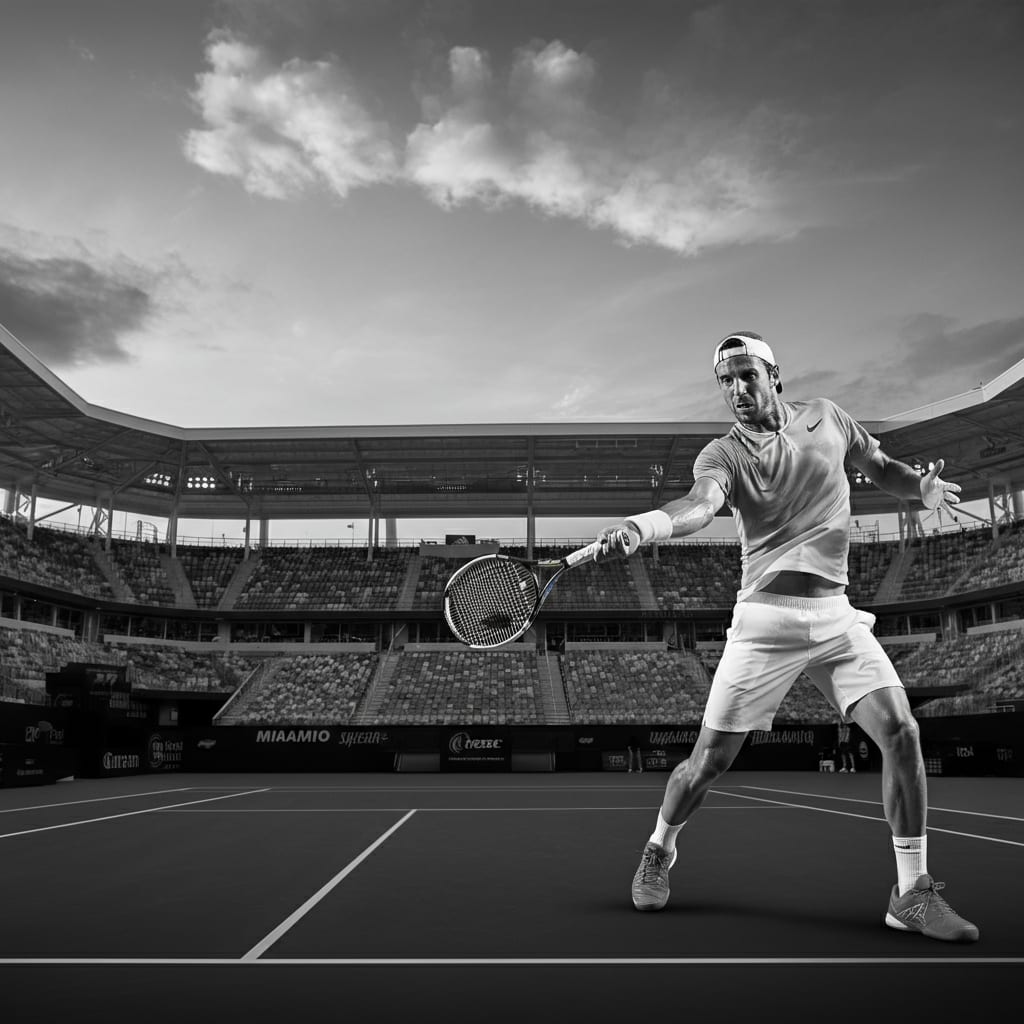
Sweat pooling on the baseline. Lungs screaming for oxygen. The Miami heat is unforgiving—it demands your legs, your breath, and ultimately, your willpower. Surviving the heavy, humid air of South Florida requires a specific brand of suffering. Enter Ethan Quinn.
Listen to the Second Serve Podcast
Get our daily AI-synthesized audio briefings and match reviews on the go.
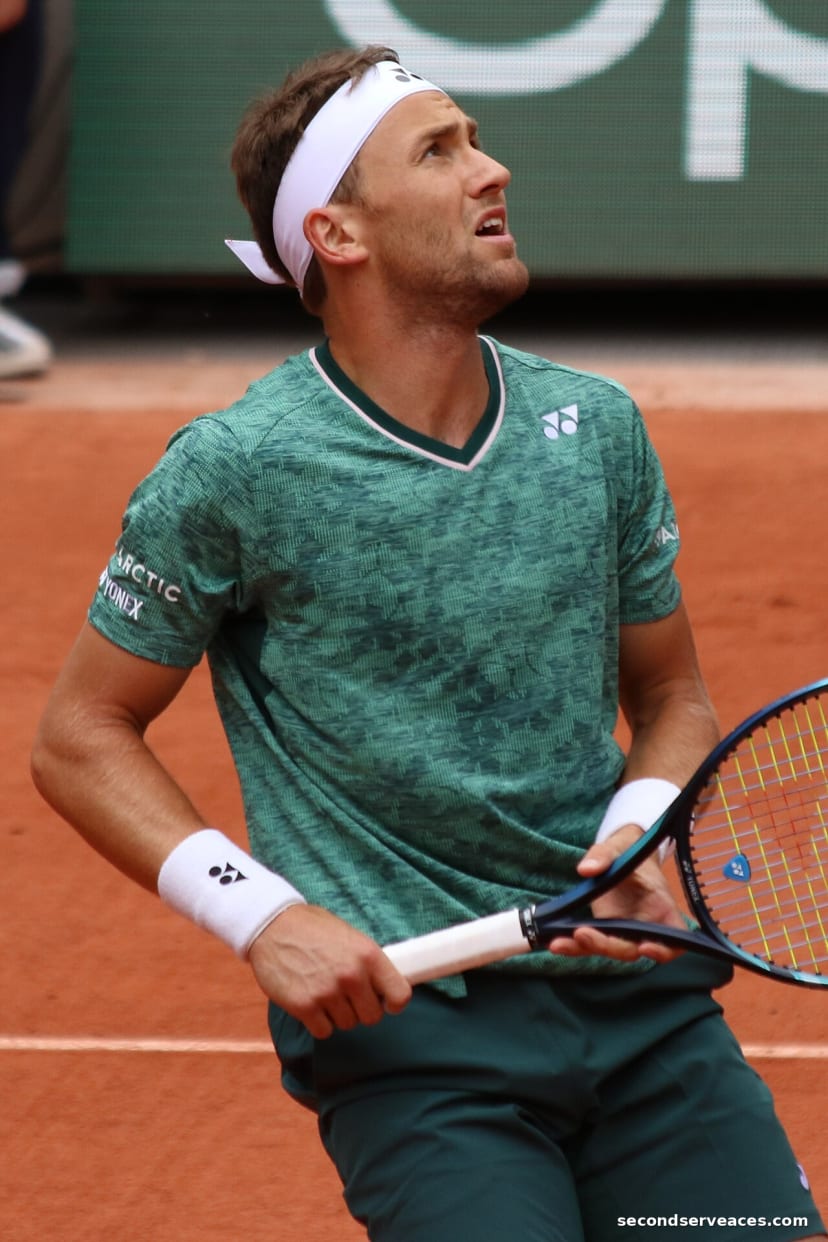
The 22-year-old American out of Fresno, California, walked onto the hard courts of the 2026 Miami Open as an underdog and is walking out as a tactical enigma. Navigating the early rounds of a Masters 1000 event is akin to a high-speed car crash; you either brace for impact or you get run over. Quinn chose the former. After grinding past Hubert Hurkacz in the opening round, he faced an entirely different beast in the second: World No. 12 Casper Ruud. Defeating one requires razor-sharp reflexes. Defeating both back-to-back requires a chameleon’s mind.
Professional tennis at this altitude is an open book. Your flaws are broadcast on stadium screens, and your lungs are put on the clock. Beating Ruud isn't about out-hitting him; it's about suffocating his preferred geometry.
The Tactical Breakdown
Rewiring your brain between opponents is the hardest mental tax on the tour. On Tuesday, Quinn was staring down the barrel of Hurkacz’s explosive, first-strike tennis. The Polish server asks you to guess, forcing you to protect the strike zone and block returns into uncomfortable spaces. By Thursday, the assignment completely flipped. Ruud asks you to bleed.
The Norwegian’s game is built on a heavy, punishing topspin forehand, usually dictated from the ad-court. He thrives on a gritty surface where the ball sits up, allowing him to loop shots deep into the corners and slowly push his opponent into the fence. Ruud wants a track meet. Quinn refused to give him one.
How do you neutralize a baseline grinder who wants to stand ten feet behind the baseline? You steal his time.
- Shrinking the Court: Rather than retreating to match Ruud’s depth, Quinn hugged the baseline. Taking the ball strictly on the rise robs a heavy-spin player of the split-second they need to set their feet. It’s a high-risk, lung-burning strategy, but it flattens the trajectory of the rally.
- Targeting the Backhand Wing: Ruud’s backhand is incredibly stable, but it lacks the lethal, point-ending aggression of his forehand. By consistently drilling flat, skidding balls to Ruud’s backhand side, Quinn forced defensive slices, preventing the World No. 12 from upgrading his court position.
- Pacing the Rally Tolerance: When you play Ruud, the rallies stretch to fifteen, twenty, sometimes twenty-five shots. Legs turn to lead. Quinn managed the physical toll beautifully, pulling the trigger down the line only when his balance was perfectly set, rather than bailing out of rallies due to exhaustion.
Transitioning from the reactionary, split-second survival against Hurkacz to the grueling, architectural baseline chess against Ruud is a testament to Quinn's expanding tactical vocabulary. He didn't just outplay his opponents; he out-thought them.
The Bigger Picture
The locker room notices a run like this. You aren't merely a promising 22-year-old prospect anymore when you collect scalps of this magnitude; you become a problem.
Taking out Hurkacz and the World No. 12 in consecutive matches shifts the narrative around Quinn’s career trajectory. American men’s tennis has been clamoring for baseline tacticians who can suffer through the European-style dirt-baller grind. While Miami is a hard court, the slow, gritty nature of the surface in high humidity mimics the heavy conditions of spring clay. Ruud historically feasts in these environments. For a young American to step into that specific crucible and emerge victorious indicates a level of physical conditioning that often takes years to develop.
Moving forward in the 2026 Miami Open, the questions surrounding Quinn will shift from his potential to his recovery. The adrenaline hangover of securing consecutive career-defining victories is a heavy blanket. Can his legs flush the lactic acid? Can his mind hit the reset button one more time?
Whatever happens in the third round, the blueprint is now out there. Ethan Quinn has the lungs to survive the deep waters, the hands to disarm a heavyweight server, and the tactical discipline to dismantle a top-tier baseline architect. The tour is brutal, and the grind never stops, but right now, the kid from Fresno is dictating the terms of engagement.
Essential Matchday Add-Ons
Tournament-tested accessories and high-frequency consumables every competitive player keeps in their bag.
Tourna Grip Original Dry Feel Overgrip (10-Pack)
4.8 ★ (12,000+ reviews)
The gold standard for sweaty hands. Proprietary dry feel absorbs moisture better as play intensifies.
Luxilon ALU Power 125 Silver String Set
4.9 ★ (3,500+ reviews)
Unrivaled control and spin potential used by over 50% of the ATP Top 100 players.
Babolat Custom Damp Vibration Dampener (2-Pack)
4.7 ★ (4,200+ reviews)
Customizable dampening with removable central O-ring for fine-tuning court feedback and sound.
Penn Championship Extra Duty Tennis Balls (4-Can Pack)
4.7 ★ (8,900+ reviews)
Official ball of USTA League Tennis with extra-duty felt designed for abrasive hard courts.
Analyze Ethan Quinn vs. Casper Ruud
Predict tactical adjustments, momentum swings, and serve strategy options for this match-up using our AI simulator.
The Aces Tactical Panel
This report was curated and edited by Bhaskar Goel. Tactical analysis and technical insights were provided by our specialized panel of expert correspondents.
Julian Price
Senior Tactical Correspondent
Stuffy, pedantic British academic and historian specializing in match momentum and historical context.
Elena Cruz
Director of Analytical Research
Data scientist specializing in court surface physics and movement patterns.
Bhaskar
The Editor & Fan
Passionate tennis player and site editor bringing everyday amateur insights and relatable fan commentary.
Arthur Vance
Senior Existential Analyst
Deep, eccentric, and DFW-inspired. Models court metaphysics, kinetic beauty, and player psychology.
Leo Sterling
High-Performance Consultant
Hard-nosed ex-trainer from Melbourne with a no-nonsense view on tour fitness.