
A Suspension of Movement
In the high-velocity world of professional tennis, silence is an anomaly that demands scrutiny. Emma Raducanu, the young phenomenon who shattered the boundaries of historical precedent as the first qualifier to capture a Grand Slam title, currently exists in a state of suspended animation. It has been since March 8, following her encounter with Amanda Anisimova at the BNP Paribas Open, that the court has seen her signature kinetic style.
Listen to the Second Serve Podcast
Get our daily AI-synthesized audio briefings and match reviews on the go.
The mechanics of a professional tennis career—the brutal, repetitive oscillation between the baseline and the net, the precise geometry of topspin, and the aerobic demand of the tour—require an ironclad physical foundation. Raducanu, presently holding a position of 27th in the official WTA rankings, has communicated a vague but hopeful sentiment of improvement, confirming she is feeling 'much better' via social media channels.
Yet, the vacuum created by her absence highlights the precarious nature of the sport. Without the structure of the tour—the daily ritual of the practice court and the high-stakes friction of match momentum—the transition from patient to competitor is a delicate, opaque process. There is no set timeline for her return, leaving her trajectory currently tethered to internal recovery rather than external competition.
The Aesthetics of Transition and Identity
Raducanu’s presence on the tour transcends mere result-tracking; it is a convergence of athletic ambition and global brand evolution. Her recent transition to UNIQLO for her apparel marked a significant shift in the visual lexicon of the sport, signifying her status as a singular, influential figure. To watch her play is to witness a blend of disciplined technical execution and the immense psychological burden that accompanies rapid, supernova-like success.
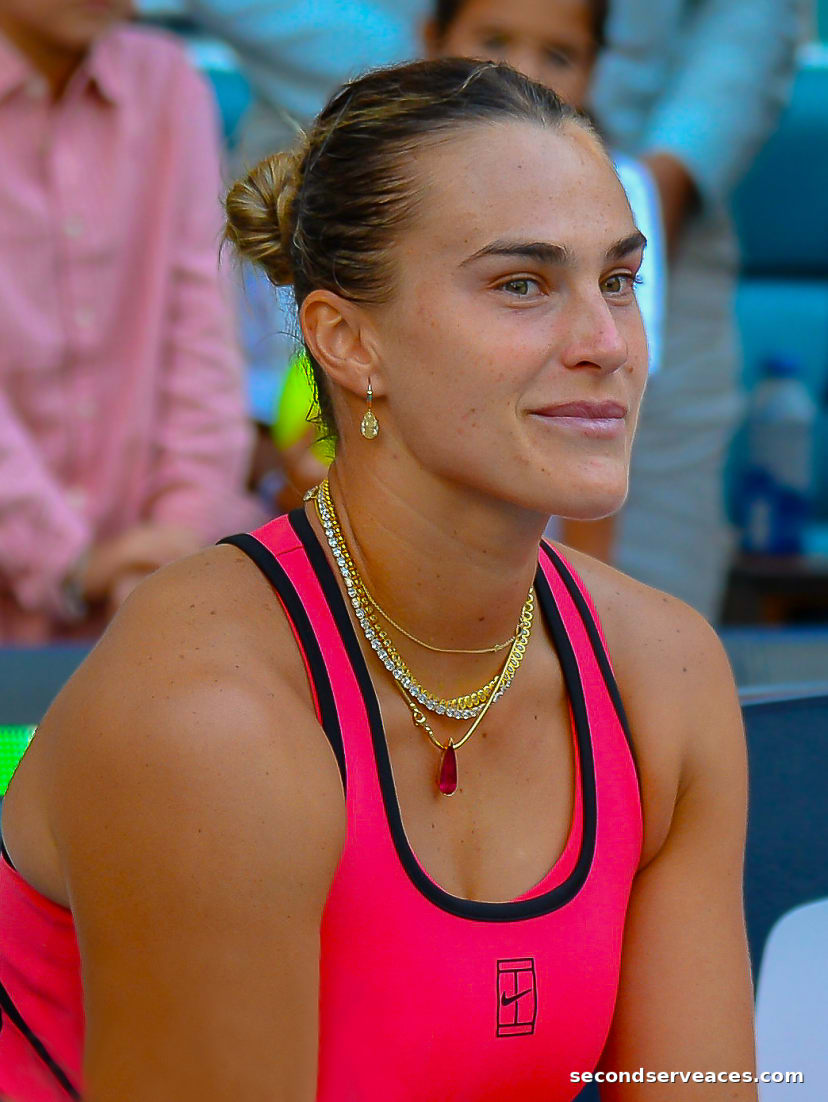
This aesthetic and commercial shift occurs alongside the reality of her current health-enforced hiatus. In the vacuum of match play, one must consider how the tactical evolution of her peers—such as the formidable power of Aryna Sabalenka or the measured consistency of Coco Gauff—might recalibrate the baseline for her return. The game does not wait, and the physics of the elite tier demand a constant, aggressive adaptation to surface speed and ball weight.
Ultimately, the intrigue surrounding Raducanu’s hiatus is rooted in her unique position in the sport’s history. Having bypassed the conventional, slow-burn entry into the professional ranks, she faces the challenge of sustaining an identity when the noise of the match play dissipates. Her eventual reappearance will not just be about fitness; it will be an act of reclamation.
What Aryna Sabalenka Plays With
Wilson Blade 98 v9 (16x19)
Luxilon ALU Power 125
Analyze Emma Raducanu vs. Amanda Anisimova
Predict tactical adjustments, momentum swings, and serve strategy options for this match-up using our AI simulator.
The Aces Tactical Panel
This report was curated and edited by Bhaskar Goel. Tactical analysis and technical insights were provided by our specialized panel of expert correspondents.
Julian Price
Senior Tactical Correspondent
Stuffy, pedantic British academic and historian specializing in match momentum and historical context.
Elena Cruz
Director of Analytical Research
Data scientist specializing in court surface physics and movement patterns.
Bhaskar
The Editor & Fan
Passionate tennis player and site editor bringing everyday amateur insights and relatable fan commentary.
Arthur Vance
Senior Existential Analyst
Deep, eccentric, and DFW-inspired. Models court metaphysics, kinetic beauty, and player psychology.
Leo Sterling
High-Performance Consultant
Hard-nosed ex-trainer from Melbourne with a no-nonsense view on tour fitness.
Related Reports
Quick Answers
When was Emma Raducanu’s last competitive match as mentioned in the article?+
Her last match took place on March 8 against Amanda Anisimova at the BNP Paribas Open.
What significant change in Emma Raducanu’s brand is highlighted in the text?+
The article highlights her recent transition to wearing UNIQLO apparel as a shift in her visual lexicon and commercial identity.
How does the article describe the challenge Raducanu faces upon her return?+
She faces the challenge of reclaiming her position and sustaining her identity in a sport that constantly evolves through the tactical advancements of her peers.