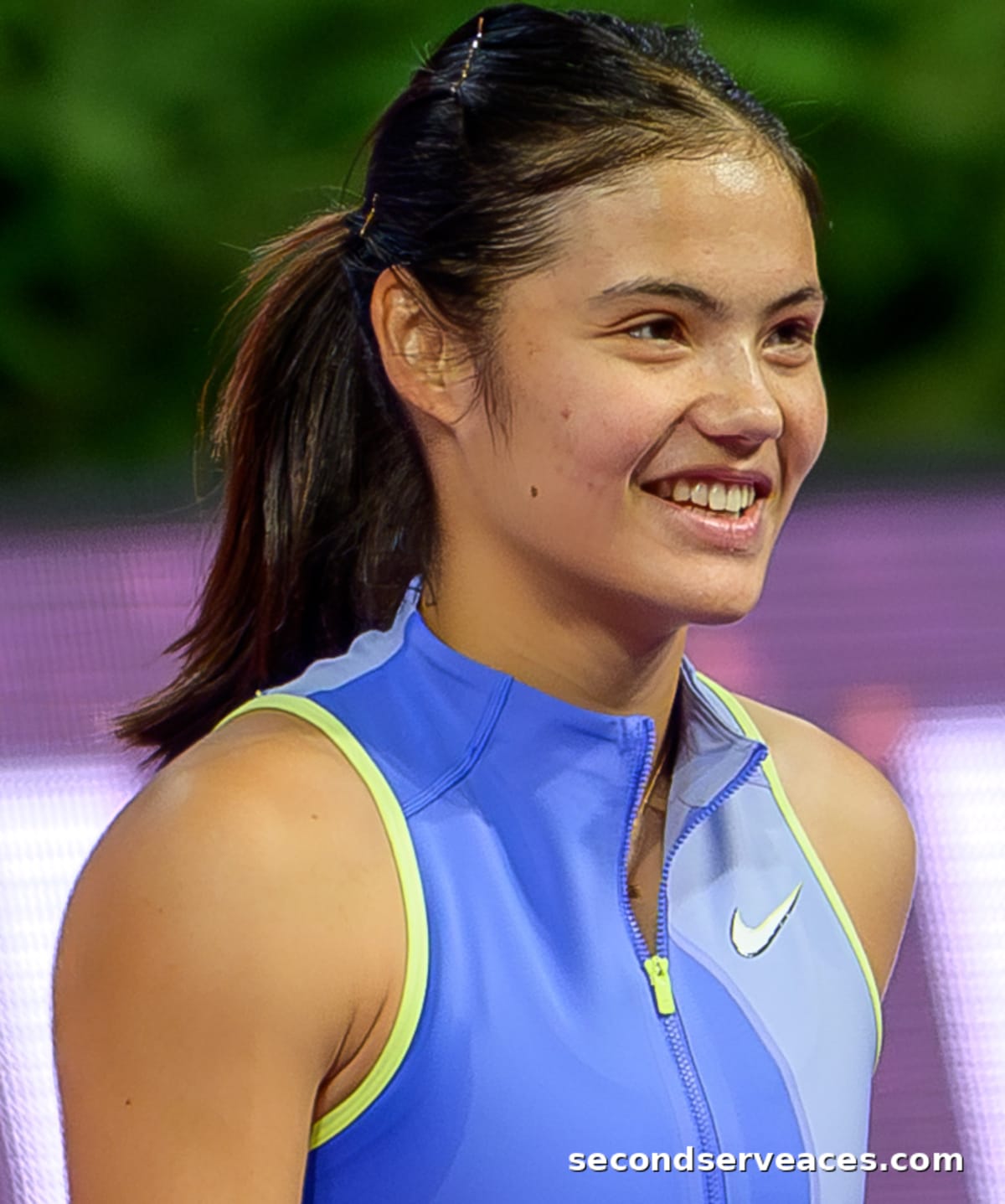
There is a specific, almost terrifying physics to the modern baseline game, a reality where the human body is expected to act as both a high-velocity projectile and a solid concrete brake. When Emma Raducanu burst into the public consciousness, she did so by defying the typical gravity of the professional tour, capturing a historic crown while navigating the qualifying draw without dropping a single set. Yet, the very mechanics that propelled her to that peak have since engaged in a quiet, relentless war against her own skeletal frame, turning her career into a series of forced pauses and recalibrations.
Listen to the Second Serve Podcast
Get our daily AI-synthesized audio briefings and match reviews on the go.
The announcement of her withdrawal from both the China Open and the upcoming WTA 1000 event in Wuhan represents more than just a gap in the autumn draw; it is a stark reminder of the sheer physical tax demanded by the sport. Raducanu’s absence from these high-profile hard-court events leaves fans contemplating the delicate balance between athletic potential and physical durability. As the tour moves east, the narrative of her season becomes one of recovery rather than competitive momentum.
To understand the current state of Raducanu’s career is to understand the immense pressure placed on a young athlete who has had to grow up, biomechanically speaking, in the absolute glare of the global spotlight. With every tournament representing a high-stakes calculation of risk and reward, her team has been forced to prioritize long-term structural integrity over short-term ranking points. The decision to skip the Asian swing, while disappointing to local organizers, is a calculated effort to ensure her body can withstand the rigors of future campaigns.
The Grand Slam Breakthrough of 2021
To fully grasp the trajectory of Emma Raducanu, one must return to the warm, high-friction hard courts of Flushing Meadows in 2021. At just eighteen years old, she executed a run of tennis so pure and unburdened by tactical scar tissue that it felt almost anomalous. Her clean, aggressive baseline strokes and impeccable timing allowed her to redirect pace with an ease that left veteran opponents utterly bewildered, culminating in a historic maiden title.
Her style of play during that magical fortnight was characterized by an aggressive baseline positioning that took time away from her opponents. Standing at 1.75 meters, she utilized her height to generate steep angles on her return of serve, transforming defensive situations into offensive opportunities within a single strike. This high-risk, high-reward approach requires immaculate footwork and a level of physical confidence that is difficult to sustain over multiple grueling seasons without a deep athletic foundation.
The immediate aftermath of that triumph brought an unprecedented level of scrutiny and a frantic schedule that her developing body was not yet equipped to handle. The transition from the lower tiers of the ITF circuit to the relentless, weekly grind of the main tour is a shock to any young athlete's nervous system. The sudden demand for elite-level deceleration and explosive lateral movement on unforgiving hard courts began to expose minor biomechanical imbalances, leading to a cycle of minor strains and joint inflammation.
The Physical Toll of the European Clay and Grass Swings
Before her recent physical setbacks, Raducanu showed genuine flashes of her championship-winning form during the European swings. She put together highly encouraging runs, reaching the finals in both Romania and Queen's, demonstrating that her ceiling remains incredibly high when her body cooperates. These performances highlighted her ability to adapt her aggressive style to different surfaces, from the sliding demands of clay to the low-skidding bounces of grass.
However, the physical exertion required to reach those deep tournament stages ultimately extracted a heavy price. The constant torque on her wrists and the explosive loading on her lower limbs culminated in a debilitating stress fracture. This severe diagnosis forced her to make the agonizing decision to miss both Wimbledon and the US Open, depriving the sport's biggest stages of one of its most charismatic and popular figures.
The kinetic violence of the modern slide on hard and grass courts places immense stress on the metatarsals and the lower back. For a player like Raducanu, who relies on rapid direction changes to dictate play from the baseline, a stress fracture is not merely an inconvenience; it is a systemic warning. It requires months of complete offloading and meticulous rehabilitation to ensure the bone heals with enough density to withstand the repetitive impacts of professional play.
The Autumn Cancellations in Beijing and Wuhan
The decision to withdraw from the China Open and the WTA 1000 event in Wuhan is a direct consequence of this ongoing recovery process. Currently sitting at No. 89 in the official WTA rankings, Raducanu needs consistent match play to rebuild her ranking and secure direct entry into future majors. Yet, rushing back onto the high-traction hard courts of Asia before her stress fracture is fully consolidated would risk a catastrophic recurrence.
Raducanu is far from the only high-profile casualty of this grueling portion of the calendar. The China Open draw has been significantly depleted by a wave of physical ailments and absences. Former World No. 1 Karolina Pliskova, promising young Canadian Victoria Mboko, and American prospect Hailey Baptiste have all been forced to withdraw, illustrating the systemic wear and tear that the modern tour inflicts on its players by the time autumn arrives.
This collective exodus of talent raises broader questions about the structure of the tennis season itself. The transition from the high-intensity hard courts of North America directly into the demanding Asian swing leaves very little window for active recovery. For athletes carrying micro-tears or bone bruising, the long-distance travel and rapid surface changes act as a catalyst for acute injury, forcing players into difficult decisions regarding their scheduling and long-term health.
The Geopolitical Crossroads of the Asian Games
While Raducanu focuses on rehabilitation, other young stars are navigating entirely different sets of challenges on the continent. The 21-year-old left-handed prodigy from the Philippines, Alex Eala, made the bold decision to represent her country at the Asian Games. This choice came despite the looming threat of potential sanctions from the tour's governing body, highlighting the complex intersection of national identity and professional tennis.
This situation underscores the delicate tightrope players must walk when national federations and professional tours clash over scheduling. As we examined in our previous coverage of how the WTA Threatens Alex Eala With Fines Over Asian Games, the pressure to perform on the global stage for one's country can often conflict with the rigid eligibility rules and ranking structures established by the professional circuit.
Eala, currently ranked No. 18 in the world, possesses an aggressive baseline style that mirrors Raducanu's in intensity, though delivered from the left side. Her willingness to face potential administrative hurdles to represent her nation adds a compelling layer to her rising profile, setting up a highly anticipated future matchup between these two young stars, a potential rivalry that was discussed when Andrea Petkovic Backs Alex Eala Over Iva Jovic in recent developmental assessments.
Rivalry Matchup & Player Profiles
| Metric | Emma Raducanu | Alex Eala |
|---|---|---|
| Current Rank | No. 89 | No. 18 |
| Age | 23 | 21 |
| Country | Great Britain | Philippines |
| Height | 1.75 m (5' 9") | 1.75 m (5' 9") |
| Handedness | Right-handed | Left-handed |
| Play Style | Aggressive baseliner | Aggressive baseliner |
| Career Titles | 1 | 1 |
Despite their similar physical stature and shared commitment to aggressive baseline play, Emma Raducanu and Alex Eala have never faced each other in an official professional match on the WTA Tour. This empty head-to-head record only heightens the anticipation for their eventual first meeting, which promises to be an intriguing clash of tactical adjustments and contrasting ball flights, with Eala's heavy left-handed topspin testing Raducanu's compact backhand wing.
While Raducanu works to rebuild her physical foundation and climb back toward the top tier of the sport, Eala's rapid ascent to World No. 18 establishes her as one of the most formidable young competitors on the tour. Whenever their paths do cross on a hard court, it will represent a fascinating study in contrast between Raducanu's explosive, flat ball-striking and Eala's relentless, high-energy counterpunching.
Analyze Emma Raducanu vs. Alex Eala
Predict tactical adjustments, momentum swings, and serve strategy options for this match-up using our AI simulator.
The Aces Tactical Panel
This report was curated and edited by Bhaskar Goel. Tactical analysis and technical insights were provided by our specialized panel of expert correspondents.
Julian Price
Senior Tactical Correspondent
Stuffy, pedantic British academic and historian specializing in match momentum and historical context.
Elena Cruz
Director of Analytical Research
Data scientist specializing in court surface physics and movement patterns.
Bhaskar
The Editor & Fan
Passionate tennis player and site editor bringing everyday amateur insights and relatable fan commentary.
Arthur Vance
Senior Existential Analyst
Deep, eccentric, and DFW-inspired. Models court metaphysics, kinetic beauty, and player psychology.
Leo Sterling
High-Performance Consultant
Hard-nosed ex-trainer from Melbourne with a no-nonsense view on tour fitness.
Related Reports
Quick Answers
Why did Emma Raducanu withdraw from the China Open and Wuhan?+
Emma Raducanu withdrew from both the China Open and the Wuhan Open to continue her recovery from a persistent stress fracture.
Which other players are missing the China Open due to injury or absence?+
Karolina Pliskova, Victoria Mboko, and Hailey Baptiste have also withdrawn from the China Open due to injuries or other absences.
What is the head-to-head record between Emma Raducanu and Alex Eala?+
Emma Raducanu and Alex Eala have never faced each other in an official professional match on the WTA Tour, leaving their head-to-head record tied at 0-0.