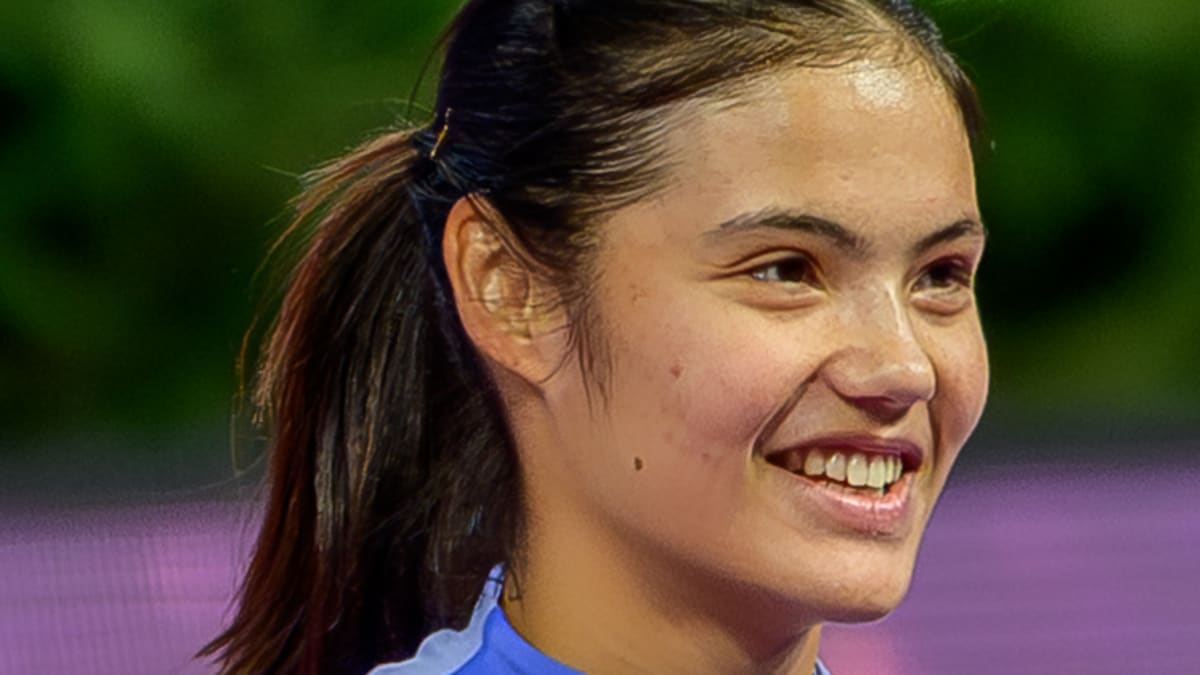
Emma Raducanu’s structural durability faces another critical test as she continues to struggle with physical setbacks. The British No. 59 sustained a stress fracture in her right lower leg during her final clash against Donna Vekic at the HSBC Championships on June 14. This structural breakdown highlights the immense physical demands placed on her 1.75-meter frame, forcing her off the tour during the most critical swing of the season.
Listen to the Second Serve Podcast
Get our daily AI-synthesized audio briefings and match reviews on the go.
From a technical perspective, an aggressive baseliner relying on explosive lateral movement requires maximum bone density and joint stability. Facing Vekic, a heavy hitter who utilizes deep, flat groundstrokes, forced Raducanu into extreme defensive slides. The constant deceleration on hard courts transmits high-impact shockwaves directly up the tibia and fibula, eventually leading to micro-fractures in the lower extremities.
According to official player profiles on the WTA Tour Home, Raducanu's career has been heavily disrupted by physical limitations. This latest lower leg injury is not an isolated incident but part of a broader pattern of load-management challenges. For a player with her high-performance ceiling, finding the right training volume is essential to avoid these recurring structural setbacks.
The Late Withdrawal From The Grass Courts of SW19
The timing of the stress fracture could not have been worse for the British star. The injury forced Emma Raducanu to withdraw from the Wimbledon Championships just hours before her scheduled opening-round match against Antonia Ruzic. Grass courts demand low-slung movement and rapid directional shifts, which place immense strain on a compromised lower leg.
Mechanically, playing on grass requires a player to bend deeply from the knees and hips while maintaining a low center of gravity. For a player recovering from a lower leg stress fracture, the kinetic chain is severely compromised. Pushing off the right leg to generate power on the forehand wing becomes a structural liability rather than an offensive asset, making competitive play impossible.
Replacing tournament play with rehab sessions has become a frustratingly familiar routine for the 23-year-old. Missing out on a home Grand Slam against an opponent like Ruzic cost Raducanu valuable ranking points and match sharpness. It also raised further questions about her long-term physical viability in elite-level professional tennis.
Andrew Castle Warns of Premature Retirement Risks
The persistent nature of these injuries has drawn serious concern from prominent figures within British tennis. Former British No. 1 Andrew Castle predicted that Raducanu could announce a sudden retirement if her physical setbacks continue to stall her career progression. Castle's warning underscores the psychological and physical toll of constant rehabilitation cycles.
For any professional athlete, the "bang for buck" ratio of training hours to actual competitive play must remain viable. When a player spends more time in the physiotherapy room than on the match court, the mental strain can equal the physical damage. Raducanu's aggressive baseline style requires absolute confidence in her movement, a confidence that is difficult to maintain under constant threat of reinjury.
While some analysts view Castle's projection as overly pessimistic, the data shows that chronic lower-body injuries are difficult to manage. Unlike upper-body strains, lower-leg stress fractures directly impact a player's ability to build aerobic capacity and foot speed. Without a stable foundation, competing against the physical elite of the WTA tour becomes nearly impossible.
From Hobart to Flushing Meadows: Tracking the Physical Toll
Raducanu's struggle to find physical consistency was evident at the start of the season. She opened her 2026 campaign at the Hobart International, where she suffered an opening-round defeat to Taylah Preston on January 15. The lack of match fitness was clear, as her lateral movement lacked its usual explosive edge.
Following that early exit, her physical recovery has hit subsequent roadblocks. Raducanu has pulled out of both the Canadian Open and the US Open as she continues to undergo rehabilitation for her stress fracture. These absences are massive blows, especially considering her historic success at Flushing Meadows.
Her absence from the North American hard-court swing prevents her from building any competitive rhythm. As we noted in our coverage of the Canadian Open environment, these high-tier tournaments demand peak physical conditioning. Without it, entering the draw is simply too risky for Raducanu’s long-term health.
Rivalry Matchup & Player Profiles
| Metric | Emma Raducanu | Donna Vekic |
|---|---|---|
| Rank | No. 59 | No. 34 |
| Country | Great Britain | Croatia |
| Age | 23 | 30 |
| Height | 1.75 m (5 ft 7 in) | 1.79 m (5 ft 10 in) |
| Handedness | Right-handed | Right-handed |
| Play Style | Aggressive baseliner | Aggressive baseliner |
| Career Titles | 1 | 5 |
Donna Vekic leads their head-to-head rivalry 1-0 after defeating Emma Raducanu 6-0, 7-6(6) in their first-ever meeting in the final of the 2026 Queen's Club Championships. This matchup highlighted the tactical and physical contrast between the two aggressive baseliners, with Vekic's height and serve power giving her a distinct edge on fast grass courts.
As Raducanu continues to rehabilitate her right lower leg stress fracture, analyzing the physical load of these matchups is critical. Vekic's deep, heavy groundstrokes forced Raducanu into extreme defensive positions, which likely exacerbated the mechanical stress on her lower leg prior to her withdrawal from subsequent summer events.
What Carlos Alcaraz Plays With
Babolat Pure Aero 98
Babolat RPM Blast 1.30
Babolat VS Original (12-Pack)
Nike Vapor Pro 2
Analyze Emma Raducanu vs. Donna Vekic
Predict tactical adjustments, momentum swings, and serve strategy options for this match-up using our AI simulator.
The Aces Tactical Panel
This report was curated and edited by Bhaskar Goel. Tactical analysis and technical insights were provided by our specialized panel of expert correspondents.
Julian Price
Senior Tactical Correspondent
Stuffy, pedantic British academic and historian specializing in match momentum and historical context.
Elena Cruz
Director of Analytical Research
Data scientist specializing in court surface physics and movement patterns.
Bhaskar
The Editor & Fan
Passionate tennis player and site editor bringing everyday amateur insights and relatable fan commentary.
Arthur Vance
Senior Existential Analyst
Deep, eccentric, and DFW-inspired. Models court metaphysics, kinetic beauty, and player psychology.
Leo Sterling
High-Performance Consultant
Hard-nosed ex-trainer from Melbourne with a no-nonsense view on tour fitness.
Related Reports


Quick Answers
What injury forced Emma Raducanu to withdraw from the US Open?+
Emma Raducanu withdrew from the US Open due to a stress fracture in her right lower leg, which she sustained during the final against Donna Vekic at the HSBC Championships.
Who defeated Emma Raducanu in her opening match of the 2026 season?+
Emma Raducanu opened her 2026 season at the Hobart International, where she lost to Taylah Preston on January 15.
What did Andrew Castle predict regarding Emma Raducanu's career?+
Former British No. 1 Andrew Castle predicted that Raducanu could announce a sudden, premature retirement if her physical setbacks and injuries continue.