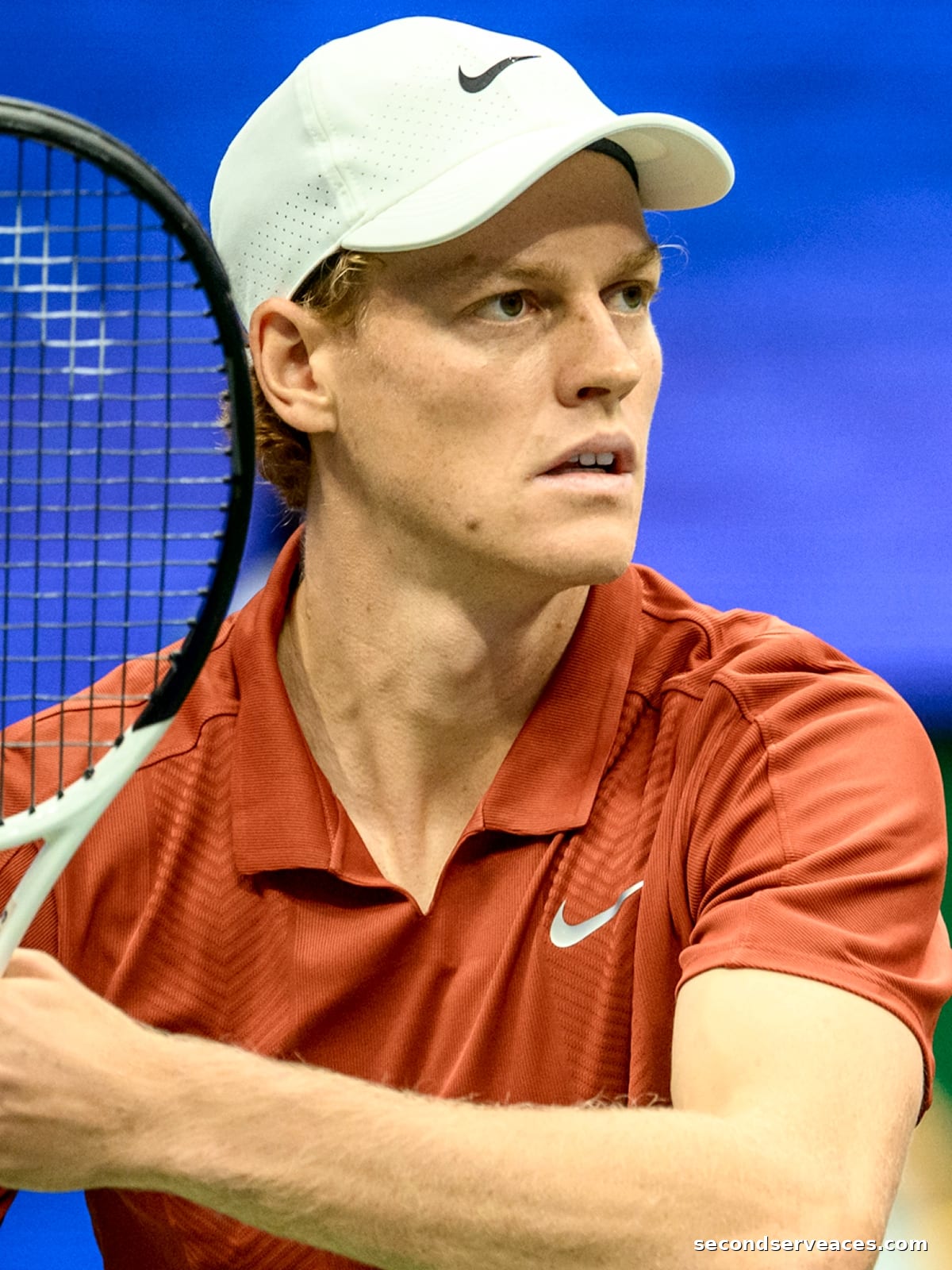
The pristine lawns of yesteryear have long yielded to the unforgiving, concrete-hard courts of Flushing Meadows, and with this transition, the physical toll on the world's finest practitioners has reached a zenith. World No. 1 Jannik Sinner, the lean conqueror from San Candido, has officially withdrawn from the upcoming US Open, citing a persistent knee injury that has hampered his movement. This premature departure robs the New York spectators of a premier title contender, casting a shadow over the year's final grand gathering. Sinner's withdrawal reflects a broader, modern malaise where the sheer velocity of the sport leaves little room for physical preservation.
Listen to the Second Serve Podcast
Get our daily AI-synthesized audio briefings and match reviews on the go.
The Physical Toll of the Modern Baseline Crusade
In my day, the legendary combatants of the 1970s, such as Björn Borg and Jimmy Connors, engaged in marathon baseline duels without the constant threat of joint degradation that plagues today's athletes. As we noted when discussing how Federer Warns Fans on Alcaraz & Sinner Injury Struggles, the modern hard-court schedule demands a level of physical exertion that the human frame was simply not engineered to endure. Sinner, currently sitting atop the global standings according to the official ATP rankings, must now pivot his focus toward long-term rehabilitation rather than chasing silverware in Queens.
The loss of the top seed reshapes the entire draw, thrusting the remaining elite competitors into a highly volatile competitive landscape. Sinner's absence is not merely a blow to the tournament's star power, but a tactical disruption that alters the seeding dynamics for the remaining contenders. For a young man with thirty career titles to his name, this forced hiatus serves as a stark reminder that even the most refined technique cannot insulate a player from the brutal realities of the hard-court circuit.
With the "San Candido Sentinel" sidelined, the pressure intensifies on the remaining favorites to navigate the early rounds without faltering. The physical demands of best-of-five tennis on DecoTurf are notorious, and without Sinner's clinical baseline presence, the upper half of the draw becomes a land of sudden opportunity for ambitious outsiders.
The Abdominal Ailment of Rio's Rising Star
Sinner is far from the only casualty of this grueling summer campaign, as young Brazilian sensation Joao Fonseca has also withdrawn. Fonseca, the exceptionally talented twenty-year-old from Rio de Janeiro, has been forced to pull out due to a severe abdominal injury. This physical breakdown follows a disappointing walkover in Cincinnati, where the young prodigy was unable to take the court, signaling that the structural integrity of his service motion had been compromised.
The abdominal wall is the very engine room of the modern serve, absorbing immense rotational forces with every delivery. For a young, aggressive baseliner like Fonseca, who relies on explosive power to dictate play from the back of the court, any micro-tear in this region renders competitive play impossible. His withdrawal from the US Open represents a significant developmental setback, denying him invaluable experience on the grandest stage of North American tennis.
The tennis aristocracy had hoped to see Fonseca test his mettle against the seasoned veterans in New York, especially given his meteoric rise to World No. 26. Instead, his team must now exercise extreme caution, ensuring that this abdominal pathology does not mutate into a chronic impediment. The transition from the junior ranks to the unrelenting demands of the senior tour requires a physical adaptation that cannot be rushed, as many a fallen prodigy has discovered to their detriment.
An Extended Hibernation for the Danish Prodigy
Joining the casualty list is the mercurial Dane, Holger Rune, who has officially extended his injury layoff by withdrawing from the tournament. Rune's physical struggles have become an unwelcome recurring motif in his young career, preventing him from establishing the competitive rhythm necessary to challenge the game's upper echelon. His absence from New York deprives the draw of one of its most charismatic, if occasionally petulant, young stars.
Rune's withdrawal is particularly frustrating for those who appreciate his tactical versatility and competitive fire. The young Dane has struggled to maintain structural durability over five-set matches, a deficiency that has repeatedly stalled his momentum. Without a solid physical foundation, his immense natural talent remains shackled, leaving tennis enthusiasts to wonder when he will finally put together a complete, healthy season.
As the tour marches on, Rune's prolonged absence highlights the delicate balance between high-intensity training and physical recovery. The modern game demands that players operate at their absolute limit from the very first ball, leaving no margin for minor physical misalignments. For Rune, this extended period of convalescence must be used to rebuild his kinetic chain from the ground up, lest he find himself permanently left behind by his healthier peers.
The Domestic Casualty List on the DecoTurf
The American contingent has also suffered severe losses, with three notable home-grown talents forced to watch from the sidelines. Sebastian Korda, Ethan Quinn, and Emilio Nava have all withdrawn from the tournament due to various physical ailments. Their absences leave a massive void in the American tennis narrative, depriving the home crowd of several highly anticipated matches on the blue courts of the USTA Billie Jean King National Tennis Center.
Korda's withdrawal is especially poignant, given his classical lineage and smooth, effortless style that recalls the elegant stroke play of the late 20th century. Quinn and Nava, representing the next generation of American hopefuls, have also seen their dreams of New York glory dashed by the unforgiving nature of the hard-court season. These injuries underscore the immense pressure placed on domestic players to perform during their home swing, often pushing their bodies past the breaking point.
Amidst this cascade of withdrawals, there is a silver lining for Australia's Alexei Popyrin, who has gained direct entry into the main draw. Popyrin replaces Spain's Alejandro Davidovich Fokina, who was also forced to withdraw due to injury. This shuffling of the entry list is a testament to the chaotic nature of the pre-tournament week, where the fortunes of players can shift in an instant based on medical reports rather than on-court results.
Rivalry Matchup & Player Profiles
| Metric | Jannik Sinner | Joao Fonseca |
|---|---|---|
| Rank | 1 | 26 |
| Country | Italy | Brazil |
| Age | 25 | 20 |
| Height | 1.91 m (6 ft 3 in) | 1.88 m (6 ft 2 in) |
| Handedness | Right-handed | Right-handed |
| Play Style | Aggressive baseliner | Aggressive baseliner |
| Career Titles | 30 | 2 |
Jannik Sinner leads their head-to-head 1-0, having won their highly competitive lone encounter in the fourth round of the 2026 Indian Wells Masters in straight tiebreak sets (7-6(6), 7-6(4)). Both players deploy a punishing brand of aggressive baseline tennis, though Sinner's superior movement and experience have given him the definitive edge in high-pressure moments.
While Sinner has established himself as the premier force in men's tennis, Fonseca represents the vanguard of the next generation. Their contrasting career trajectories—Sinner with thirty titles and Fonseca with two—suggest a rivalry that is still in its infancy, yet possesses immense potential once both players return to peak physical health.
What Jannik Sinner Plays With
Head Speed MP 2024
Head Hawk Touch 1.25
Head Prime Tour (12-Pack)
Nike GP Challenge 1
Analyze Jannik Sinner vs. Joao Fonseca
Predict tactical adjustments, momentum swings, and serve strategy options for this match-up using our AI simulator.
The Aces Tactical Panel
This report was curated and edited by Bhaskar Goel. Tactical analysis and technical insights were provided by our specialized panel of expert correspondents.
Julian Price
Senior Tactical Correspondent
Stuffy, pedantic British academic and historian specializing in match momentum and historical context.
Elena Cruz
Director of Analytical Research
Data scientist specializing in court surface physics and movement patterns.
Bhaskar
The Editor & Fan
Passionate tennis player and site editor bringing everyday amateur insights and relatable fan commentary.
Arthur Vance
Senior Existential Analyst
Deep, eccentric, and DFW-inspired. Models court metaphysics, kinetic beauty, and player psychology.
Leo Sterling
High-Performance Consultant
Hard-nosed ex-trainer from Melbourne with a no-nonsense view on tour fitness.
Related Reports
Quick Answers
Why did Jannik Sinner withdraw from the US Open?+
World No. 1 Jannik Sinner withdrew from the US Open due to a persistent knee injury.
Which American players withdrew from the tournament?+
Sebastian Korda, Ethan Quinn, and Emilio Nava are the three American players who withdrew due to injuries.
Who replaced Alejandro Davidovich Fokina in the US Open main draw?+
Alexei Popyrin gained direct entry into the main draw, replacing the injured Alejandro Davidovich Fokina.