The Architect of the Baseline
In this sport, we are defined by the surfaces we conquer. For Daniil Medvedev, the 2026 season has been an exercise in relentless efficiency. Sitting firmly inside the top 10 and holding the third spot in the Race, the Russian has already secured three ATP titles and a final run at Indian Wells. Yet, as the tour pivots to the crushed brick of Monte-Carlo, the conversation shifts from hard-court dominance to the nuanced struggle for footing and patience on clay.
Listen to the Second Serve Podcast
Get our daily AI-synthesized audio briefings and match reviews on the go.
Medvedev is currently operating under the guidance of Rohan Goetzke and Thomas Johansson, a coaching duo tasked with refining a game that is often as cerebral as it is unorthodox. The goal? Consistency. He has proven he can capture a Masters title on this surface—a feat he achieved at the 2023 Italian Open—but the red clay requires a different mental frequency than the predictable bounce of the hard courts.
The Tactical Breakdown
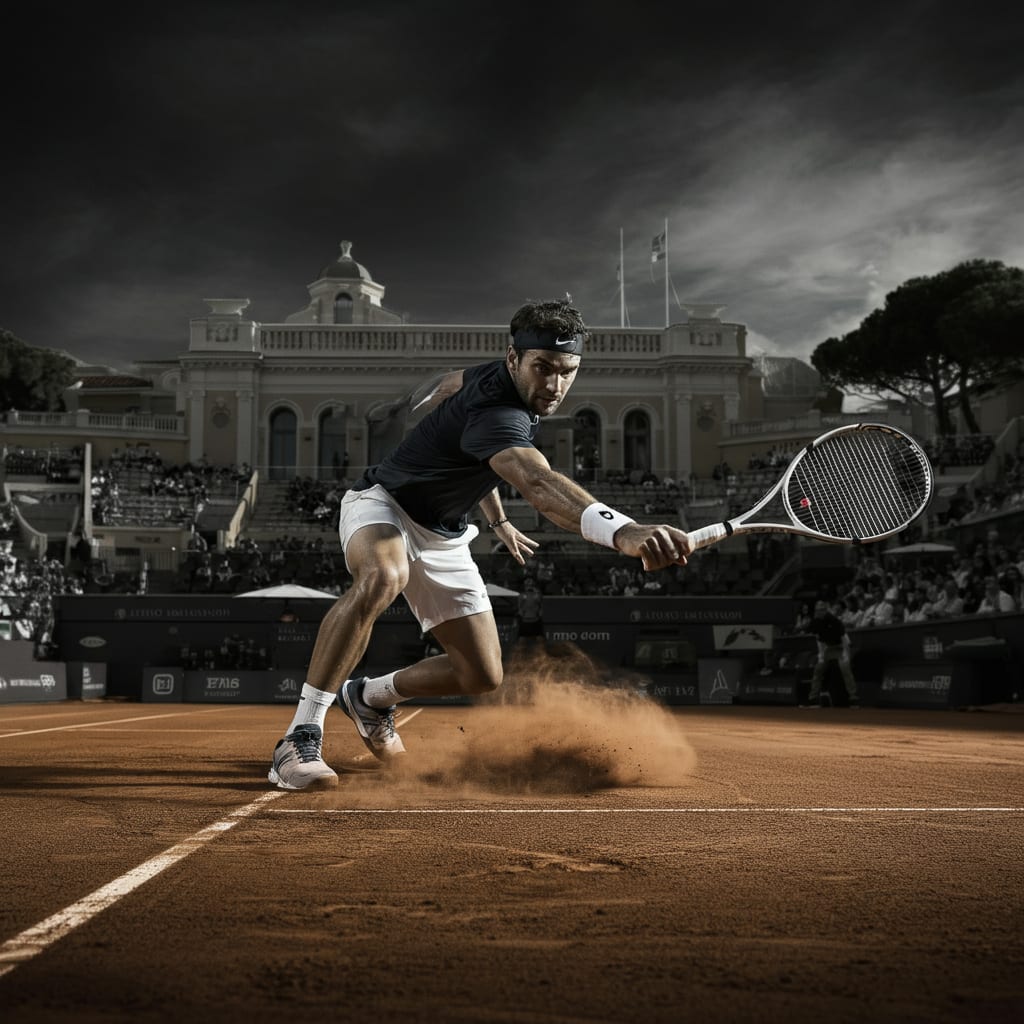
On clay, the court geometry changes. The slide becomes a primary defensive weapon, and the heavy bounce forces a longer, more arduous rally tolerance. Historically, Medvedev has used his unique, deep return position to neutralize power servers, but on clay, that depth can be a liability if the opponent uses short, angled slices to pull him forward. To succeed in Monte-Carlo, he must rely on his ability to shift from a wall-like counter-puncher to someone who can dictate play with heavy, directional topspin.
- Neutralizing the Angle: On clay, the court opens up. Expect Medvedev to focus on serve placement that prioritizes height over pure speed to prevent opponents from stepping in.
- Rally Discipline: Moving from hard courts requires him to accept that winners are harder to come by. The tactical shift here is less about the finish and more about creating the favorable court position.
- Verticality: While known for his baseline grit, integrating more frequent net approaches when pulling opponents wide will be essential to shorten points and save precious physical stamina for a deep tournament run.
The Bigger Picture
The Monte-Carlo Country Club holds a specific memory for Medvedev: his 2019 semi-final appearance, which ended in a loss to Dusan Lajovic. That match remains a benchmark for the lessons he’s carried into his prime years. His career trajectory is no longer about proving he belongs; it’s about conquering the surface that asks the most questions of his biomechanics.
With Stefanos Tsitsipas and Novak Djokovic looming as constants on this surface, the pressure is on Medvedev to validate his high Race ranking with a strong showing. If he can bridge the gap between his 2023 Rome victory and the current season’s form, he transforms from a hard-court specialist into a genuine threat every time the tour hits Europe.
What Daniil Medvedev Plays With
Tecnifibre T-Fight 305 Isoflex
Tecnifibre Razor Soft
Tecnifibre ATP Players Overgrip
Analyze Daniil Medvedev vs. Rohan Goetzke
Predict tactical adjustments, momentum swings, and serve strategy options for this match-up using our AI simulator.
The Aces Tactical Panel
This report was curated and edited by Bhaskar Goel. Tactical analysis and technical insights were provided by our specialized panel of expert correspondents.
Julian Price
Senior Tactical Correspondent
Stuffy, pedantic British academic and historian specializing in match momentum and historical context.
Elena Cruz
Director of Analytical Research
Data scientist specializing in court surface physics and movement patterns.
Bhaskar
The Editor & Fan
Passionate tennis player and site editor bringing everyday amateur insights and relatable fan commentary.
Arthur Vance
Senior Existential Analyst
Deep, eccentric, and DFW-inspired. Models court metaphysics, kinetic beauty, and player psychology.
Leo Sterling
High-Performance Consultant
Hard-nosed ex-trainer from Melbourne with a no-nonsense view on tour fitness.