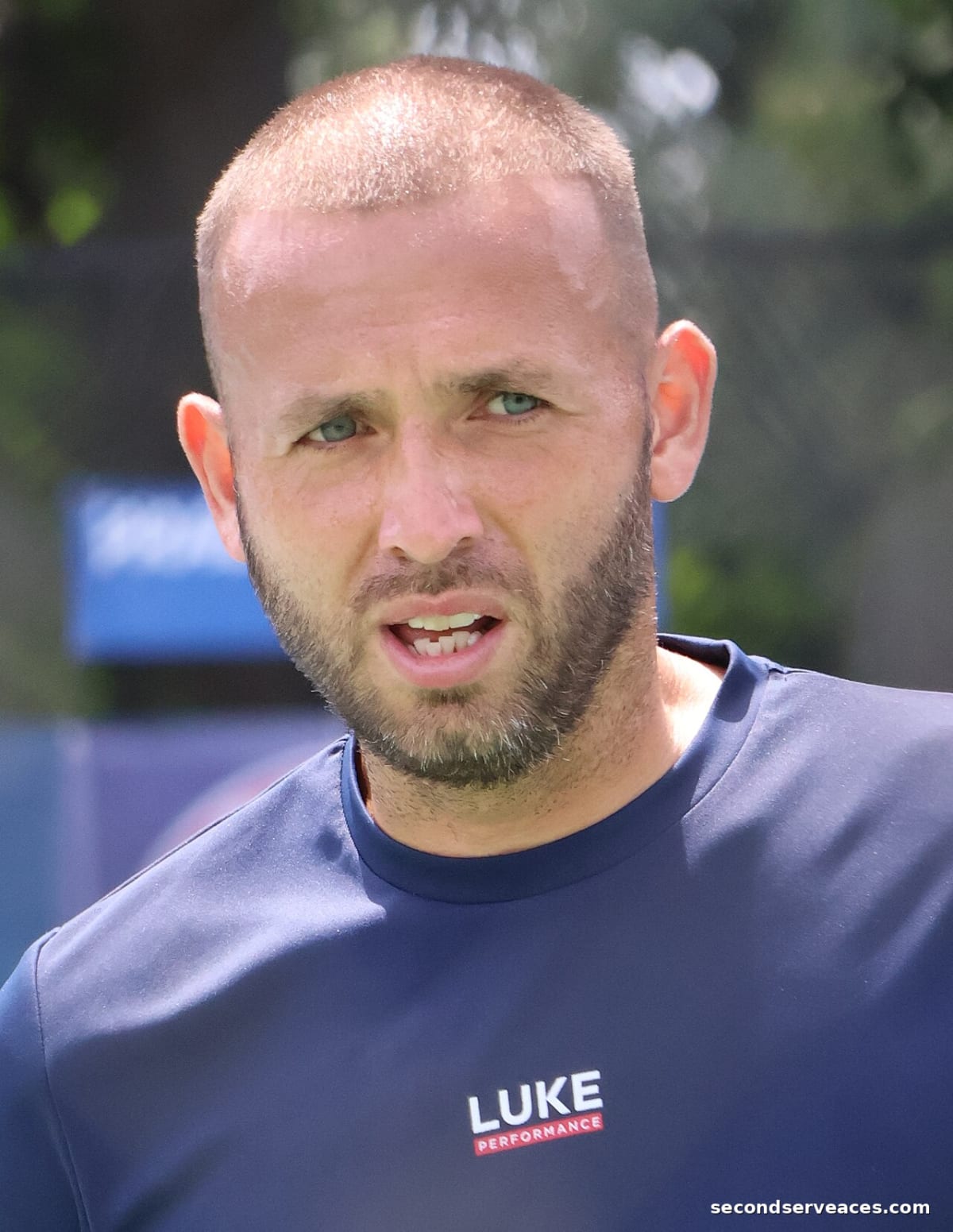
The friction between veteran players and national tennis federations has reached a boiling point on the grass of West Kensington. Dan Evans, the long-standing British representative known for his gritty baseline craft and biting slice, has publicly voiced his displeasure with the Lawn Tennis Association (LTA). The dispute stems from the organization's decision to deny him a main draw wild card for the Queen's Club Championships, a tournament where Evans has historically drawn massive home support.
Listen to the Second Serve Podcast
Get our daily AI-synthesized audio briefings and match reviews on the go.
Evans, who has navigated a highly demanding professional career with a physical profile that relies on court coverage and tactical variation rather than raw power, viewed the wildcard snub as a structural oversight. At 36 years old, the veteran felt his historical contributions to British tennis warranted an administrative courtesy. Instead, he was forced to enter the qualifying draw, where his campaign was cut short before the main event even began.
The 2023 Ascent to World No. 21
To understand the depth of Evans' frustration, one must look at his recent competitive ceiling. In 2023, Evans reached a career-high ranking of world No. 21, a testament to his high-efficiency game style. His technical setup, which relies heavily on a low-skidding backhand slice to disrupt his opponent's hitting zone, proved to be highly effective on fast surfaces. According to official ATP rankings, this peak represented the culmination of years of tactical refinement.
Unlike modern baseline players who rely on extreme western grips and heavy topspin, Evans has always operated with a flatter, more classical toolkit. His racquet specifications—optimized for control and directional accuracy—allowed him to redirect pace with exceptional efficiency. This high-precision style made him a highly respected opponent on tour, capable of dismantling high-seeded players through sheer court craft.
His performance metrics during his peak season highlighted a player who maximized his physical output. Evans was particularly adept at defending his second serve, utilizing court positioning and early ball-striking to mitigate his lack of raw service speed. This tactical discipline kept him competitive at the highest levels of the sport, making his sudden slide down the rankings all the more difficult to digest.
The Physical Toll of the 2024 Season
The transition from his career-high ranking to his current standing has been defined by physical wear and tear. Evans has managed to play only five matches this year due to persistent injuries that have severely compromised his movement. For a player whose success is predicated on elite footwork and kinetic chain efficiency, these physical setbacks have proven catastrophic to his match momentum.
This lack of competitive match play was glaringly evident during his qualifying match at Queen's Club. Facing Marcos Giron, Evans struggled to find his rhythm, ultimately losing the match and failing to reach the main draw. Without the physical sharpness required to sustain long, high-intensity rallies on slick turf, his tactical slice lost much of its bite, leaving him vulnerable to Giron's aggressive baseline depth.
This physical decline has accelerated his career timeline significantly. As we detailed in our previous coverage of how Dan Evans plans to retire from professional tennis, the British veteran has already resolved to hang up his racquets. The reality of his physical limitations has made this grass-court season a bittersweet farewell tour rather than a competitive resurgence.
The Lawn Tennis Association Wild Card Controversy
The core of Evans' grievance lies in how the LTA manages its developmental assets versus its retiring legends. Evans openly criticized the governing body for failing to award him a main draw wildcard, labeling the decision as a distinct lack of a "classy gesture." For a player who has represented his country in Davis Cup ties and maintained a top-tier national presence, the administrative snub felt like a dismissal of his career achievements.
This controversy is not an isolated incident within British tennis administration. Tatjana Maria, last year's champion at Queen's, also accused the LTA of a lack of respect after she was similarly denied a wild card. The parallel complaints suggest a systemic shift in how the LTA allocates its tournament entries, prioritizing younger developmental players over established veterans. This tension closely mirrors the administrative debates we explored regarding the Wimbledon wildcard selection process.
From an analytical standpoint, the LTA's strategy prioritizes long-term return on investment by giving younger players exposure to tour-level competition. However, Evans argues that this approach lacks nuance. By failing to honor veterans who have driven ticket sales and local engagement for over a decade, the association risks alienating both its legacy players and the home fans who expect to see them compete on the main stage.
The Financial Realities of the Wimbledon Swan Song
Despite the disappointment at Queen's Club, Evans' final career milestone remains intact. He will make his final professional appearance at Wimbledon, where he is expected to receive a warm reception from the home crowd. This tournament represents the ultimate testing ground for his classical grass-court game, offering one last opportunity to showcase his signature slice on the sport's most prestigious stage.
The financial mechanics of this year's tournament add a significant layer of security to his retirement. Wimbledon's total prize money pot has increased to a record-breaking £64.2 million. Crucially for Evans, first-round losers are set to receive £80,000, ensuring that even a premature exit provides a substantial financial cushion as he transitions away from the professional tour.
As Evans prepares for his final competitive outings, his legacy remains secure. His career, documented in detail on his public Wikipedia profile, serves as a blueprint for players who lack elite height or power but possess the tactical intelligence to compete at the absolute summit of the sport. While his relationship with the LTA may end on a strained note, his impact on British tennis over the past decade remains undeniable.
Analyze Dan Evans vs. Marcos Giron
Predict tactical adjustments, momentum swings, and serve strategy options for this match-up using our AI simulator.
The Aces Tactical Panel
This report was curated and edited by Bhaskar Goel. Tactical analysis and technical insights were provided by our specialized panel of expert correspondents.
Julian Price
Senior Tactical Correspondent
Stuffy, pedantic British academic and historian specializing in match momentum and historical context.
Elena Cruz
Director of Analytical Research
Data scientist specializing in court surface physics and movement patterns.
Bhaskar
The Editor & Fan
Passionate tennis player and site editor bringing everyday amateur insights and relatable fan commentary.
Arthur Vance
Senior Existential Analyst
Deep, eccentric, and DFW-inspired. Models court metaphysics, kinetic beauty, and player psychology.
Leo Sterling
High-Performance Consultant
Hard-nosed ex-trainer from Melbourne with a no-nonsense view on tour fitness.
Related Reports

Quick Answers
Why did Dan Evans fail to reach the main draw at Queen's Club?+
Evans was forced to play the qualifying draw after being denied a wild card, where he lost his match to Marcos Giron.
When does Dan Evans plan to retire from professional tennis?+
Evans announced that he will retire from professional tennis following this year's Wimbledon tournament.
How much prize money will first-round losers receive at Wimbledon this year?+
First-round losers at Wimbledon are set to receive £80,000 out of a record £64.2 million total prize money pot.