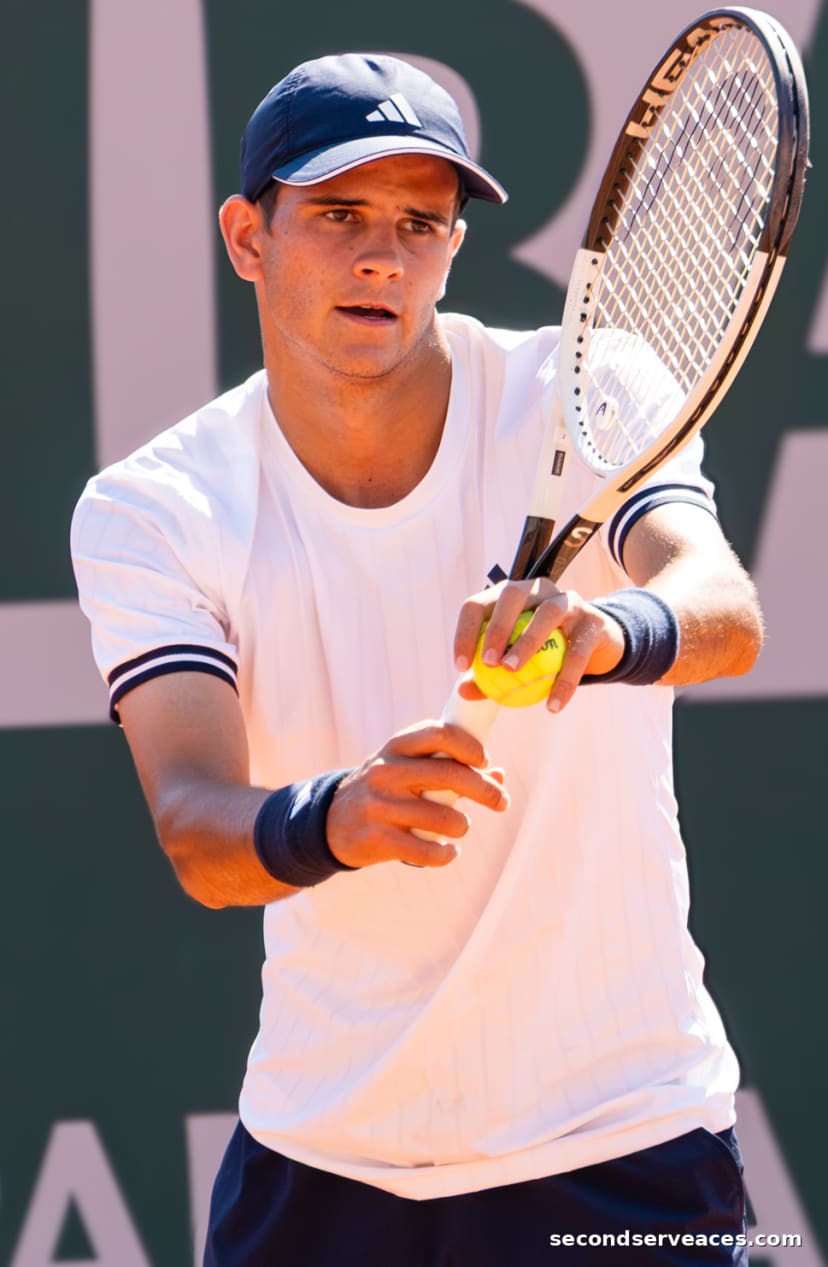
There is a peculiar calculus to the professional tennis serve, a fragile biomechanical chain where a millimeter of errant ball toss translates to catastrophic geometric failure upon impact. When Coco Gauff stepped onto the sun-baked cerulean hardcourts of the Miami Open, that chain was visibly fracturing. The American surrendered the first set 6-3 to Italy’s Elisabetta Cocciaretto, struggling against both her opponent’s rhythmic baseline flat-striking and her own internal serving demons.
Listen to the Second Serve Podcast
Get our daily AI-synthesized audio briefings and match reviews on the go.
Yet, tennis is fundamentally a sport of problem-solving under duress. Gauff, operating under the lingering physical doubts of a recent injury withdrawal from Indian Wells, engineered a vital mid-match recalibration to halt a burgeoning upset, eventually overpowering Cocciaretto to secure her place in the third round.
The Anatomy of an Asymmetrical Stat Line
To examine the box score of this encounter is to stare at a mathematical paradox. How does a player routinely sabotage her own service games and still emerge victorious against a top-tier WTA competitor? The raw data offers a fascinating glimpse into Gauff’s sheer athletic force.
- The Deficit: Dropped the opening set 6-3, struggling to find a sustainable rhythm.
- The Breakdown: Committed a staggering 11 double faults over the course of the match.
- The Paradox: Despite the double faults, Gauff somehow won 63 percent of her overall service points.
- The Context: Avenged a loss to Cocciaretto from earlier this season at the Qatar Open.
- The Horizon: Advances to face compatriot Alycia Parks in a highly anticipated third-round clash.
Giving away nearly three free games via double faults is, in the modern era, typically an actuarial death sentence. It severely disrupts match momentum and hands the opponent unearned oxygen. However, that 63 percent service point win rate reveals the sheer terminal velocity of Gauff's first serve when it actually landed in the box, alongside a baseline rally tolerance that suffocated Cocciaretto during open play.
The Tactical Breakdown
From a purely strategic standpoint, Gauff’s game is built on an almost supernatural lateral elasticity. She does not merely run to the ball; she absorbs the kinetic energy of her opponent’s shot, loads heavily on her outside leg, and violently redirects the trajectory with extreme topspin.
Historically, Cocciaretto thrives when given a consistent rhythm, stepping inside the baseline to take the ball early and rob her opponent of recovery time. In the first set, the Italian successfully exploited Gauff’s erratic service toss, leaning into aggressive return positions on the second serve and immediately pinning the American deep in her backhand corner. By attacking the Gauff forehand—traditionally the more volatile of her two wings—Cocciaretto dictated the early court geometry.
Gauff’s mid-match adjustment was not merely psychological; it was highly technical. Facing an opponent who had already deciphered her patterns earlier this year in Qatar, Gauff subtly altered her serve placement patterns. Rather than chasing the sheer speed that was causing her toss to spray, she began heavily utilizing the kick serve out wide on the ad court. This dragged Cocciaretto out of the center, opening the deuce side of the court for Gauff's subsequent plus-one groundstrokes. By forcing the Italian to defend from the tramlines, Gauff flipped the script, leveraging her superior footwork to dominate the ad-court exchanges and erase any break point opportunities that arose from her serving yips.
The Bigger Picture
This victory represents far more than a simple progression through the draw. It is a vital data point in Gauff’s ongoing evolution as a premier hardcourt technician. Coming off an injury withdrawal at Indian Wells, the primary question surrounding the American was whether her physical conditioning could withstand the brutal humidity and grinding rallies inherent to the Miami Open. Surviving a grueling, imperfect match against an opponent who recently beat her indicates a mature, pragmatic approach to tournament survival.
Furthermore, navigating past the ghosts of the Qatar Open demonstrates an elite psychological resilience. Gauff did not panic when the first set slipped away 6-3. Instead, she diagnosed the problem, accepted the friction of her malfunctioning serve, and found an alternative route to the finish line.
Looking ahead, the aesthetic and tactical contrasts will be stark. Gauff now prepares to face Alycia Parks, a player whose game is entirely predicated on explosive, low-margin power and towering serves. Against Parks, Gauff will suddenly shift from the role of the aggressor into that of the elite counter-puncher. If she can clean up the mechanics of her service toss, her defensive court coverage and heavy topspin will serve as the perfect antidote to Parks's flat, heavy artillery. In Miami, the temperature is rising, and Gauff is learning, in real-time, how to win ugly when the geometry refuses to align.
What Coco Gauff Plays With
Head Boom MP 2024
Head Lynx Tour 1.25
Head Prime Tour (12-Pack)
Analyze Coco Gauff vs. Elisabetta Cocciaretto
Predict tactical adjustments, momentum swings, and serve strategy options for this match-up using our AI simulator.
The Aces Tactical Panel
This report was curated and edited by Bhaskar Goel. Tactical analysis and technical insights were provided by our specialized panel of expert correspondents.
Julian Price
Senior Tactical Correspondent
Stuffy, pedantic British academic and historian specializing in match momentum and historical context.
Elena Cruz
Director of Analytical Research
Data scientist specializing in court surface physics and movement patterns.
Bhaskar
The Editor & Fan
Passionate tennis player and site editor bringing everyday amateur insights and relatable fan commentary.
Arthur Vance
Senior Existential Analyst
Deep, eccentric, and DFW-inspired. Models court metaphysics, kinetic beauty, and player psychology.
Leo Sterling
High-Performance Consultant
Hard-nosed ex-trainer from Melbourne with a no-nonsense view on tour fitness.