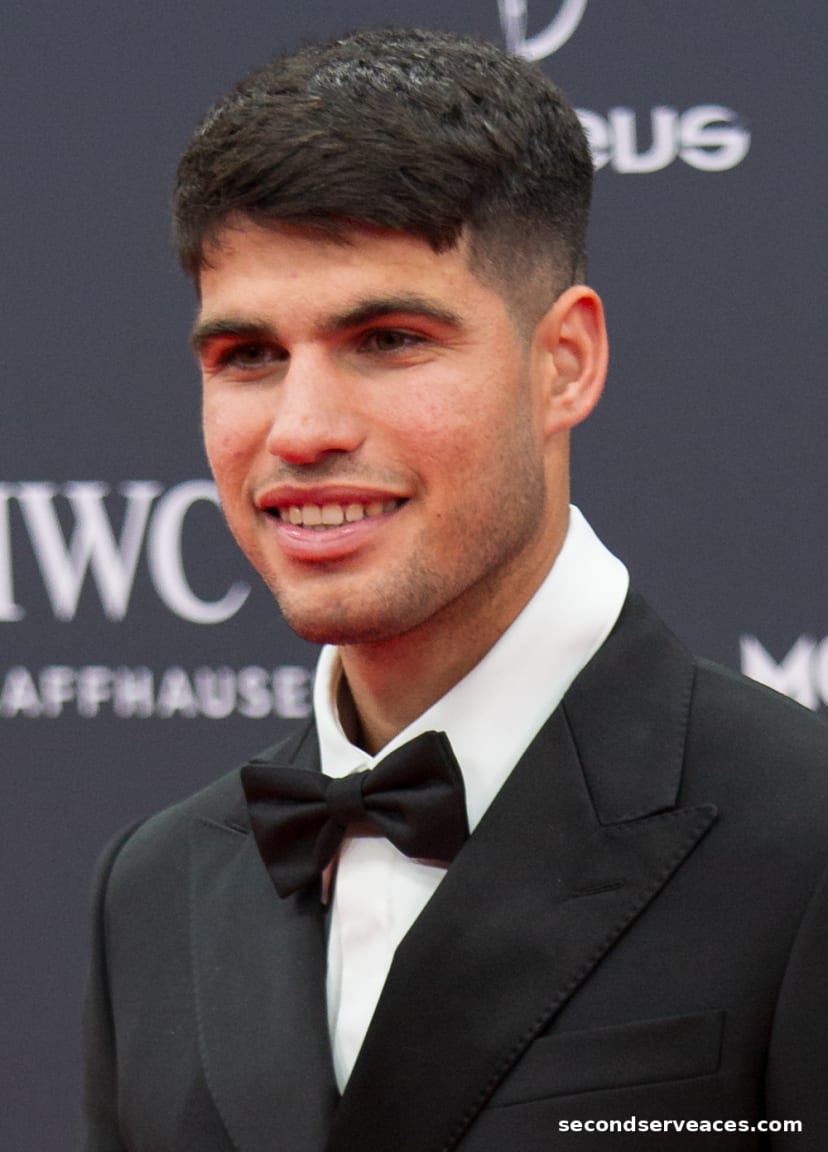
When you are living out of a suitcase in the locker rooms of the ATP tour, the noise doesn't just come from the crowd. For Carlos Alcaraz, the mounting challenge isn't just the spin or the serve—it is the lens. As we descend onto the red dust of Monte-Carlo, the young Spaniard has been vocal about the erosion of privacy that comes with his stature, noting the relentless presence of cameras that follow players everywhere, leaving little room for the mental decompression necessary to compete at the peak of the sport.
Listen to the Second Serve Podcast
Get our daily AI-synthesized audio briefings and match reviews on the go.
The Tactical Breakdown
The transition to clay is always a litmus test for rally tolerance and point construction. Alcaraz, a man who dictates play with immense topspin and explosive court coverage, thrives on the unpredictability he brings to the baseline. His game is built on a foundation of offensive aggression; he forces opponents to hit shots they aren't comfortable with while scrambling to reach balls that should be winners. When he enters a defensive state, he utilizes his reach to transform a neutral point into a break point opportunity in a single stroke.
Oppositely, Jannik Sinner’s rise has been surgical. Since his momentum-shifting titles in Indian Wells and Miami, his ability to take the ball on the rise has neutralized even the most potent servers. On the clay, where the surface usually rewards patient grinders, Sinner relies on a high-velocity, low-margin game that denies his opponents the time to set their feet. His tactical edge lies in his serve placement patterns—wide out to pull opponents off the court and opening up the backhand cross-court exchange where he rarely misses.
The Bigger Picture
The stakes in Monte-Carlo have shifted dramatically. Sinner arrives in the principality after skipping this event last season, leaving him a massive opportunity to gain points. He sits in a position to potentially claim the World No. 1 ranking if he secures the title. For Alcaraz, the burden is doubled: he is tasked with defending his title while navigating the psychological weight of being the hunted.
- The Privacy Paradox: Alcaraz's candid admissions highlight a growing friction between media demands and the athlete's mental necessity for focus.
- Ranking Implications: The gap between the two is closing, and the Monte-Carlo draw acts as a fulcrum for the remainder of the European clay swing.
- Surface Transition: While Sinner’s recent hard-court form is undeniable, clay demands a different rhythmic patience that will test whether his aggressive baseline style can sustain the same level of intensity against the best on the dirt.
The history of this rivalry is only beginning, but the architecture of their match-ups already suggests a clash of philosophies. One plays with the raw, intuitive flair of a street artist, the other with the cold, calculated precision of an engineer. We aren't just watching a tournament; we are watching a shift in the hierarchy of the sport.
What Carlos Alcaraz Plays With
Babolat Pure Aero 98
Babolat RPM Blast 1.30
Nike Vapor Pro 2
Analyze Carlos Alcaraz vs. Jannik Sinner
Predict tactical adjustments, momentum swings, and serve strategy options for this match-up using our AI simulator.
The Aces Tactical Panel
This report was curated and edited by Bhaskar Goel. Tactical analysis and technical insights were provided by our specialized panel of expert correspondents.
Julian Price
Senior Tactical Correspondent
Stuffy, pedantic British academic and historian specializing in match momentum and historical context.
Elena Cruz
Director of Analytical Research
Data scientist specializing in court surface physics and movement patterns.
Bhaskar
The Editor & Fan
Passionate tennis player and site editor bringing everyday amateur insights and relatable fan commentary.
Arthur Vance
Senior Existential Analyst
Deep, eccentric, and DFW-inspired. Models court metaphysics, kinetic beauty, and player psychology.
Leo Sterling
High-Performance Consultant
Hard-nosed ex-trainer from Melbourne with a no-nonsense view on tour fitness.