The Burden of the Record and the Smile That Defies It
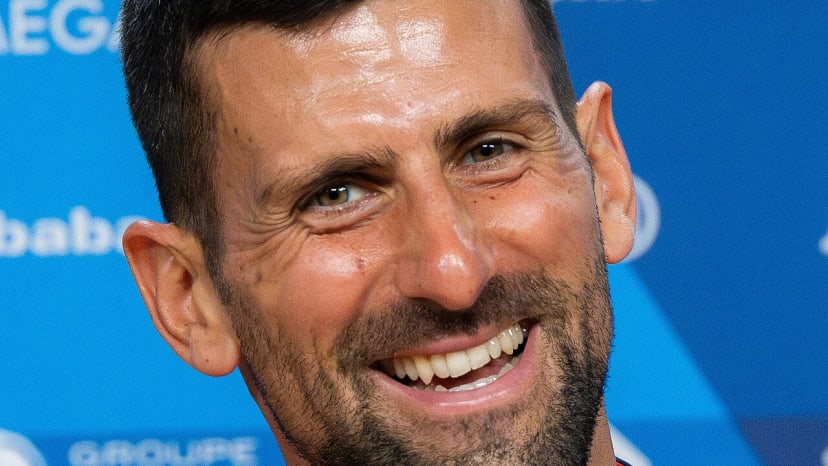
In the silence between service games, where the weight of expectations often crushes the spirit, Carlos Alcaraz has found a singular weapon: the ability to maintain a smile. It is an act of rebellion against the grind of the ATP Tour. Dominic Thiem, a man who knows the physical cost of scaling the mountain, suggests that this specific psychological approach—the sheer pleasure of the fight—might be the bridge to catching the most staggering number in our sport: Novak Djokovic’s 24 Grand Slam titles.
Listen to the Second Serve Podcast
Get our daily AI-synthesized audio briefings and match reviews on the go.
We have spent years analyzing the tactical evolution of the game, from the serve-and-volley elegance of Roger Federer to the relentless, heavy-topspin attrition of Rafael Nadal. Yet, the mental tax of maintaining that excellence is often what breaks a player first. Thiem’s observation highlights that while the tools of the modern game—the raw power of Jannik Sinner or the technical variety of Alexander Zverev—are essential, longevity remains a mental pursuit.
Alcaraz currently finds himself navigating a treacherous path. His recent withdrawal from the Barcelona Open due to a wrist issue and a slide to number two in the official rankings following the Monte Carlo Masters final against Sinner prove that even the most talented suffer the erosion of the physical. The chase is not just against the ghosts of legends; it is a battle against the human anatomy under constant duress.
The New Guard and the Fragility of Momentum
The landscape of the tour is shifting with a speed that catches even veterans off guard. While we look at the established names, the emergence of talents like Joao Fonseca, who conquered Basel last year, and Jakub Mensik, whose victory over Sinner in Doha served notice of his potential, suggests a depth of competition unseen in decades. The old guard, including the seasoned Gael Monfils, watches from the wings as the generation shift accelerates.
Consistency is the currency of the elite, and the current volatility at the top reflects a sport in flux. When Alcaraz steps onto the clay, the expectation is perfection. However, as Patrick McEnroe and other keen observers often note, the path to greatness is rarely linear. It is a series of fits and starts, injuries managed, and mental resets. The loss at Monte Carlo wasn't just a defeat; it was a tactical recalibration against a peer who is currently locked into a similar trajectory of ascent.
Dominic Thiem, reflecting on the current state of play, reminds us that the history books are not written by the players who hit the hardest, but by those who can sustain the intensity while keeping the game's inherent joy intact. Whether the Spaniard can overcome his current physical setbacks to eventually shadow the 24-title benchmark is a question for the coming decade, not the next tournament.
What Carlos Alcaraz Plays With
Babolat Pure Aero 98
Babolat RPM Blast 1.30
Babolat VS Original (12-Pack)
Nike Vapor Pro 2
Analyze Carlos Alcaraz vs. Rafael Nadal
Predict tactical adjustments, momentum swings, and serve strategy options for this match-up using our AI simulator.
The Aces Tactical Panel
This report was curated and edited by Bhaskar Goel. Tactical analysis and technical insights were provided by our specialized panel of expert correspondents.
Julian Price
Senior Tactical Correspondent
Stuffy, pedantic British academic and historian specializing in match momentum and historical context.
Elena Cruz
Director of Analytical Research
Data scientist specializing in court surface physics and movement patterns.
Bhaskar
The Editor & Fan
Passionate tennis player and site editor bringing everyday amateur insights and relatable fan commentary.
Arthur Vance
Senior Existential Analyst
Deep, eccentric, and DFW-inspired. Models court metaphysics, kinetic beauty, and player psychology.
Leo Sterling
High-Performance Consultant
Hard-nosed ex-trainer from Melbourne with a no-nonsense view on tour fitness.