Tennis is a mirror. When you stare across the net, sometimes you see a rival, sometimes a ghost, and occasionally, if you look close enough, you see a younger version of yourself staring right back. The geometry of the court does not care about age, but the mind certainly does.
Listen to the Second Serve Podcast
Get our daily AI-synthesized audio briefings and match reviews on the go.
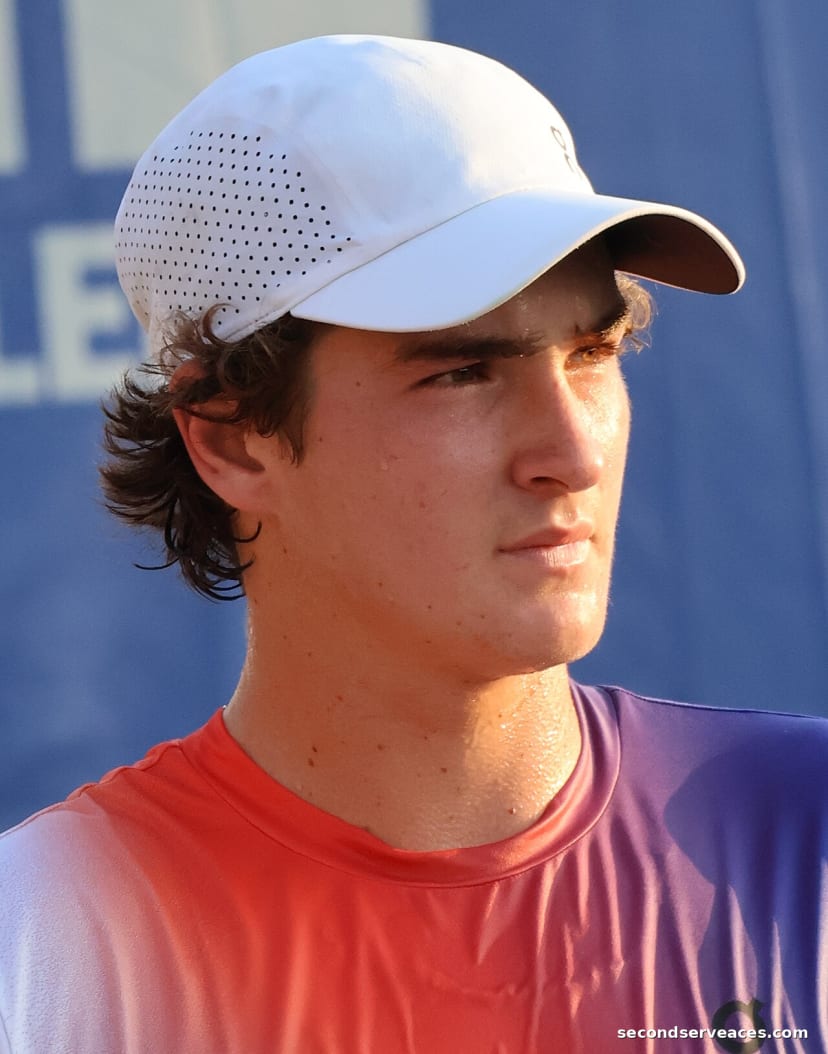
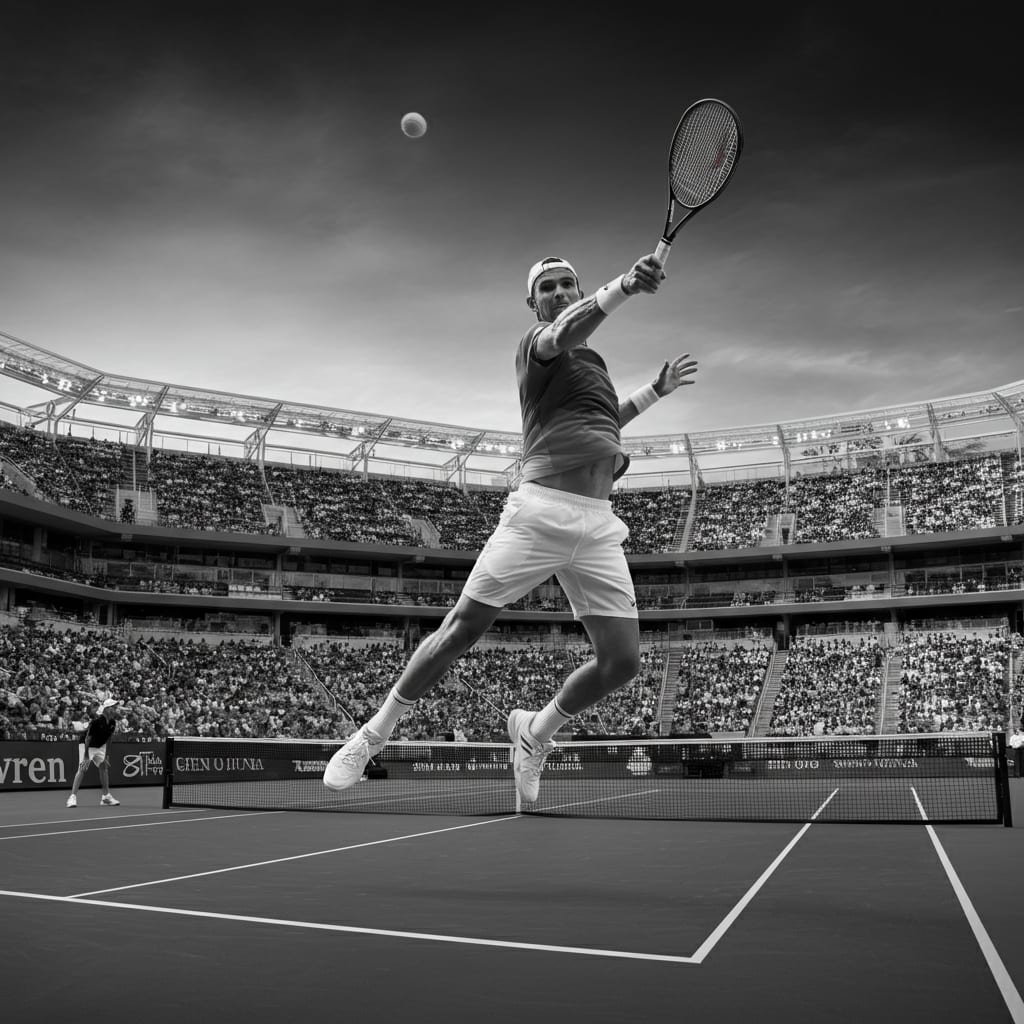
Under the electric lights of Hard Rock Stadium, with approximately 16,000 spectators creating a deafening cauldron of noise, World No. 1 Carlos Alcaraz experienced that exact psychological phenomenon. The Spaniard walked onto the blistering Miami hard court as the apex predator of the sport, only to find an explosive, fearless teenager challenging him for every square inch of baseline real estate.
Advancing to the third round of the Miami Open, Alcaraz secured a hard-fought 6-4, 6-4 victory over Brazilian teenager Joao Fonseca. While the straight-sets result might look routine on a tournament draw sheet, the reality of those twenty games was a grueling, lungs-burning physical chess match. Alcaraz himself noted the eerie similarity post-match, stating that the Brazilian teenager reminds him a lot of himself at that age. Navigating that reality requires a unique kind of mental discipline.
The Tactical Breakdown
You do not survive a hyper-aggressive opponent by simply hitting the ball harder; you survive by manipulating the space. Alcaraz’s game is built around explosive movement and a devastatingly heavy forehand, but against Fonseca, the World No. 1 had to lean heavily on his defensive problem-solving and rally tolerance.
Fonseca plays with a distinct lack of fear, stepping inside the baseline to take the ball agonizingly early. To counter this, Alcaraz had to disrupt the teenager's rhythm. When a player tries to rush you, the tactical response is to change the eye-level of the incoming ball. Alcaraz utilized his elite topspin to push Fonseca back, refusing to give the Brazilian the flat, waist-high balls he craves.
Here is how the World No. 1 surgically dismantled the threat:
- Forehand Trajectory Manipulation: Instead of engaging in flat-hitting baseline brawls, Alcaraz increased his net clearance. By hitting heavy topspin deep into the corners, he forced Fonseca to hit from awkward heights, naturally drawing unforced errors as the rallies extended past the five-shot mark.
- Return Positioning Shifts: Serving in the ATP is a game of intimidation. Fonseca brought serious heat, prompting Alcaraz to dynamically alter his return depth. By occasionally dropping deep behind the baseline, Alcaraz bought himself the necessary fraction of a second to absorb the raw power and reset the point neutral.
- Strategic Net Approaches: The hard courts of Miami can brutalize the legs. Recognizing the physical toll of grinding out long rallies against a younger, fresher opponent, Alcaraz picked precise moments to follow his approach shots to the net, suffocating Fonseca's recovery angles and finishing points on his own terms.
The Bigger Picture
Stepping onto the court as the World No. 1 means you are no longer the hunter; you are the hunted. Every player in the locker room circles your name on the draw, bringing their absolute best tennis to the stadium. Alcaraz is currently navigating the treacherous transition from being the tour's ultimate disruptor to its defending king.
This 6-4, 6-4 victory is a testament to the maturation of his game. Early in his career, Alcaraz might have allowed his ego to draw him into a sheer power contest with a player like Fonseca. Today, he played with the quiet, suffocating pragmatism of a veteran. He understood that the hard surface of the Miami Open rewards consistency and spin just as much as it rewards pace.
Looking historically at the sport, the great champions—the ones who sustain their ranking at the absolute pinnacle—learn to win matches on the days when they cannot simply overpower the man across the net. They win by managing risk, understanding the momentum of break points, and recognizing when to accelerate. The fact that Alcaraz could explicitly see his own youthful exuberance in Fonseca, yet compartmentalize that emotion to execute a clinical tactical game plan, speaks volumes about his psychological durability.
As the Miami Open progresses, this match will serve as a vital calibration exercise. Alcaraz has the legs, the lungs, and the strokes. Now, he is refining the veteran mindset required to stay at the summit of a brutally unforgiving sport.
What Carlos Alcaraz Plays With
Babolat Pure Aero 98
Babolat RPM Blast 1.30
Babolat VS Original (12-Pack)
Nike Vapor Pro 2
Analyze Carlos Alcaraz vs. Joao Fonseca
Predict tactical adjustments, momentum swings, and serve strategy options for this match-up using our AI simulator.
The Aces Tactical Panel
This report was curated and edited by Bhaskar Goel. Tactical analysis and technical insights were provided by our specialized panel of expert correspondents.
Julian Price
Senior Tactical Correspondent
Stuffy, pedantic British academic and historian specializing in match momentum and historical context.
Elena Cruz
Director of Analytical Research
Data scientist specializing in court surface physics and movement patterns.
Bhaskar
The Editor & Fan
Passionate tennis player and site editor bringing everyday amateur insights and relatable fan commentary.
Arthur Vance
Senior Existential Analyst
Deep, eccentric, and DFW-inspired. Models court metaphysics, kinetic beauty, and player psychology.
Leo Sterling
High-Performance Consultant
Hard-nosed ex-trainer from Melbourne with a no-nonsense view on tour fitness.