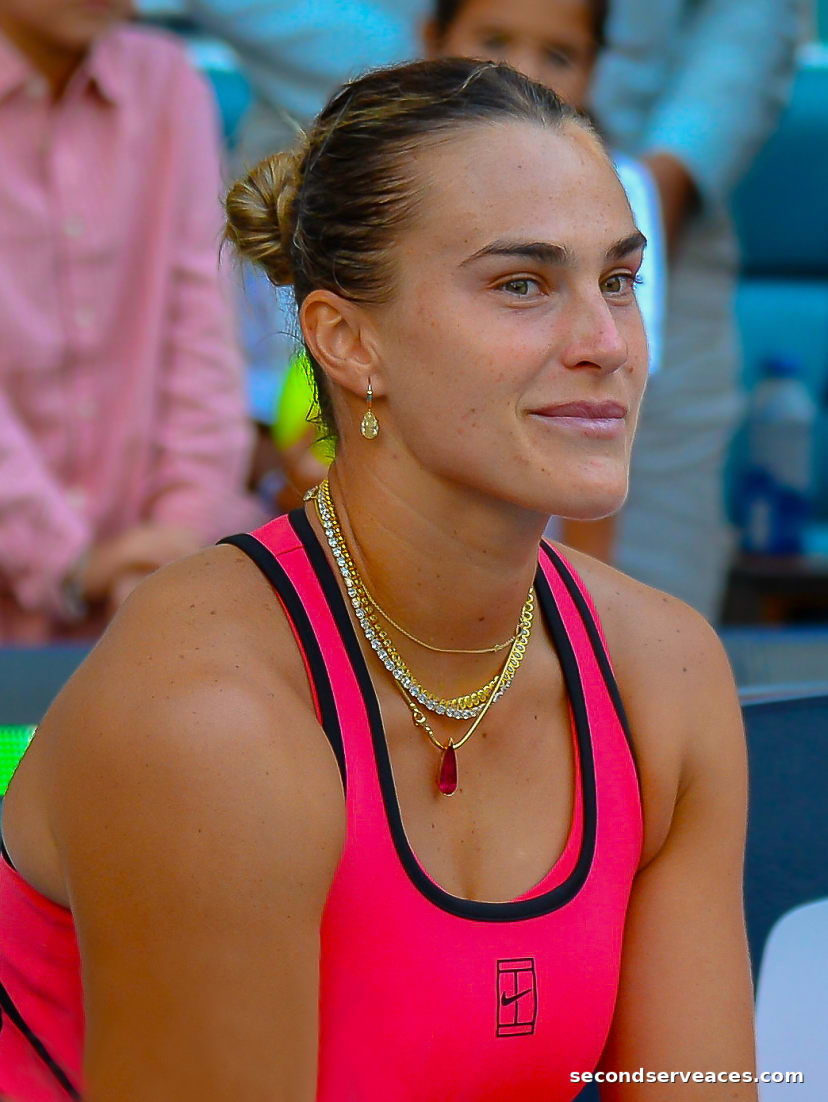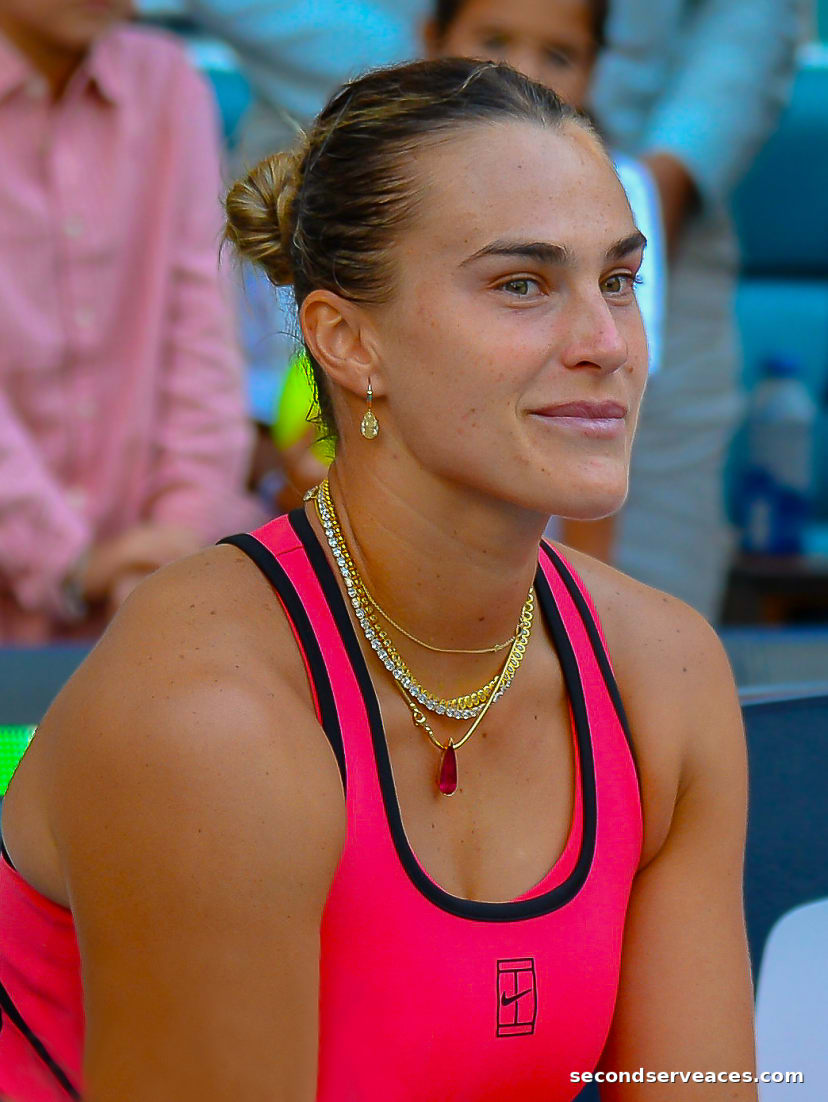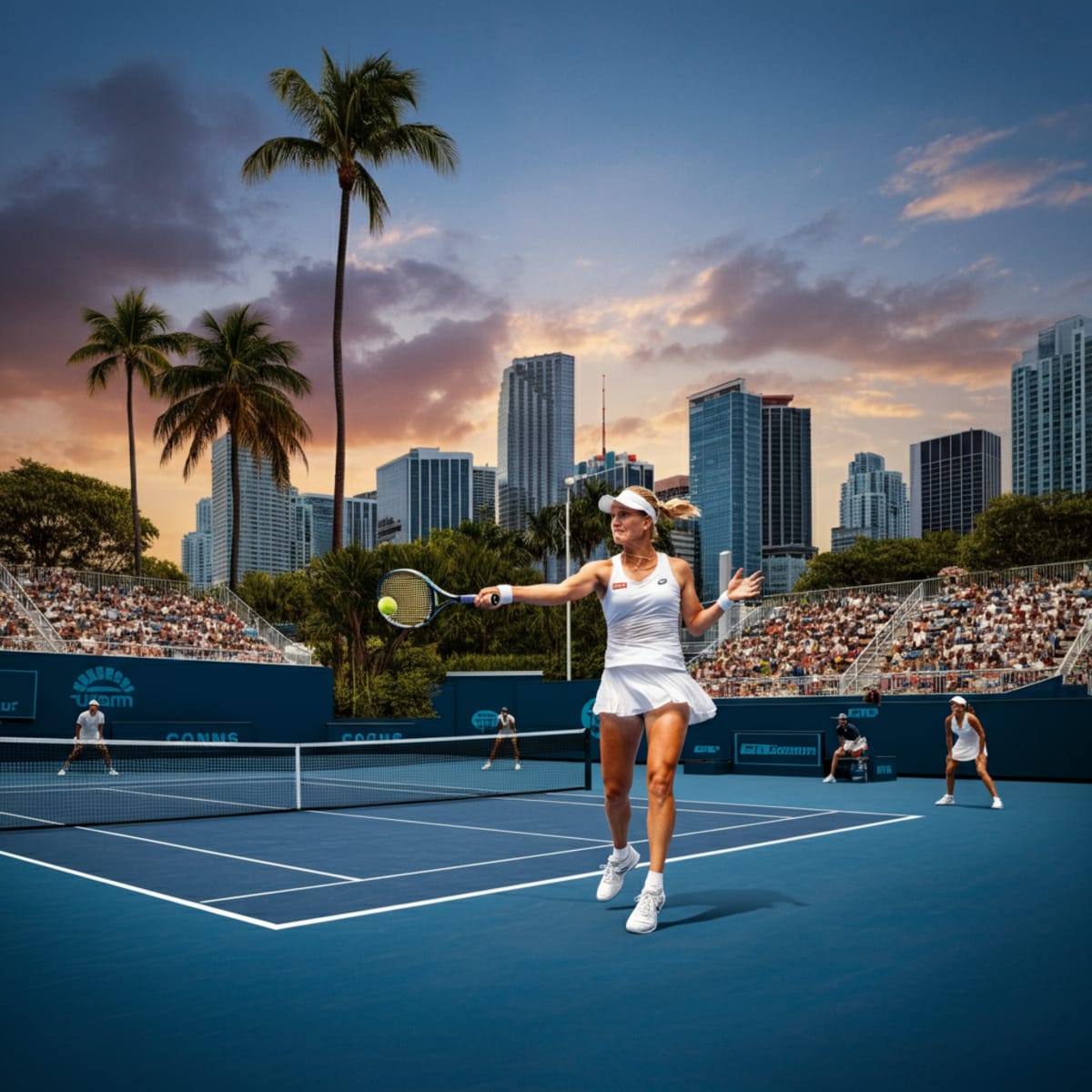
Underneath the swaying palms of Biscayne Bay, the real heat isn't radiating from the azure hard courts. It is emanating directly from the press room. Before a single ball has been struck in anger at this year's Miami Open, the ever-candid Aryna Sabalenka has already delivered a blistering verbal volley, reminding us that the fiercest exchanges in professional tennis don't always require a racquet.
Listen to the Second Serve Podcast
Get our daily AI-synthesized audio briefings and match reviews on the go.
Stepping to the microphone with the same uncompromising aggression she brings to a pivotal break point, the world No. 2 addressed recent grievances echoing from the Middle East. The controversy stems from her withdrawal—alongside world No. 1 Iga Swiatek—from the Dubai Tennis Championships last month. The tournament director offered a remarkably harsh assessment of their absence, a critique Sabalenka has now publicly dismantled.
To fully grasp the unfolding drama as the tour shifts to the Florida sunshine, let us review the vital intelligence gathered from the grounds:
- The Threat of a Boycott: Aryna Sabalenka firmly stated she may never return to compete at the Dubai Tennis Championships.
- The Catalyst: Both Sabalenka and the Warsaw Whirlwind, Iga Swiatek, faced severe public criticism from the Dubai tournament director regarding their February withdrawals.
- The Rebuttal: During her pre-tournament press conference at the Miami Open, Sabalenka flatly dismissed the official's comments as "ridiculous."
- The British Return: Amidst the WTA fireworks, Jack Draper is quietly and diligently continuing his comeback campaign on the men's side of the draw.
The Tactical Breakdown
When analyzing the modern game, fans and pundits alike often fixate purely on topspin rates, serve placement patterns, and court geometry. Yet, the most crucial tactical element for today's elite competitor is load management. To understand why skipping a 1000-level event like Dubai isn't a sign of weakness—but rather a calculated strategic maneuver—we must look beneath the hood of Sabalenka's and Swiatek's respective playstyles.
Sabalenka's brand of tennis relies entirely on explosive kinetic chain mechanics. She generates staggering pace off both wings, demanding an incredibly high level of fast-twitch muscle recruitment. Flattening out a forehand to dictate the baseline exchanges requires absolute lower-body stability. If her legs are weary, the rally tolerance plummets, and unforced errors creep into the margins. Similarly, Swiatek’s extreme western grip and relentless, sliding defensive footwork demand peak physical condition. Historically, players who attempt to redline their bodies through the grueling Middle Eastern swing often arrive in North America lacking the match momentum required to conquer the "Sunshine Double."
Opting out of Dubai was an exercise in preserving physical capital. By stepping away from the tour's relentless grind, Sabalenka ensures her explosive first-serve percentages and lateral court coverage remain elite for the premium hard-court battles in Indian Wells and Miami. The tactical mechanics of modern baseline warfare dictate that rest is an offensive weapon. A fatigued athlete cannot consistently exploit an opponent's weaknesses over a three-set marathon.
The Bigger Picture
Looking at the grand tapestry of tennis history, the friction between independent contractors (the players) and the governing events is a tale as old as the Open Era itself. Promoters desperately need marquee names to drive ticket sales and broadcast leverage. Athletes, conversely, must protect their instruments to ensure career longevity. This delicate ecosystem frequently teeters on the edge of discord.
Sabalenka's willingness to label an executive's criticism as "ridiculous" highlights a shifting power dynamic on the WTA Tour. Today's superstars are increasingly unapologetic about prioritizing their health over historic calendar obligations. This fiercely independent mindset will likely heavily influence her ranking trajectory this season. By choosing her battles, she aims to arrive at the Grand Slams entirely unburdened by the cumulative fatigue that historically derails late-season campaigns.
Meanwhile, as the spotlight zeroes in on the top of the women's game, the sprawling Miami venue is quietly playing host to another compelling narrative. Jack Draper's ongoing comeback is a testament to the grit required to navigate the ATP circuit. Following his own battles with physical setbacks, the young Brit's presence in Florida underscores the overarching theme of this week: resilience. Whether you are a reigning major champion demanding respect for your scheduling choices, or a rising star fighting to reclaim your ranking, the hard courts of Miami offer the ultimate proving ground.
As the Florida fortnight commences, the air is thick with anticipation. Sabalenka has firmly set her boundaries off the court. Now, the rest of the locker room waits to see how fiercely she defends them on it.
What Aryna Sabalenka Plays With
Wilson Blade 98 v9 (16x19)
Luxilon ALU Power 125
Analyze Aryna Sabalenka vs. Iga Swiatek
Predict tactical adjustments, momentum swings, and serve strategy options for this match-up using our AI simulator.
The Aces Tactical Panel
This report was curated and edited by Bhaskar Goel. Tactical analysis and technical insights were provided by our specialized panel of expert correspondents.
Julian Price
Senior Tactical Correspondent
Stuffy, pedantic British academic and historian specializing in match momentum and historical context.
Elena Cruz
Director of Analytical Research
Data scientist specializing in court surface physics and movement patterns.
Bhaskar
The Editor & Fan
Passionate tennis player and site editor bringing everyday amateur insights and relatable fan commentary.
Arthur Vance
Senior Existential Analyst
Deep, eccentric, and DFW-inspired. Models court metaphysics, kinetic beauty, and player psychology.
Leo Sterling
High-Performance Consultant
Hard-nosed ex-trainer from Melbourne with a no-nonsense view on tour fitness.