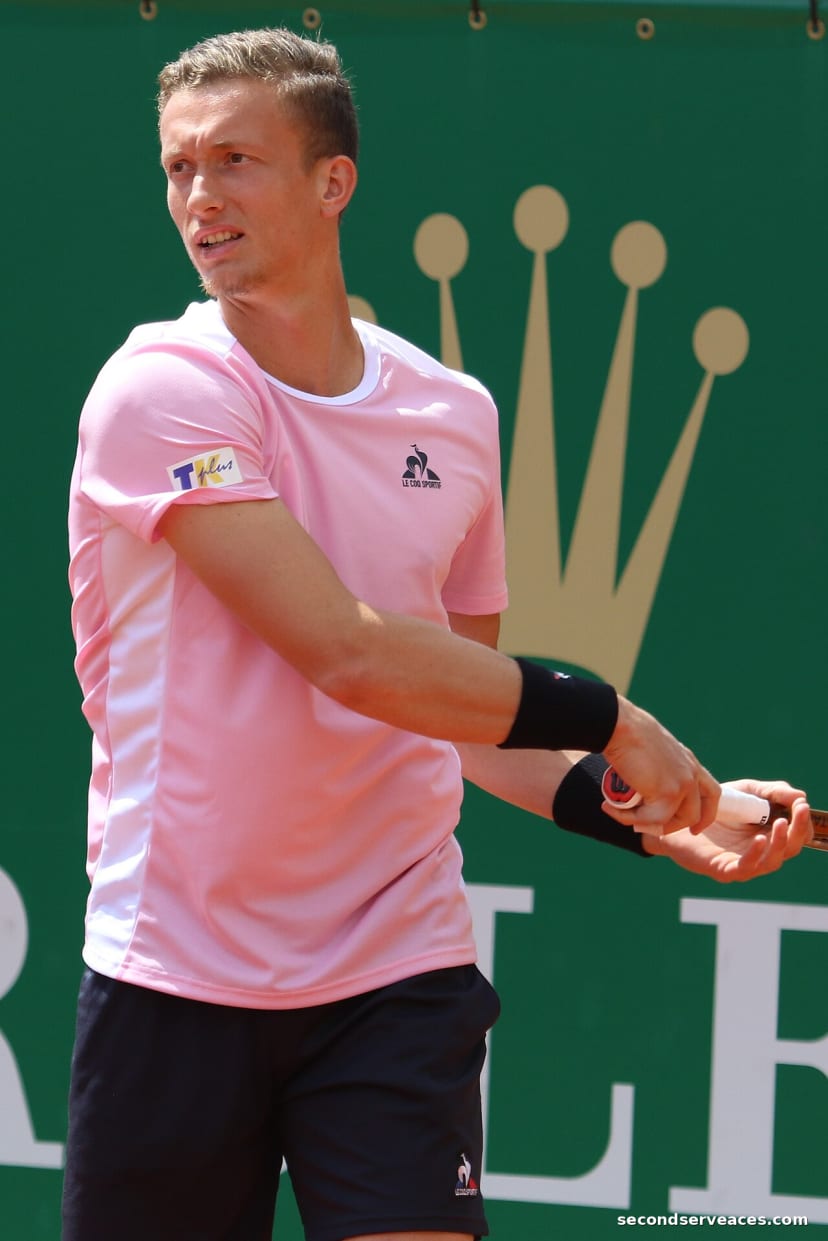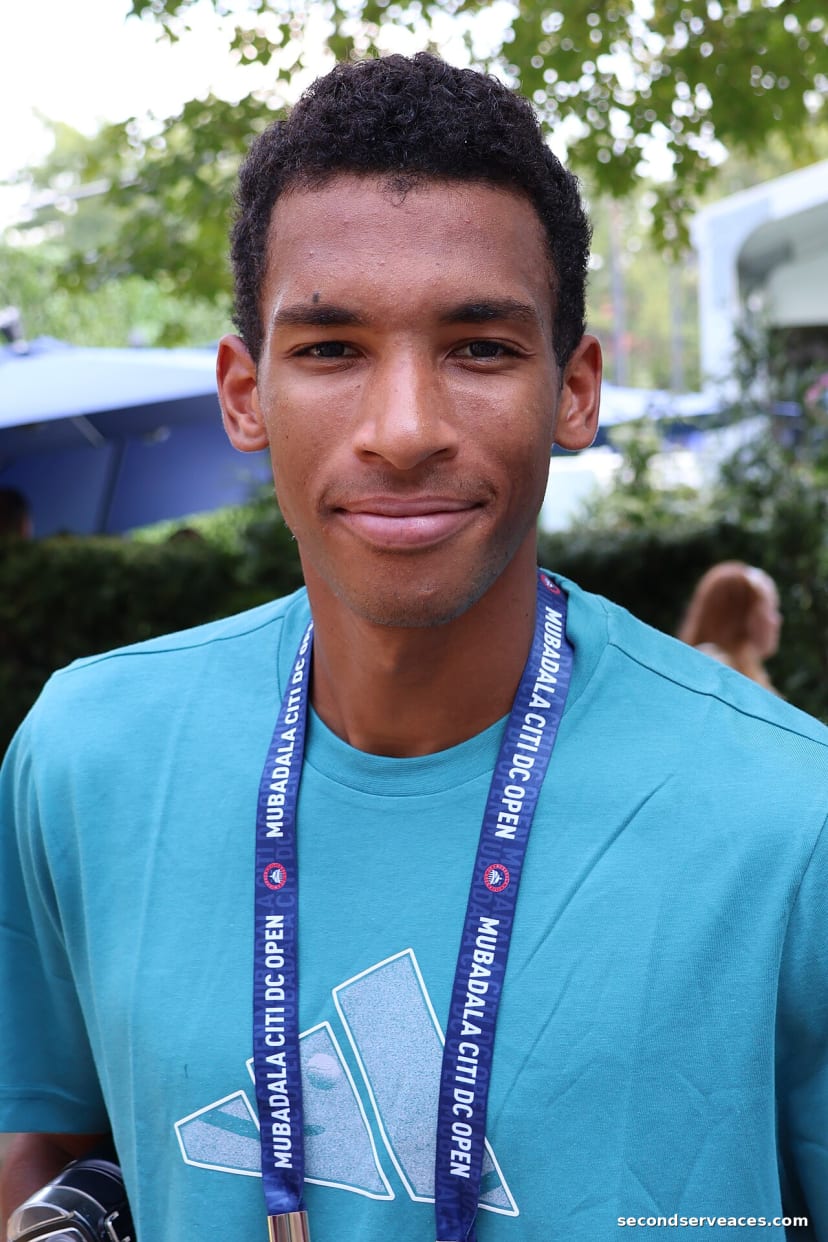
There is a specific threshold of temporal violence in professional tennis, a point where a match ceases to be a strategic contest and becomes a sheer anatomical dissection. In exactly fifty-five minutes on the vivid blue hard courts of the Miami Open, Arthur Fils enacted exactly this sort of physical and geometric suffocation. The final scoreboard—a brutally asymmetric 6-0, 6-1 third-round victory over Stefanos Tsitsipas—reads less like a competitive tennis result and more like a typographical error. To limit a top-tier ATP talent to a solitary game requires an orchestration of physics that borders on the surreal.
Listen to the Second Serve Podcast
Get our daily AI-synthesized audio briefings and match reviews on the go.
To understand the sheer unlikeliness of this outcome, one must look at the physical toll of the preceding months. Recovering from a lumbar or thoracic injury alters a tennis player's fundamental relationship with gravity and torque. Since returning from a debilitating back injury in February, the young Frenchman has quietly compiled a 9-4 win-loss ledger. Yet, compiling solid tour-level wins is one thing; stripping a seeded opponent of their rhythm in under an hour is an entirely different echelon of performance. The narrative echoing from the Fils camp in recent weeks was a quiet insistence that he was "fully back" to optimal physical condition. Fifty-five flawless minutes against Tsitsipas serves as empirical, undeniable validation of that claim.
The Tactical Breakdown
Geometry and time remain the two ultimate currencies on a hard court. To deliver a "bagel" (a 6-0 set) means breaking an opponent's serve three consecutive times, effectively neutralizing their primary weapon. Historically, Tsitsipas’s single-handed backhand represents an aesthetic triumph but a mechanical liability on the return of serve, particularly against opponents who can generate acute, high-bouncing angles. Fils operates with a remarkably live arm and devastating racquet-head speed. By relentlessly attacking the Tsitsipas ad-court with high-velocity, heavy-RPM kick serves and aggressive topspin forehands, Fils likely short-circuited the Greek’s ability to dictate play from the center of the baseline.
Furthermore, the temporal footprint of this match—exactly fifty-five minutes—dictates an absolute absence of extended baseline attrition. This points directly to lethal first-strike tennis. Fils was ostensibly punishing the Tsitsipas second serve, stepping aggressively inside the baseline, and suffocating the return. When a player's primary defensive slice is met with immediate, punishing pace rather than a neutral rally ball, the psychological weight of the match quickly becomes unbearable. Fils did not just beat Tsitsipas; he deprived him of the oxygen required to construct points.
The Bigger Picture
Beyond the immediate shock of the scoreline, the most profound takeaway from this Miami result is the biomechanical confidence it reveals. The modern ATP forehand is entirely predicated on violent core rotation—a kinetic chain that starts in the friction of the feet and whips violently through the lower back. (Consider, for a moment, the sheer anatomical terror of rotating through a heavy topspin forehand with a compromised lumbar spine; the back is the structural fulcrum of all modern tennis power). For Fils to swing freely enough to thoroughly dismantle a player of Tsitsipas's caliber indicates zero lingering apprehension regarding his February injury. He is swinging with the unencumbered, dangerous freedom of a wholly healthy athlete.
The draw now presents an entirely different psychological and computational puzzle: Valentin Vacherot. This upcoming fourth-round encounter will mark their very first meeting at the tour level. While taking apart a known entity like Tsitsipas requires precise tactical execution against established data points, navigating a maiden tour-level matchup demands rapid, on-the-fly adjustment. Fils will need to decode Vacherot’s serve patterns and movement tells in real-time. However, if the Frenchman's kinetic chain remains as fluid and explosive as it was during those fifty-five minutes in the third round, the variables on the other side of the net may simply cease to matter.
What Stefanos Tsitsipas Plays With
Wilson Blade 98 v9
Luxilon 4G 125
Wilson Pro Overgrip (12-Pack)
Analyze Arthur Fils vs. Stefanos Tsitsipas
Predict tactical adjustments, momentum swings, and serve strategy options for this match-up using our AI simulator.
The Aces Tactical Panel
This report was curated and edited by Bhaskar Goel. Tactical analysis and technical insights were provided by our specialized panel of expert correspondents.
Julian Price
Senior Tactical Correspondent
Stuffy, pedantic British academic and historian specializing in match momentum and historical context.
Elena Cruz
Director of Analytical Research
Data scientist specializing in court surface physics and movement patterns.
Bhaskar
The Editor & Fan
Passionate tennis player and site editor bringing everyday amateur insights and relatable fan commentary.
Arthur Vance
Senior Existential Analyst
Deep, eccentric, and DFW-inspired. Models court metaphysics, kinetic beauty, and player psychology.
Leo Sterling
High-Performance Consultant
Hard-nosed ex-trainer from Melbourne with a no-nonsense view on tour fitness.