A Career Defined by Twenty-Four Kinetic Encounters
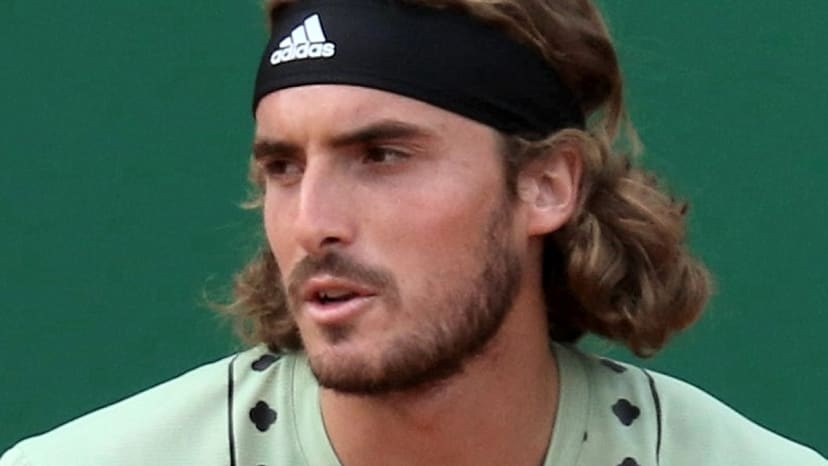
To view the professional trajectory of Andy Roddick is to examine a man who stood, with singular intensity, in the shadow of perhaps the most aesthetic force the sport has ever produced. Now at 43 years old, Roddick occupies a reflective space, looking back at the 24 matches he contested against Roger Federer. This was not merely a series of athletic skirmishes; it was a repeated, high-stakes interrogation of form, speed, and the elusive nature of professional perfection.
Listen to the Second Serve Podcast
Get our daily AI-synthesized audio briefings and match reviews on the go.
The mathematics of their rivalry remain stark, a testament to the specific gravity Federer exerted over his era. Roddick, despite his blistering serve and foundational power, secured only three victories in those 24 meetings. It is a figure that invites meditation on the nature of competitive frustration and the subtle, often imperceptible differences that distinguish the elite from the truly transformative.
Of particular significance to the broader ATP Tour narrative are the seven instances where Roddick succumbed to Federer in the crucibles of Grand Slam semi-finals or finals. These losses represent more than simple scorelines; they are markers of a time when the very physics of the game seemed to bend toward the Swiss maestro, regardless of the tactical adjustments Roddick deployed.
The Dichotomy of Attack and Defensive Fortification
Roddick’s recent reflections provide an intimate look into the tactical conundrum that defined his career against his greatest rival. He speaks of Federer not as a static opponent, but as an entity that mastered the synthesis of aggressive intent and defensive resilience. While many players define themselves by a singular weapon, Federer’s ability to transition from baseline defense to immediate, suffocating offense remains the touchstone of his legacy.
The challenge for Roddick was rarely about raw output, but rather the internal clock by which Federer operated. Facing a player who could neutralize a dominant serve with such consistent, clinical placement meant that every rally became a battle of attrition. Roddick’s observations highlight that the difficulty lay in the realization that Federer’s defense was, in itself, a form of preparation for an eventual, devastating strike.
As the game evolves into the era of younger stars like Carlos Alcaraz—who continues to shape headlines with his recent injury-induced withdrawal from the Barcelona Open—one cannot help but compare the modern tactical landscape to the one Roddick navigated. The endurance required to maintain one’s body and strategy against such formidable standards remains the silent burden of every professional athlete.
The Evolution of Perspective Beyond the Baseline
Now removed from the immediate heat of the tour, Roddick’s perspective serves as a window into the evolution of tennis history. He sits among a pantheon of names—Novak Djokovic, Rafael Nadal, Andy Murray—who all, in their own way, had to reconcile their tactical philosophies with the dominant paradigms of their time. These players were not just competitors; they were students of a game that demanded constant iteration.
The legacy of these 24 meetings with Federer is found not in the win-loss column, but in the analytical depth that Roddick now brings to the conversation. He understands that to play at that level is to exist in a state of constant, high-pressure adaptation. Whether it is the intensity of a break point or the subtle shifts in match momentum, the nuances are what provide the sport with its enduring, philosophical weight.
Ultimately, these reflections remind us that the history of tennis is a dialogue. It is a conversation carried out through the topspin of the ball and the geometry of the court. As Roddick looks back at his clashes with Federer, he offers us a rare glimpse into the mind of a competitor who realized that, even in defeat, the struggle against excellence is the ultimate validation of one's own pursuit.
What Novak Djokovic Plays With
Head Speed Pro
Luxilon ALU Power 125
Head Prime Tour (12-Pack)
Asics Court FF 3 Novak
Analyze Roger Federer vs. Andy Roddick
Predict tactical adjustments, momentum swings, and serve strategy options for this match-up using our AI simulator.
The Aces Tactical Panel
This report was curated and edited by Bhaskar Goel. Tactical analysis and technical insights were provided by our specialized panel of expert correspondents.
Julian Price
Senior Tactical Correspondent
Stuffy, pedantic British academic and historian specializing in match momentum and historical context.
Elena Cruz
Director of Analytical Research
Data scientist specializing in court surface physics and movement patterns.
Bhaskar
The Editor & Fan
Passionate tennis player and site editor bringing everyday amateur insights and relatable fan commentary.
Arthur Vance
Senior Existential Analyst
Deep, eccentric, and DFW-inspired. Models court metaphysics, kinetic beauty, and player psychology.
Leo Sterling
High-Performance Consultant
Hard-nosed ex-trainer from Melbourne with a no-nonsense view on tour fitness.